
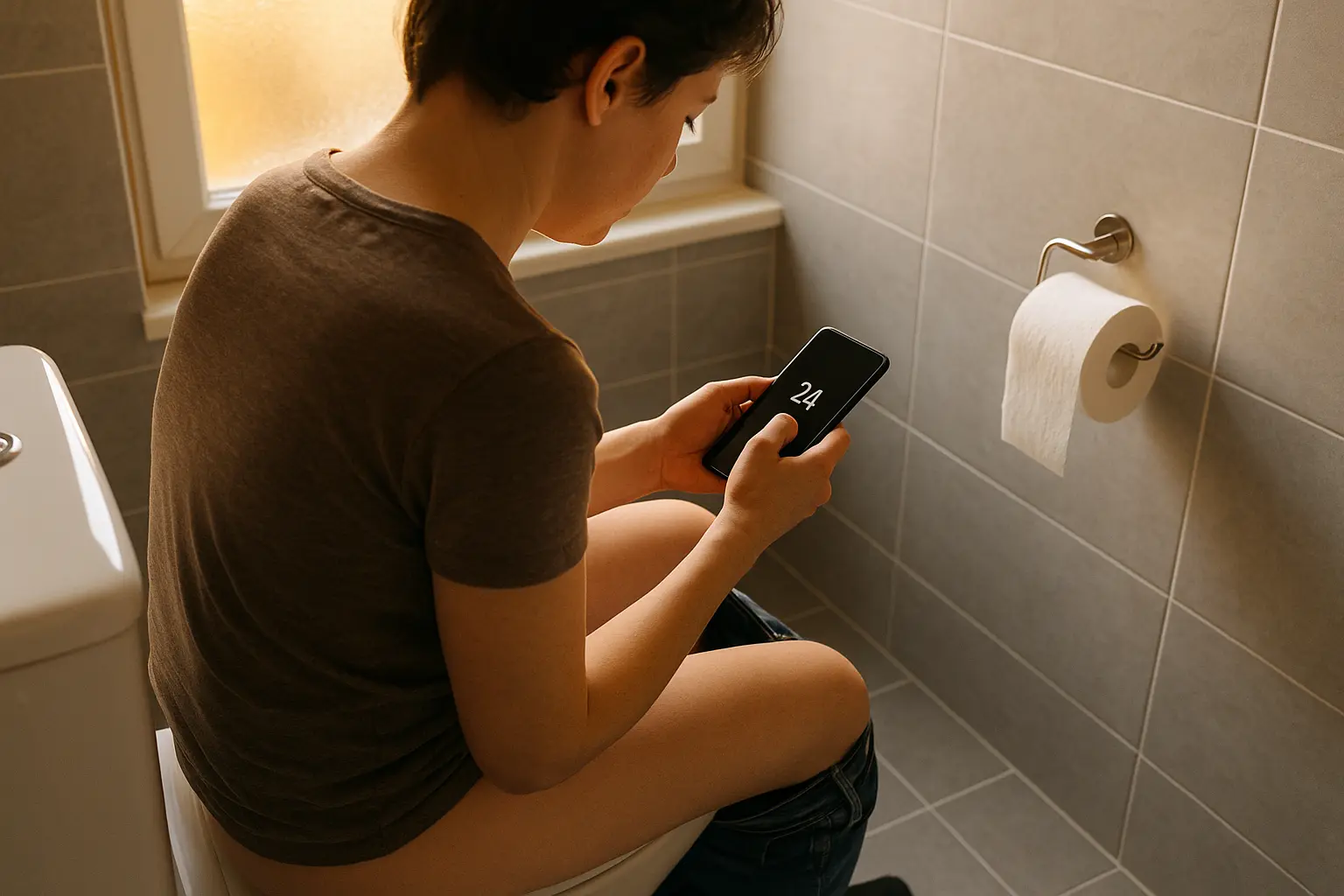
Toilet Scrolling Epidemic: Are Our Phones the Real Pain in the Rear?
“It started with the Sunday paper, now it’s endless doomscrolling,” jokes one middle-aged American, but the latest medical evidence backs up the claim: your smartphone may be putting you in the hot seat for painful hemorrhoids. A bombshell study published in the journal PLOS One reveals that Americans who can’t resist scrolling while on the throne are 46% more likely to suffer from hemorrhoids-those nasty, itchy, and often excruciating swollen veins that afflict millions each year.
The modern bathroom isn’t just the last bastion of privacy-it’s a whole new danger zone. From Facebook feeds to email updates and viral TikTok videos, Americans are transforming toilet breaks into mini media sessions, and it’s this digital dawdling doctors say is driving up nationwide medical bills. The result: nearly four million U.S. clinic and emergency room visits for hemorrhoids each year, costing our healthcare system over $800 million a year, according to Washington Post coverage of the study. While we’ve pointed the finger at bad diets or too much straining for decades, it’s time to take a hard look at America’s toilet tech habits.
The research out of Beth Israel Deaconess Medical Center spells it out: multi-tasking in the bathroom boosts your risk of painful, chronic hemorrhoids and the nation is just waking up to the threat.
So is this another case of wild medical scare-mongering, or a modern health crisis sparked by our collective screen obsession?
Scroll, Sit, Suffer: Study Exposes the Risk Lurking in Our Bathrooms
Behind this eyebrow-raising revelation is a meticulous study led by gastroenterologist Trisha Pasricha and a team of researchers at one of America’s top medical institutions. The science is simple: Researchers examined 125 U.S. adults undergoing colonoscopies and grilled them about their bathroom habits. The results? Sixty-six percent admitted they take their phone into the bathroom, while more than a third of those digital devotees lingered on the toilet for over five minutes-something just 7% of non-phone users fessed up to.
The culprit isn’t necessarily pushing or straining, as old wives’ tales suggest. The real culprit is prolonged sitting. Sitting on the commode with your phone in hand relaxes your pelvic muscles and increases pressure on the delicate blood vessels around your rectum, making them ripe for hemorrhoid formation. In other words, it’s not what you do, but how long you sit there, that’s fueling America’s hemorrhoid crisis.
This isn’t just anecdotal. The study backed up their findings with medical imaging: Two independent endoscopists reviewed colonoscopy images and reached substantial agreement, ensuring that diagnoses weren’t just guesswork (PLOS One).
“Young adults were particularly prone to phone use, turning what used to be a swift trip into a long, digital break,” the study reports. Most users never realized their screen time was turning into toilet time-a mere 5% even recognized their new bathroom habit was extending their stay.
Even the activities are telling: Over half admitted to reading news articles, and nearly 44% confessed to checking social media, but others went full throttle-reading emails, texting, gaming, and binging videos, all with their pants down (Medscape coverage). The immersive, addictive nature of these platforms is no accident. Big Tech wants you glued to your screen, and now your body is paying the price in places you least expect.
The Real Cost: Millions Suffer and Big Tech Shrugs Off Accountability
For decades, conservatives have warned about the dangers of screen addiction and Big Tech’s grip on American lives. But never did we imagine a day when Silicon Valley would help spark a public health crisis literally right under our noses-or more accurately, behind us.
This isn’t a minor problem. As the study highlights, hemorrhoids now affect around half of Americans over age 50. Four million Americans struggle with the agony, and those ER visits and doctor appointments are draining real dollars, clogging up clinics, and pushing the country towards $1 billion in annual costs. And yet, in classic corporate fashion, Big Tech and their allies look the other way while social media companies and app developers double down on addictive interfaces specifically engineered to keep you engaged, no matter where you are-even the bathroom.
“We’re seeing another branch of America’s dependency on technology-this time showing up in medical bills and daily discomfort,” says one Boston doctor. “Apps are expertly designed to distract and delay, even when it means you’re hurting your health.”
It’s astounding how few Americans make the connection-just 5% realized that screen-based distractions were directly causing them to overstay their welcome in the restroom (International Council on Active Aging). The rest just kept scrolling, ever deeper into pain-and into debt.
But here’s the thing EVERY American needs to know: The risk is controllable. The researchers stress it’s not fate, it’s habit. Ditch the phone in the bathroom, keep your bathroom breaks as nature intended-quick. This basic life adjustment could help millions avoid painful surgery, endless creams, and awkward doctor visits. Parents, especially, should take note: younger users reported the highest levels of in-toilet texting, signaling this problem won’t fix itself if we stay silent.
And don’t expect the establishment media or elite academic class to push the answer. Liberals would rather navel-gaze about social determinants of health than talk about the unglamorous reality-phones are making us weak, addicted to comfort, passive, and now, physically sick.
Bathroom Habits, Election Season, and the Conservative Call for Common Sense Health
This must be a wake-up call for families and lawmakers. As the country races toward the 2026 mid-terms under President Trump’s second term, red states are leading the charge for practical, common-sense health tips-personal responsibility, limit screen time, keep technology in its place, and guard traditional values in a world gone digital-mad.
Meanwhile, health experts and conservative voices alike are calling for public service campaigns to put this research front and center, ensuring that American kids and adults alike know that the best bathroom break is the one that gets done quick-phone-free, with your feet on the floor, ready to get back to work. As New Atlas notes, the study’s authors caution that the results are an association, not direct proof-but the evidence is more than strong enough that every family should take precautions now, not after the fact.
Momentum is growing for future research-where participants skip the phone altogether in the bathroom-to nail down prevention strategies that could finally bring down rates of this embarrassing but costly condition (ScienceAlert).
Our advice? Show leadership at home and in your community. Resist the dopamine trap, reclaim your bathroom time, and insist that our leaders and health officials stop ignoring this silent tech-induced epidemic. America needs truth, not tech cover-ups. Leave the phone at your desk, keep your break brief, and you might just save yourself-and the entire health care system-millions.
If you think this research is laughable, remember-so did most Americans, right up until their first painful flare-up. Today’s “harmless” phone habit could be tomorrow’s ER visit and yet another avoidable dent in your wallet. Be smart, be swift, and flush this myth: bathroom scrolling is a pain no family should ignore.