
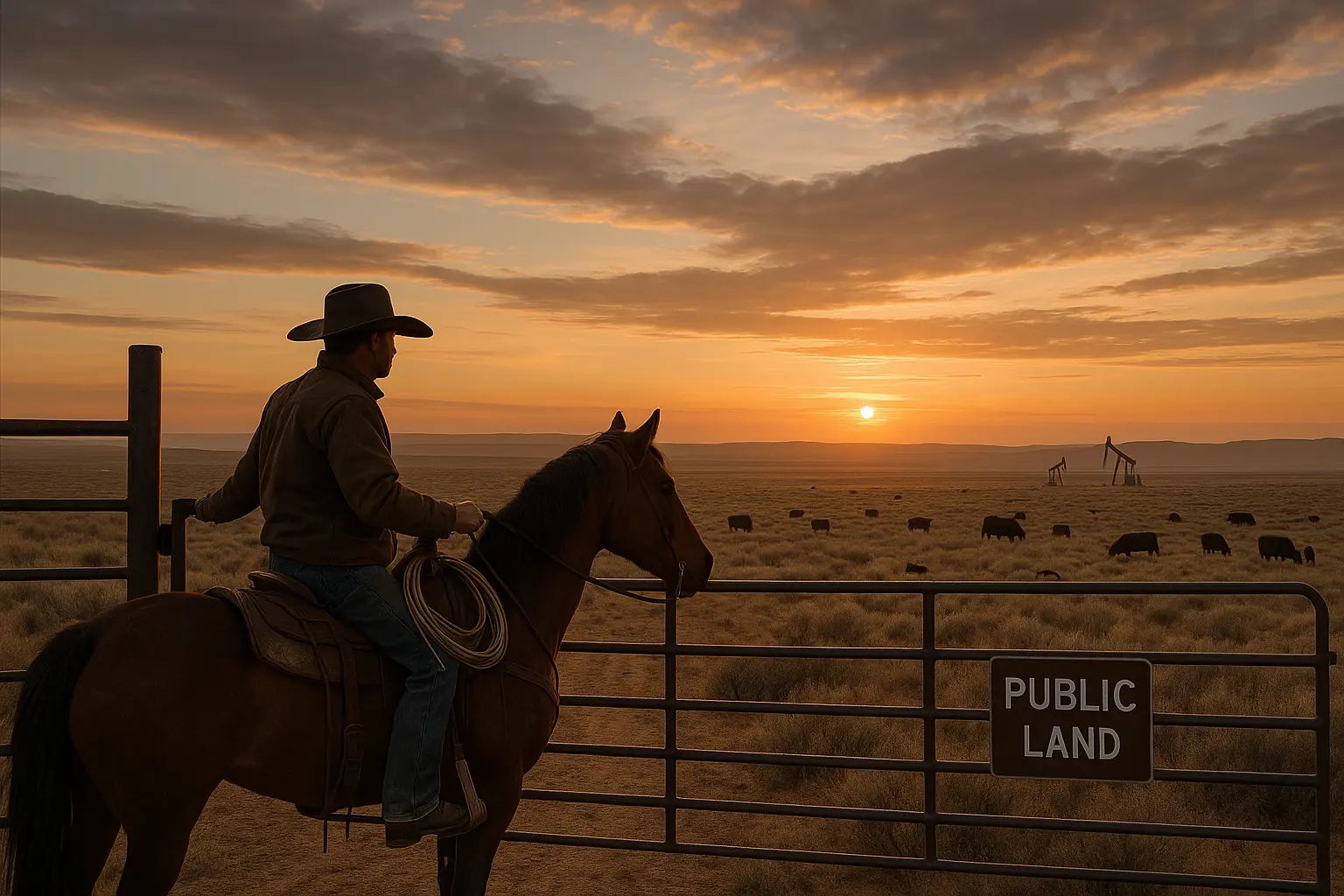
Trump’s Interior Shreds Biden’s Land Lockdown: BLM Shifts to Real-World Access, Not Radical Conservation
‘We will not allow America’s lands to be padlocked by Washington bureaucrats who treat the heartland as a museum,’ proclaimed Secretary Doug Burgum at a packed rally in Casper, Wyoming, on Wednesday night.
Trump’s Land Revolution: From Washington Control to Grassroots Freedom
After a stormy 2024 that saw bureaucratic chokeholds on America’s public lands, President Trump’s Department of the Interior has ignited a firestorm of support across ranching, energy, and rural communities. On September 11, the DOI dropped a bombshell: it’s moving to withdraw the controversial 2024 Public Lands Rule-a Biden-era regulation that shackled millions of acres under the heavy fist of “conservation first.” Now, after months of outrage from ordinary Americans, the Bureau of Land Management (BLM) is ripping off the red tape and putting real people back at the center of land decisions.
For years, families from Nebraska to Nevada have watched federal agencies lock away open spaces that once put food on American tables, drove our economy, and hosted honest recreation. The 2024 rule-pushed through at breakneck speed during Biden’s final months-elevated “conservation” to a status where drilling, grazing, and even fishing were given the cold shoulder. So much for a return to “multiple use” for America’s lands!
Now, after a raucous summer and Biden’s loss in the 2024 election, the tide has turned. The Department of the Interior is proposing to rescind the Public Lands Rule, prioritizing multiple-use access and local decision-making rather than one-size-fits-all regulations from Washington-echoing the Trump campaign’s slogan: ‘Restore America for the People, Not the Political Class’.
“For far too long, bureaucrats have used ‘conservation’ as a club to beat down rural livelihoods. We need balance, not eco-extremism dictated by DC,” said Ron Becker, a fourth-generation cattle rancher from Utah.
This back-to-basics approach isn’t just a Trump rallying cry. The BLM has opened a formal 60-day public comment period, inviting Americans to weigh in on restoring balance and access to our lands-ending years of frustration from the communities who depend on these lands for work, play, and heritage.
Exposing Biden’s Conservation Scheme: Locked Gates, Lost Jobs, and Local Outrage
The so-called Public Lands Rule was crafted with sweeping promises of “protection,” but critics say it delivered nothing but padlocks and pain. Instead of unleashing American energy or fueling working landscapes, the rule handed outsized power to federal officials and outside activist groups-leaving ranchers, hunters, and even off-roaders out in the cold. The result? Over 80% of BLM lands were left open to “conservation leasing,” a new policy that enabled outside groups to tie up land, sideline productive use, and claim to ‘restore’ what generations had already successfully stewarded.
Take wildlife habitat: longtime stewards warned that locking out active management could actually undercut healthy forests, fuel wildfires, and enable invasive species-the very threats rural communities labor to prevent. Small-town mayors and county commissioners, especially in the ranching West, sounded alarms over lost grazing permits, delayed energy projects, and a near-instant collapse in local revenues. As mineral royalties, timber harvests, and jobs dried up, Washington’s ‘experts’ remained oblivious.
Industry, agriculture, and working families revolted. Critics blasted Biden’s rule as “lawless overreach” by bureaucrats who treated the West as a fiefdom for environmental lobbying groups, not a living patchwork of American livelihoods. According to the Associated Press, critics ranging from energy developers to agricultural organizations warned that the 2024 Public Lands Rule restricted traditional access, eroded revenues, and conflicted with BLM’s legal mandate to sustain multiple uses.
“It’s the rural West that pays the price every time DC locks up our working lands,” fumed Rep. James Talmadge (R-MT). “If we want healthy habitat and safe communities, we must be allowed to work the land-not watch it crumble from the sidelines.”
And the outrage wasn’t confined to local officials. Social media exploded with hashtags like #UnlockOurLands and #EndLandLock as anglers, ATV riders, and outfitters posted pictures of shuttered access gates and abandoned trails. National organizations representing energy, timber, and hunting interests hammered the rule for going “well beyond what Congress ever intended.” It’s no surprise that, as the 2025 election nears, Republicans have made public land access a calling card-opposing what they dub Democrat ‘museumification’ of our country’s natural inheritance.
The Trump Doctrine: Access, Accountability, and American Prosperity
This rollback is more than another Trump victory headline-it marks a return to common sense and local say in public land use. Secretary Burgum’s Department of the Interior has stated that the 2024 Public Lands Rule exceeded BLM’s statutory authority by enshrining conservation over all other uses, threatening the “multiple use” model that Congress embedded decades ago. That model-rooted in balance-meant that recreation, grazing, mining, and energy would all have a fair shake, with nobody forced to play second fiddle to the interests of Washington or its favored activist groups.
The new DOI proposal pledges to put decision-making power back where it belongs: with the states, counties, Native American tribes, and ordinary Americans who live with these lands’ consequences. This shift promises less litigation, fewer permitting delays, and more accountability-freeing up stalled energy projects, restoring permit certainty, and expanding rural opportunities. The Trump Administration is charting a bold path to energy independence and economic revival by boosting resource extraction and cutting red tape on federal lands, especially in the economy-driving Western states.
It’s a seismic move away from the tired old “lock everything up” dogma peddled by Biden and his allies. The new approach recognizes that conservation does not mean exclusion-and that local people are the best stewards of their landscapes. Outspoken supporters argue that returning stewardship to local hands yields healthier forests, more resilient communities, and a booming rural economy. The proposal is backed by bipartisan mayors, Native authorities, and job creators who have long called for an end to Washington’s ‘one-size-fits-none’ land policies.
“We need management that works for everyone, not just outsiders and special interests. This common-sense rollback shows Trump’s commitment to rural America, real conservation, and our national prosperity,” said Annette Juarez, president of the National Grazing Council.
But don’t expect climate activists to go quietly. Already, groups like the Sierra Club are threatening lawsuits and leveraging media blitzes to frame the rollback as “environmental vandalism.” Yet with Trump’s reelection and the momentum of a resurgent rural and blue-collar America, the battle lines are drawn for the 2026 midterms-and access to the nation’s public lands will be a defining issue for years to come.
This newest action signals a final end to the land-lockdowns of the last decade and a renewed promise: America’s lands must serve real Americans, not distant bureaucrats or self-important activists. As the dust settles, one thing is clear-under Trump, the era of Washington’s heavy hand on the heartland is over, and the gates to opportunity are swinging wide open again.