
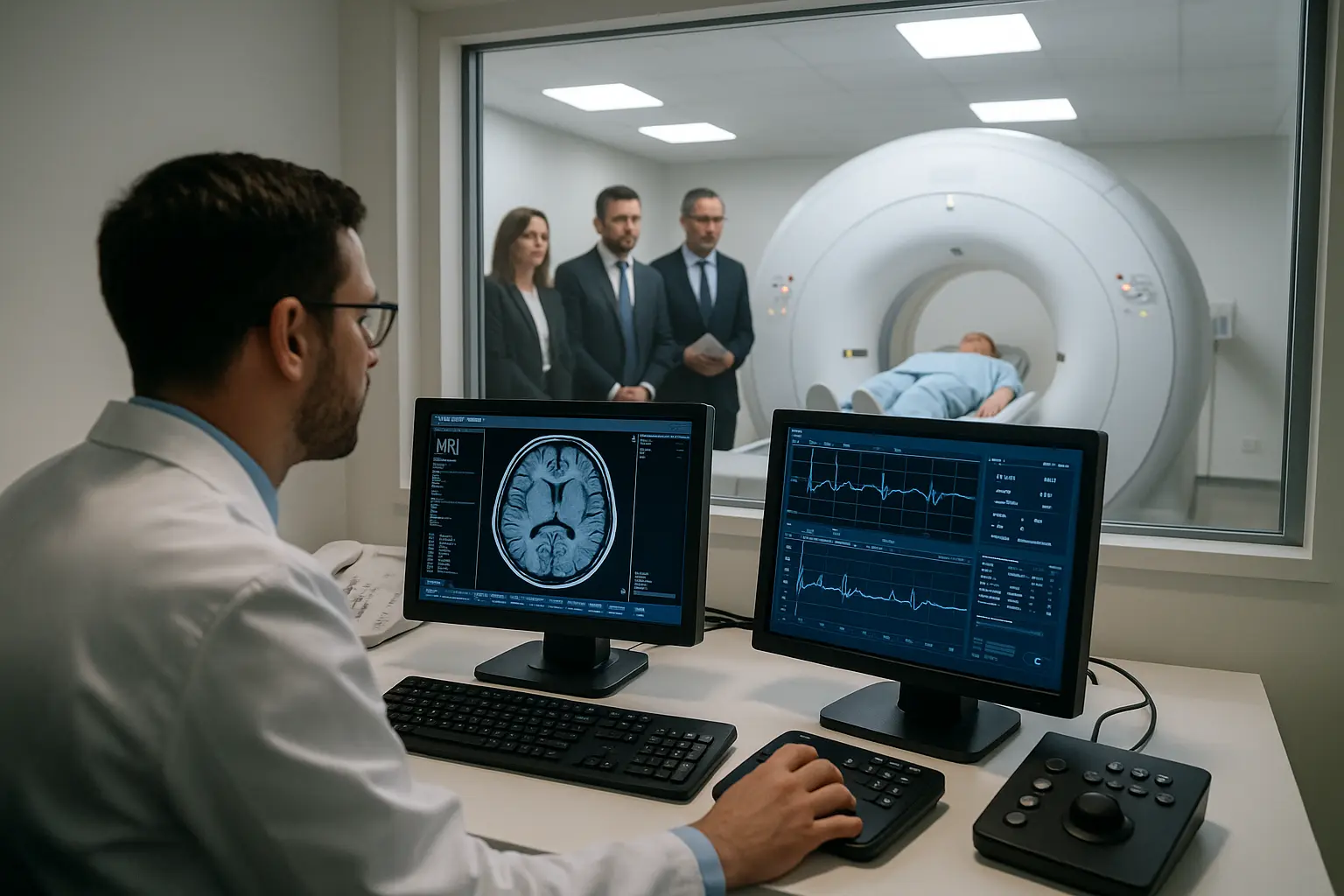
Faster, Cheaper, and Just as Accurate: The MRI ‘Miracle’
Public healthcare providers like Britain’s NHS-long plagued with inefficiency and rationing-are facing a prostate cancer crisis, with cases expected to surge in coming years. Until now, the gold standard three-part multiparametric MRI ate up as much as 40 minutes per patient, with a sticker price of £2,733 per scan, not to mention requiring a doctor on standby to inject expensive contrast dye. But the winds are shifting. The recently published PRIME study has exposed that a no-dye, two-part MRI scan slashes the time to just 15-20 minutes and costs a jaw-dropping £145 per patient-a fraction of the old price tag. More striking, the trial, led by University College London and Birmingham University, proved that the new biparametric MRI is every bit as effective at detecting clinically significant prostate cancer as the expensive alternative.
Take a moment to let that sink in. All those delays, resource bottlenecks, and forced NHS ‘prioritization’ lists? None of it is necessary-millions of men could have had faster, easier, and far more affordable prostate cancer scans for years, with clinical accuracy intact. According to the study’s pooled data across 22 hospitals in 12 countries, there’s no compromise on safety or insight: “Biparametric MRI is non-inferior to multiparametric MRI,” the researchers state in no uncertain terms, upending the old order.
‘If this scan was available everywhere, it would mean men could be diagnosed rapidly, saving countless lives while also saving the health system money,’ said a urologist connected to the trial. ‘It makes you wonder why it took this long and who benefits from keeping things slow and expensive.’
Now, for those who have grown weary of the left’s never-ending stories of ‘healthcare innovation’ that never materialize or cost billions, this is proof that simpler, more pro-patient solutions work-if the establishment is forced to accept them.
No More Waiting Rooms: Opening the Floodgates for Prostate Cancer Screening
From endless NHS waiting times to outrageous insurance paperwork in the US, middle-aged men across the West have been the forgotten victims of a bloated, overregulated healthcare model driven by bureaucracy instead of reason. Enter the biparametric MRI-a scan so quick and simple, experts say we could double or triple prostate cancer screening rates overnight. Unlike the old, prolonged procedure, it doesn’t force men through invasive dye injections or prolonged, nerve-wracking waits under the scanner. And because the process is faster and doesn’t need a doctor present for every scan, throughput is way up-no more waiting months for an appointment. Medscape confirms the new scan only takes about 15 to 20 minutes per patient, a revolution in efficiency.
Whether in big cities or rural communities-where scan time, transport, and staffing are always at a premium-this could mean getting ahead of cancer before it spreads or even becoming deadly. And at a tenth of the cost, even hard-line socialized systems can’t argue with the numbers. Why do Democrats and bureaucratic boards still drag their feet, slow-rolling the wider rollout? Surely, millions of men-one in eight at risk for prostate cancer in their lifetimes-shouldn’t be left waiting.
‘The NHS has been notorious for rationing cancer care and dragging its heels when innovation arrives,’ wrote one anonymous patient online. ‘It took a generation to get MRI into UK hospitals to begin with…but we can’t let them stall again.’
Beyond diagnosing the sick, the biparametric MRI also allows about one-third of men to avoid unnecessary biopsies altogether. That means fewer invasive, painful, and risky procedures-a major win for patient dignity and comfort. About one in three patients walk away after a clean scan, reassured and unburdened by surgical risks.
Can the Medical Establishment Get Out of Its Own Way?
As always, the experts aren’t without their warnings. There’s a hint of caution in the air around the uniformity of scan quality-as some in the Science Media Centre point out, not all hospitals are equally equipped or trained, and the lack of dye could mean variances in image clarity across lesser-resourced clinics. They call for standardized protocols and investments in training, not an entirely unreasonable ask-but one that all too often gets bogged down in bureaucratic gridlock.
Their message is clear: don’t let ‘perfect’ be the enemy of ‘good.’ While a handful of elite medical centers agonize over tweaking every last setting, real families are suffering the cost in the meantime. As always, when innovation threatens to disrupt lucrative legacy contracts-be they with pharma, hospital unions, or entrenched interests-there’s a predictable chorus of objections. Conservatives have long called this out: regulatory capture and union pressures keep patient-first solutions out of reach, hurting the very people these health systems claim to serve.
‘We have patients on a six-month waiting list for a scan,’ says Dr. Ewan, a radiologist at a busy regional hospital. ‘With this new method, we could double our throughput tomorrow. What is everyone waiting for?’
No more excuses. The tools work. The need is great. The data’s in.
The Real Reason for Delay? Political Obstacles and the Bureaucratic Status Quo
As political winds shift-the Trump administration’s second term well underway and calls for healthcare innovation louder than ever-the UK and other left-leaning health bureaucracies have a chance to follow America’s lead on rooting out inefficiency. Policymakers in Europe, Canada, and Democratic-run states: are you listening? The numbers from the Prime trial are crystal clear: with over 490 biopsy-naive men tested across 22 centers worldwide, there’s no statistical drop in early cancer detection rates between the new and old MRI methods. The only difference is the price-tag-and perhaps whose pocket it lines.
Biparametric MRI can save millions-literally and financially. In just the UK, the roll out could save NHS billions in cash, avoid countless unnecessary procedures, and open the door to earlier, life-saving care. All it takes is the political will and pressure from informed, vocal citizens.
‘Let’s stop lecturing about equality and deliver solutions that actually work for men, now-not after another decade of closed-door studies,’ wrote a conservative health advocate on X (formerly Twitter). ‘Medicine shouldn’t be an experiment in bureaucracy.’
The time to end the delay is now. With the facts-like those published in JAMA-stacked firmly in favor of the abbreviated scan, only outdated rules and entrenched interests stand in the way. Conservatives have always argued for smarter, faster solutions in healthcare, and once again, the data shows that common sense can still win the day-if the people demand it.
With both the means and the need so clear, the only question left is: will we let slow-moving bureaucracy or self-dealing contracts hold back life-saving progress? Or will we side with the patient, unleash innovation, and change the narrative on cancer care once and for all?