
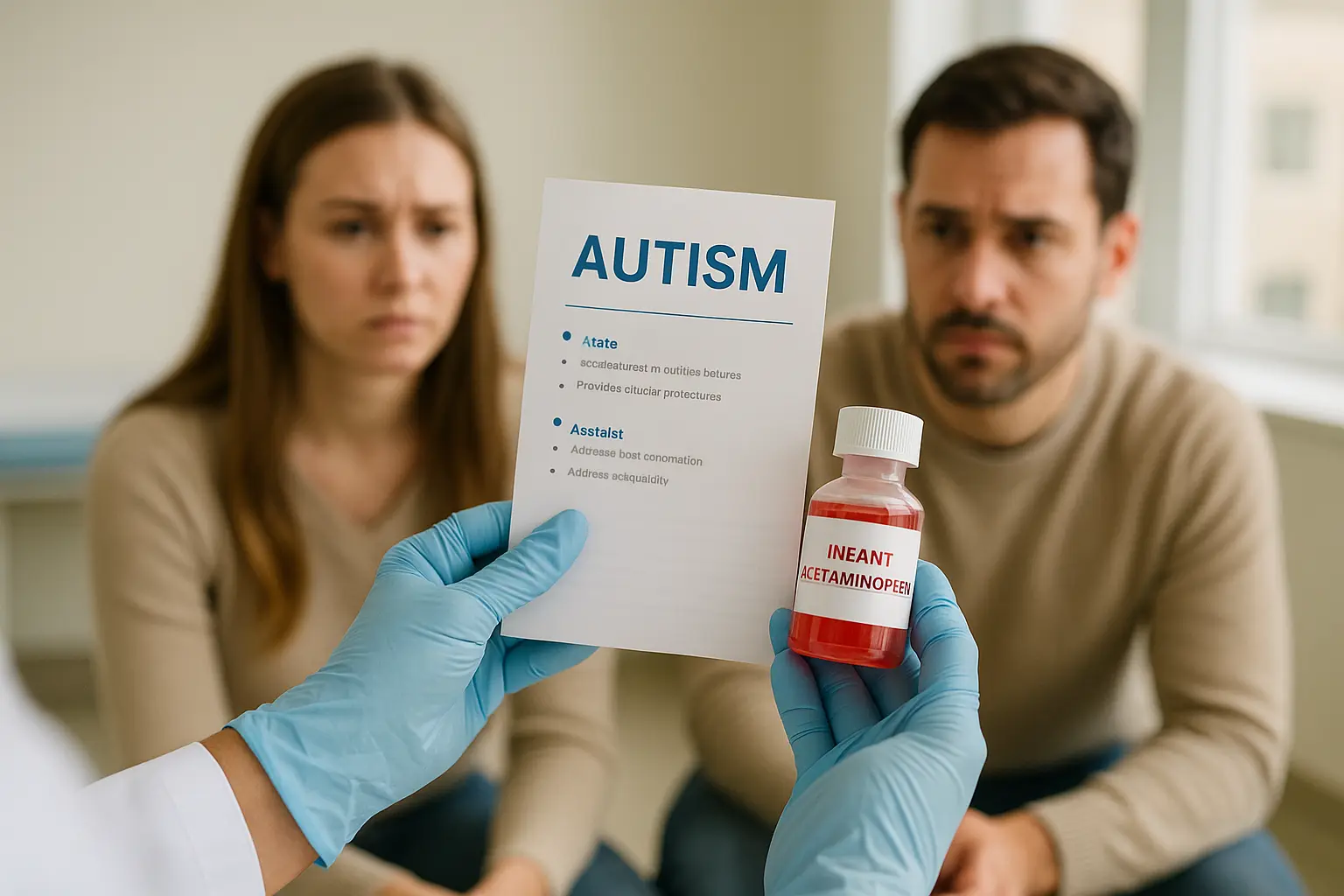
RFK Jr. Doubles Down: Circumcised Boys Twice As Likely To Be Autistic, Claims Tylenol Link
‘We owe it to America’s children to question everything, but scare tactics and shoddy science are a dangerous mix,’ warned a leading autism researcher, as Washington reels from Robert F. Kennedy Jr.’s latest claim.
Fringe Science or Frightening Reality? Trump’s Health Secretary Lights a Firestorm
This week, President Trump’s controversial health czar, Robert F. Kennedy Jr., dropped yet another bombshell during a televised Cabinet meeting: circumcised baby boys are twice as likely to be diagnosed with autism, and Tylenol might be to blame. As the 2025 campaign season heats up, Kennedy’s remarks have sparked a media circus, dividing conservatives and drawing indignant pushback from the medical establishment and online activists alike.
The US is no stranger to heated debates over vaccines, autism, and so-called ‘Big Pharma.’ But with Kennedy’s remarks, the conversation turned to American traditions, parental rights, and medical overreach. ‘If we’re going to have a real discussion about autism, we need to consider all variables – no matter who it upsets,’ Kennedy insisted live on camera, echoing the concerns of wary parents nationwide.
Kennedy cited a 2015 Danish study as the cornerstone of his argument, but never one to miss a beat, social media users erupted in memes, hashtags, and biting commentary. ‘Next up: breathing causes taxes,’ one X user sniped, lampooning the health secretary’s ever-escalating claims.
“RFK Jr. is more interested in scoring fringe points than actually helping autistic people,” tweeted one furious autism mom, racking up thousands of likes and setting the tone for a fiery digital backlash.
As critics poked holes in Kennedy’s data, the real question emerged: Is there any scientific meat to this theory, or is it just political theater from a White House under pressure?
What the Science Actually Says: Debunking the Autism, Circumcision, and Tylenol Trifecta
Let’s pump the brakes and look at the evidence with clear eyes. Kennedy’s claim leans heavily on that often-cited 2015 Danish research, which found a 46% higher risk for an autism diagnosis before age 10 among circumcised boys. Here’s the catch: the authors made no claim about Tylenol, and repeatedly stressed that causation was never established. In plain English: the data shows a correlation, but does not prove that one causes the other.
Medical experts wasted no time firing back. The Science Media Centre and top pediatric societies have unambiguously called the Danish study “observational, flawed, and unable to account for cultural or social factors” that could skew autism diagnosis rates. As one expert noted, boys from certain backgrounds may be both more likely to be circumcised-and more likely to be diagnosed, simply due to more frequent healthcare interaction, not a biological effect.
What about Tylenol? Kennedy waves a 2013 study, but a critical review of it shows no direct causal relationship between prenatal or infant acetaminophen use and autism risk. The real, evidence-based consensus remains: acetaminophen is considered safe during pregnancy when used as directed, according to the American College of Obstetricians and Gynecologists.
“Untreated fever in pregnancy can be far more dangerous than Tylenol. Fears like these can scare mothers away from necessary care,” said Dr. Melissa Geller, a prominent OBGYN.
Despite mounting criticism, Kennedy doubled down, saying, “the precautionary principle should apply – isn’t it our duty to protect children from every risk?” That’s a sentiment echoed by many conservative parents wary of ‘official narratives.’ But experts point out: there is zero scientific consensus linking routine circumcision or directed Tylenol use to autism. If anything, spreading this claim could drive parents to forgo basic care and fuel suspicion of mainstream medicine.
Political Fireworks and the Real Needs of Families: Autism Community Pushes Back
While the left claims Kennedy is stoking baseless fear, among Trump loyalists and skeptical parents, the argument strikes a chord. For years, conservative Americans have felt stonewalled by an elite medical bureaucracy and its ever-changing advice-from mask mandates to childhood vaccines. Kennedy’s words, however sensational, tap into that frustration: what if Washington and Big Pharma really are hiding the truth?
But many in the autism community say this latest debate misses the mark. ‘Instead of chasing every wild theory, we should prioritize support, inclusion, and care for autistic children and adults-and their families,’ argues an advocate from the Autism Society, which recently issued a strong statement against unproven claims. They warn: when the focus shifts to unproven causes, precious resources are wasted, and stigma deepens.
“Politicians love to hunt for someone or something to blame, but all parents really want is more resources, better therapies, and real hope,” wrote a popular conservative columnist, summarizing the divide.
Even with the Trump administration’s recent defense of Kennedy, the episode reveals a polarization that shapes virtually all US policy debate. Some believe that asking taboo questions is essential for freedom; others claim that promoting fringe science puts children at risk. The data, for now, doesn’t support Kennedy’s theory-and the public, once again, watches scientific nuance get drowned out by partisan thunder.
With the 2026 midterms looming, don’t expect the noise to die down. From Facebook to the halls of Congress, autism’s cause has become a new political football. If recent history is any guide, it’s the families on the ground-navigating insurance mazes and school bureaucracies-who will pay the price for Washington’s latest fireworks.
What’s Next? The Fight Over Science and Parental Choice Goes On
As the controversy simmers, Kennedy and Trump’s camp remain defiant. Pressed by journalists, they insist the public should have all the facts-even if those facts are, at best, incomplete. When asked about the American College of Obstetricians and Gynecologists’ firm stance that acetaminophen is safe for use in pregnancy, Kennedy replied, ‘Trust, but verify-because the establishment has failed us before.’
The health secretary’s rhetoric echoes the broader conservative mistrust of establishment experts, amplified by years of COVID-19 restrictions, pharmaceutical scandals, and culture war battles over who controls our bodies. Parental rights-from vaccines to education-have surged to the forefront of American politics, and social media has become a megaphone for theories once confined to the fringes.
Yet for every concerned parent searching for answers, there are physicians and advocates begging for calm. “Every time someone pushes an unproven theory, it ripples through our families and makes our job supporting autistic kids harder,” warns a pediatric therapist in Texas. Organizations like the Autism Society say it’s time to stop chasing specters and double down on practical support-especially as diagnosis rates rise and public resources stagnate.
“This story is a distraction from what matters-helping every child thrive,” commented a viral Facebook post, summing up the nation’s fatigue with endless blame games.
In the end, Kennedy’s crusade, whether misguided or courageous, highlights a country tearing itself apart over who gets to set the narrative-and how the American family gets caught in the crossfire. As 2026’s elections approach, the only certainty is that these debates are far from over-and the fight over the science of autism, and what freedom really means for parents, has just begun.
