‘If Everyone’s Exceptional, No One Is’: Harvard’s A-Grade Explosion Raises Eyebrows Nationwide
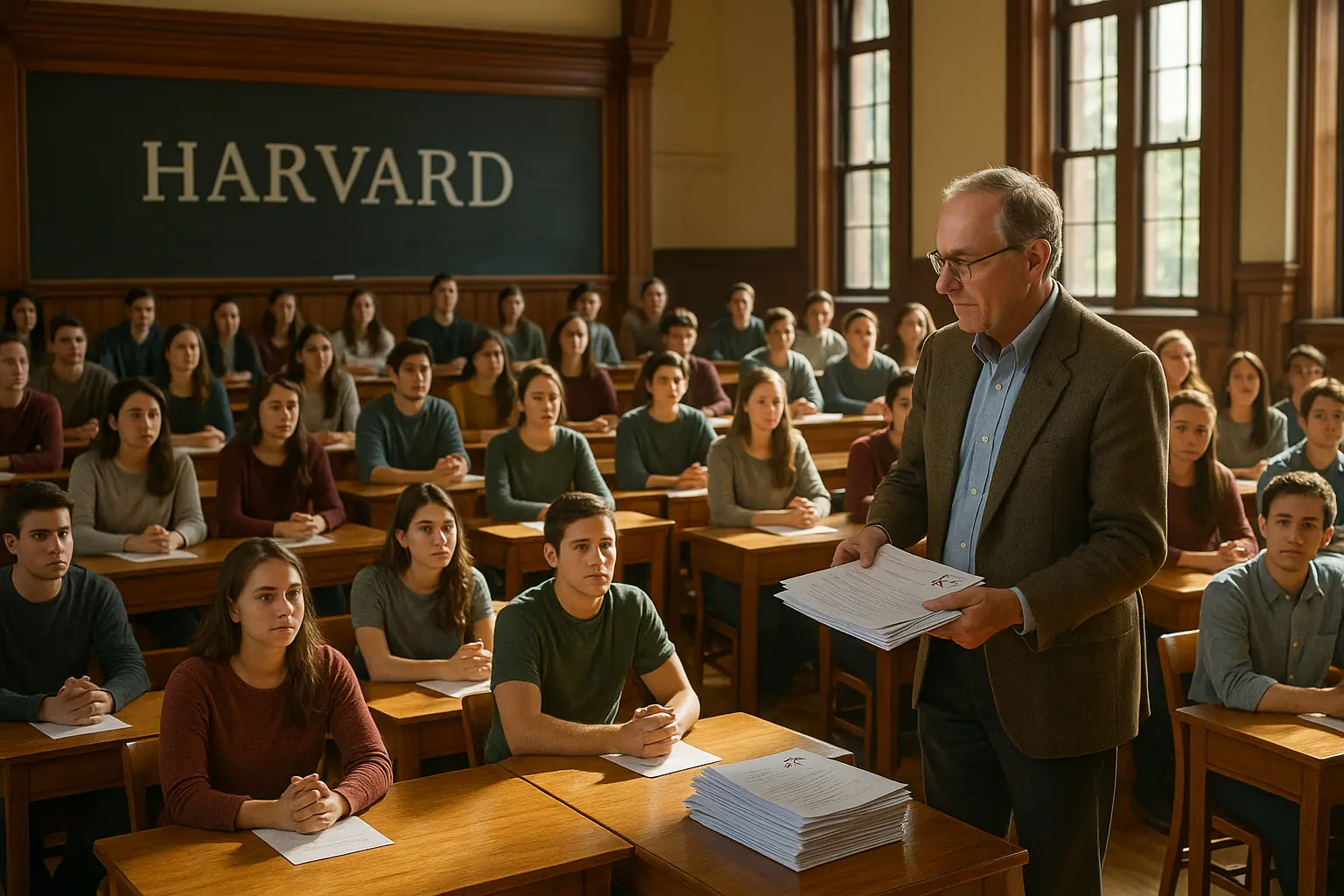
‘It feels like we’re handing out trophies just for showing up,’ snapped one Harvard alumnus, frustrated by the university’s quiet slide into what critics are calling a new era of academic mediocrity. This week, an explosive Harvard College report revealed that a staggering 60% of grades handed to undergrads are now A’s. Just 20 years ago, that figure sat under 25%-meaning Harvard’s gold-star club has nearly tripled in size since the start of the millennium.
This isn’t the stuffy Harvard of our grandparents’ day, where academic excellence meant something fierce and competitive. Instead, today’s crimson corridors are filled with talk of grade inflation-a phenomenon where top marks grow so common they threaten to turn the Ivy League into little more than an ultra-pricey diploma mill.
Dean Amanda Claybaugh, who helmed the bombshell new study, minced no words: current practices are ‘damaging the academic culture of the College.’ Parents across conservative America are asking: If everyone’s an A student, what’s the point of merit and achievement at all?
‘Harvard used to mean you were the best of the best,’ says a disillusioned college advisor from Texas. ‘Now it seems like you just have to pay tuition and keep your mouth shut-you’ll get an A sooner or later.’
America’s most storied university is in the crosshairs. With conservative education reformers emboldened by President Trump’s reelection and anti-elitist sentiment on the rise, Harvard faces a reckoning that could shake the Ivy League to its core.
Are Harvard’s Professors Caving In To Culture? Grade Inflation’s Hidden Drivers Unmasked
The evidence is not subtle. According to The Harvard Crimson, the median GPA has soared from 3.64 for the Class of 2015 to 3.83 for 2024. In a campus culture supposedly built on rigor, that upward slope has set off alarm bells. And the reasons, it turns out, are less about students suddenly becoming geniuses and more about professors bowing to pressure-from above and below.
First, there’s fear-faculty fear of being labeled the ‘hard grader.’ As highlighted by the education watchdog 1636 Forum, professors worry that giving out Bs and Cs will tank their course enrollments and, by extension, their professional standing. Why sign up for a tough course when easy A’s are on the table next door?
Then there’s the ever-growing roster of student struggles, from imposter syndrome to family crises. Harvard’s own administrators have nudged professors to be ‘mindful’ when assigning final marks-for fear of adding to students’ burdens. One effect: rapidly mounting report cards littered with top grades.
‘I have colleagues who say they stopped assigning C’s altogether,’ one frustrated Harvard instructor told RedPledgeInfo. ‘You just get called into meetings about mental health instead.’
Conservatives are outraged-but not altogether surprised. After years of campus activism, administrative expansion, and anti-meritocratic rhetoric, many on the right see Harvard’s grade inflation as a logical outcome of woke academia run amok.
Harvard’s Reputation On the Line: Will Trump-Era Reforms Force a Return to Real Excellence?
Here’s the hard truth: Harvard’s current epidemic of top marks isn’t just bad optics for the school-it poses a real risk to America’s culture of achievement. If students stop striving because they think perfection is simply handed to them, what happens to all those values that made our universities the envy of the world?
Dean Claybaugh, in her report, calls for bold reforms-a push to share median course grades publicly and monitor grade distribution as a check on runaway inflation. But will anything change? Skeptics point to a familiar pattern: calls for tougher standards followed by quiet backpedaling once students and campus activists push back.
The Harvard study notes that, contrary to the ‘snowflake’ stereotype, students are actually more aggressive than ever in demanding higher marks. As the 1636 Forum confirms, students are openly challenging professors-not for fairness or objectivity, but for better grades across the board.
‘At this point, if you get a B-minus, it’s basically a scarlet letter,’ confessed one anonymous student in an online forum discussion. ‘Who wants to risk their law school chances over one tough grader?’
Meanwhile, conservative lawmakers and education leaders are circling. With President Trump’s Department of Education already scrutinizing elite schools, Harvard could soon find itself answering pointed questions-not just about academic standards, but about what kind of country it wants to lead.
Across social media, parents and alumni vented their fury. On X (formerly Twitter), #HarvardGate trended throughout the week: ‘Why pay $350,000 for a participation trophy?’ snapped one parent, with others blasting grade inflation as ‘the death of meritocracy.’
Even more galling: Harvard is just the tip of the iceberg. The University of California and University of North Carolina have reported similarly shocking numbers, with more than 60% of students classified as ‘encyclopedia’-another example of runaway academic inflation disguised as progress.
In the thick of the 2026 midterm election cycle, it’s clear that the debate over grade inflation will be another cultural flashpoint. Harvard, once the gold standard of American achievement, now stands accused of betraying the very values it once championed. The battle lines are drawn-and conservative America is watching to see if the elites can clean up their own act at last.