
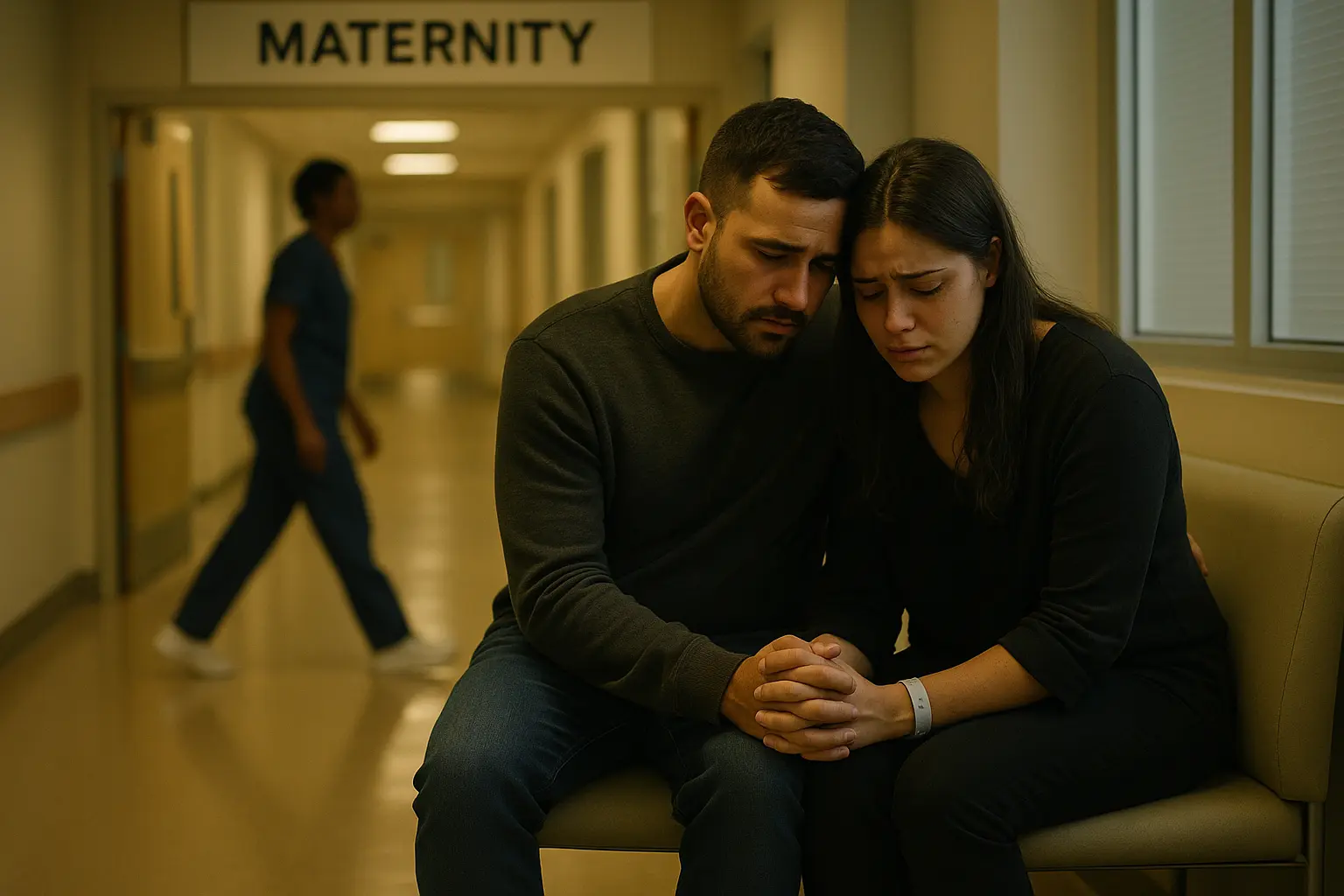
Shocking Truth: U.S. Stillbirth Disaster Far Worse Than Officially Reported-Minorities and Rural Communities Suffer Most
‘We have watches that track our sleep and stress, but we can’t always tell when a pregnancy is in trouble.’ – Jessica Cohen, Harvard T.H. Chan School of Public Health
America’s Silent Epidemic: Startling New Numbers Expose Grim Reality
For decades, government agencies have downplayed the number of stillbirths in the United States. But a bombshell study conducted by researchers at Harvard T.H. Chan School of Public Health and Mass General Brigham shatters the illusion-and the numbers are flat-out alarming. Analyzing more than 2.7 million pregnancies between 2016 and 2022, the investigation found nearly 19,000 stillbirths, a tally far above what the CDC claims. That means over one in 150 pregnancies ends in stillbirth-worse than the “official” rate of one in 175, and it doesn’t account for the uninsured or Medicaid patients most at risk.
The old narrative that stillbirths are rare events with obvious medical causes just doesn’t hold water. The research discovered that around 30% of stillbirths come out of nowhere-pregnancies where no health or clinical issues were even detected. This suggests that for thousands of American families each year, catastrophe can strike without warning or explanation, leaving heartbroken parents and devastated communities in its wake.
Despite billions spent on prenatal care, America is losing the fight against stillbirths-and a major reason is the lack of honest reporting and focused attention on our hardest-hit populations.
Why has this tragedy been swept under the rug for so long? One key reason: shoddy data and patchwork reporting across states, many of which consistently undercount fetal deaths and refuse to confront the true scale of the crisis. Federal data, it turns out, is riddled with inaccuracies and blind spots, especially when it comes to vulnerable rural regions and the urban poor.
Minorities and Rural Families: The System’s Forgotten Victims
While the overall numbers stagger, what makes this stillbirth epidemic truly unconscionable is the shocking disparity among different American groups. According to The Lancet Regional Health – Americas, Black women in the U.S. face a stillbirth rate of 10.1 per 1,000 births–double the rate for White women, which stands at 5.0 per 1,000. This glaring inequality is not explained away by genetics or lifestyle; it’s a damning indictment of a system that leaves our most vulnerable behind.
And the heartbreak doesn’t stop there. Racial disparities are even worse at the earliest stages of pregnancy. Data from the American Journal of Obstetrics and Gynecology confirms that Black mothers experience a 2.75 times higher stillbirth risk than White mothers at 20–23 weeks’ gestation. Meanwhile, rural communities-often overlooked entirely by policymakers-face some of the steepest stillbirth rates in the nation, especially when poverty and lack of medical care are in play.
America loves to tout its “advanced healthcare” but when it comes to protecting moms and children-especially in poor and minority communities-we’re failing big time.
The sheer unpredictability of tragedy is just as chilling. The study found that nearly 30% of stillbirths strike with no prior warning, meaning detecting “at risk” pregnancies isn’t as simple as it sounds. For Black women in particular, maternal health complications are a stronger contributor to this risk, while White women are more likely to experience stillbirths due to fetal complications, according to analysis from the Guttmacher Institute.
It gets worse: the new research highlights that for lower-income and racially marginalized groups, the rate of stillbirth can skyrocket to one in 112 pregnancies. That means for far too many families, especially those already struggling on the fringes of society, stillbirth is not a rare tragedy, but a looming threat barely acknowledged by those in power.
Prevention, Parental Heartbreak, and the Government’s Shrinking Response
Jessica Cohen, co-senior author of the Harvard study, pulled no punches when describing the challenge. ‘We have watches that track our sleep and stress, but we can’t always tell when a pregnancy is in trouble.’ That chilling reality underscores just how primitive our monitoring and prevention tools remain, despite all the technological advancements America brags about.
What are the real risk factors? The research sharply contradicts previous assumptions. While things like obesity, hypertension, diabetes, and substance use can play a role, the study accounted for a broad range: gestational and chronic hypertension, fetal growth problems, decreased fetal movement, amniotic fluid issues, and a history of pregnancy complications. But even with this exhaustive list, nearly a third of tragedies slipped through the cracks-proving just how unreliable current “preventive” medicine really is.
Almost half of all stillbirths at 37 weeks or later are believed to be preventable with the right screening and interventions-so why is there so little investment in saving these lives?
Part of the reason, experts suspect, is the fractured and highly politicized nature of American healthcare, which is more interested in checking bureaucratic boxes than actually delivering on the promise of “life, liberty, and the pursuit of happiness.” The study focused mostly on pregnancies covered by commercial health insurance, opening the possibility that Medicaid and uninsured populations-already at higher risk-are massively underrepresented in these numbers. The pain and despair in states with fewer reporting requirements or less access to obstetric care? Largely invisible in the official record.
But the data doesn’t lie: the stillbirth crisis is surging, with far too little honest reckoning or practical response from the powers that be. Families are left shattered, while policymakers debate semantics instead of solutions. Even as nations like South Africa scramble to implement better data systems and policies-according to the University of Cape Town’s pioneering efforts-the U.S. lags, stuck with outdated reporting and political posturing.
The Road Ahead: America Can’t Ignore This Tragedy Any Longer
There is no more room for evasion or bureaucratic excuses. The numbers uncovered by the Harvard T.H. Chan School of Public Health and Mass General Brigham can’t be swept aside or spun as statistical blips. The truth is: America’s so-called world-class healthcare system is letting tens of thousands of families suffer unimaginable loss, year after year, with little accountability.
As the 2026 election season approaches, candidates on both sides should be pressed hard-what will you do to close these deadly gaps? Will Washington put an end to the endless studies and instead take real steps to upgrade prenatal screening, overhaul reporting requirements, and push resources into minority and rural communities suffering disproportionately from tragedy? Or will desperate families continue to get vague promises and letdown after letdown?
The difference between America and nations like Cape Town isn’t just funding-it’s that South Africa is actually committed to fixing the stillbirth crisis, while our leaders can’t even admit how bad it is.
The bottom line is this: The stillbirth calamity is a symptom of deeper systemic decay-rot that disproportionately poisons our poor, rural, and minority populations. If you believe every American life is precious, demand the truth. Demand results. Demand that our leaders make ending the stillbirth disaster a National Pledge-not just another talking point.
Because until we confront the ugly data, far too many parents will keep asking themselves the question no one should ever have to ask: Why did no one warn us?