
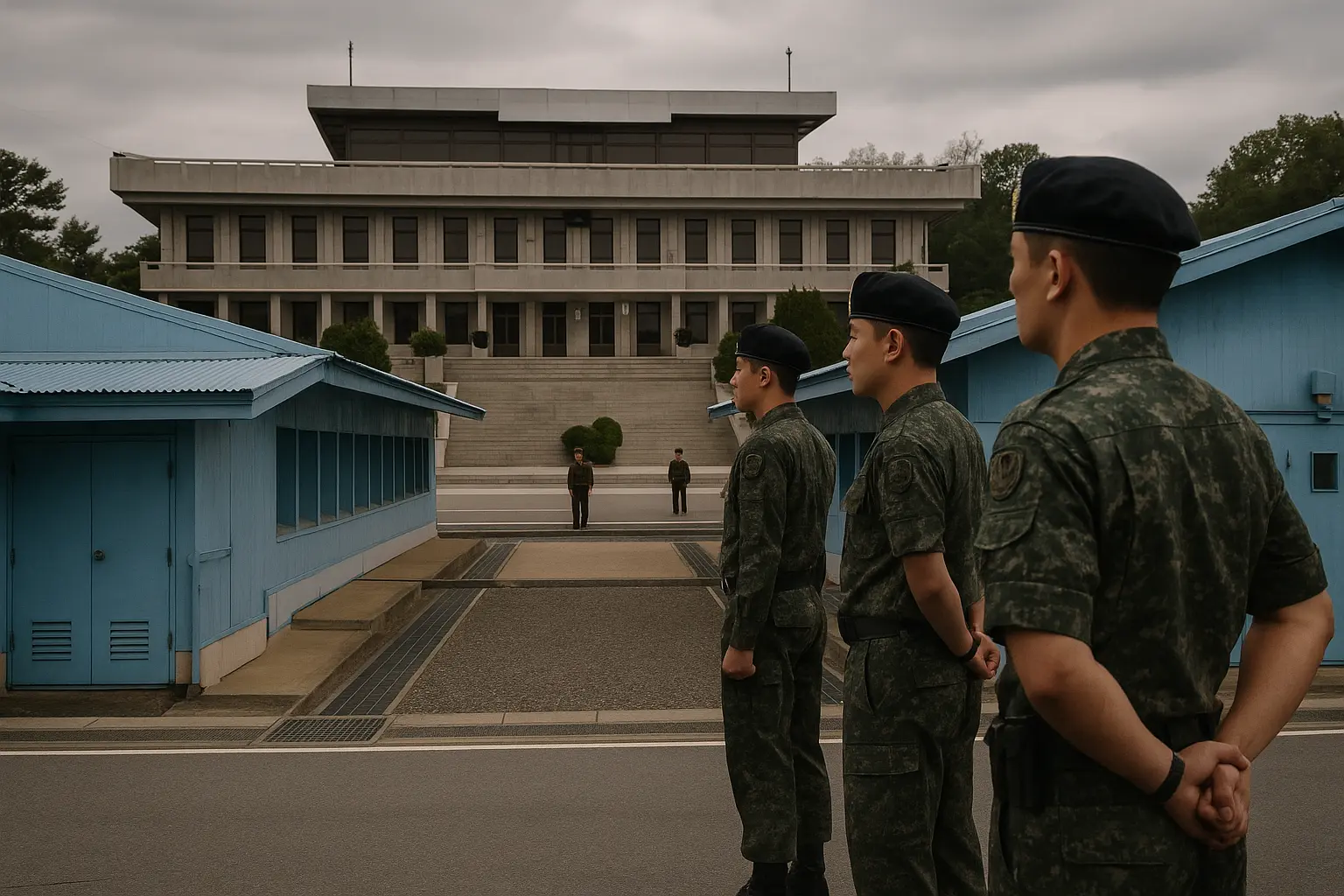
North Korea Slams Denuclearization, Exposes Rifts Ahead of China-South Korea Summit
“Denuclearization, for us, is nothing but a pipe dream concocted by delusional outsiders.” With these fighting words, North Korea’s Vice Foreign Minister Pak Myong-ho shredded what little hope remains for a peaceful Korean Peninsula. The statement, released on the eve of a historic summit between China’s Xi Jinping and South Korea’s newly minted President Lee Jae Myung, throws the entire region’s security into chaos and exposes just how divided Asia has become under growing global tensions.
Pyongyang’s Pipe Dream Taunt: A Thunderbolt Before the Summit Spotlight
As diplomatic red carpets are rolled out in Gyeongju for the long-anticipated Xi-Lee summit, North Korea couldn’t have picked a more explosive moment to pour cold water on the region’s top agenda item. Vice Foreign Minister Pak Myong-ho, with no shortage of bluster, declared that South Korea’s constant denial of North Korea’s nuclear status displays a “lack of common sense and sound logic.” His words echoed across state-controlled media, galvanizing hardliners and signaling to the world that Kim Jong Un’s regime is drawing a toxic red line against denuclearization efforts.
Pak’s rhetoric isn’t just a sound bite. It’s a calculated sledgehammer-aimed directly at the heart of Chinese and South Korean ambitions for security and stability. The timing all but guarantees denuclearization will dominate Saturday’s talks yet be dead on arrival. This apparent “pipe dream” is not just improbable-if Pak is to be believed, it’s impossible. According to reports from Reuters, North Korea feels so secure in its status as a nuclear weapons state that it’s now openly mocking its neighbors for even mentioning disarmament at high-stakes global summits.
“For years, naive Western analysts assumed small carrots and big sticks would force Pyongyang to the table. Instead, they’re watching the regime thumb its nose at every demand-while Beijing and Seoul flounder for answers.”
Both American and South Korean voters are watching these developments and asking the tough question: Does continued dialogue mean anything when the other side disrespects the rules before talks even begin?
Lee Jae Myung Juggles Fire: Caught Between Trump, Xi, and Kim’s Nuclear Shadow
South Korea’s new leader, President Lee Jae Myung, stepped into office in June after his predecessor’s dramatic ouster, but he may be facing a trial by fire unlike any before him. With a regional powder keg threatening to ignite, Lee is being forced to balance powerful, often-opposed interests: the iron grip of American influence-particularly from recently re-elected President Donald Trump-China’s expanding reach, and the ever-present specter of North Korea’s nuclear arsenal.
Xi Jinping’s arrival marks his first visit to South Korea in a staggering eleven years, an unmistakable sign that regional stakes have never been higher. The summit comes off the heels of Trump’s surprise state visit to Seoul, where Lee announced a blockbuster trade deal slashing U.S. tariffs in exchange for a tidal wave of South Korean investment into American industries. The deal was praised by Trump as “history-making,” but critics say it’s a high-wire act that could cost Seoul leverage with both China and the United States if North Korea keeps raising the heat.
Lee, meanwhile, finds himself under pressure on all sides-from voters who want security, from American allies demanding unity against rogue states, and from China, Seoul’s biggest trading partner, which wants stability on its doorstep. As The Korea Times reports, Lee faces the colossal challenge of balancing these alliances and managing the nuclear danger lurking just across the Demilitarized Zone.
“President Lee has inherited a beastly portfolio: keep the economy alive, pacify Trump, please Xi, and somehow convince Kim Jong Un to play nice. Any wrong move could upend not just his career, but regional peace.”
Many in South Korea-and in the U.S.-are starting to realize that Pyongyang’s belligerence isn’t just a local matter, but a warning to the entire free world. Can diplomacy actually tame the North, or are we stuck with a permanent nuclear flashpoint at the doorstep of American allies?
China Plays Both Sides: Strategic Summit or Hollow Theater?
With North Korea tossing grenades into the diplomatic tent, all eyes turn to China. President Xi’s visit to South Korea, coming after a marathon of meetings with world leaders at the Asia-Pacific Economic Cooperation forum, is officially pitched as a move to build trust and lower temperatures in northeast Asia. But observers know Beijing’s calculus is always about maximizing strategic clout-especially as the U.S. and China spar over trade, tech, and regional supremacy.
Xi’s government has long signaled it wants stability and economic growth, not war, on its border. But China remains North Korea’s economic lifeline, cushioning Kim’s regime from the worst of global sanctions. Does Beijing really want Pyongyang to give up the bomb-or is playing both sides too convenient? Publicly, Xi and Lee may issue calls for peace, but as North Korea ridicules the denuclearization agenda, Beijing’s reluctance to pressure its volatile neighbor becomes clear as day.
Meanwhile, Lee has little choice but to keep walking the tightrope. His government must maintain deep commercial ties with China while projecting unity with America in the face of North Korea’s threats. This diplomatic balancing act is harder than ever, and ordinary Koreans aren’t fooled by official statements. Instead, they’re asking: Is this summit mere theater for world cameras-while behind the curtain, nothing really changes?
“You can call for talks and raise hopes for denuclearization, but when one party calls your entire agenda a ‘daydream’ and Beijing refuses to twist arms, what’s left but hollow gestures?”
Some analysts openly question whether the summit can deliver results or if it’ll simply expose how little influence anyone truly has over Kim Jong Un’s nuclear ambitions. Meanwhile, Trump’s America watches-and waits, ready to step in if another crisis breaks out.
The Stark Reality: A Permanent Nuclear North, A Shifting World Order
This week’s drama is more than just diplomatic theater; it’s a warning shot for anyone hoping to roll back Pyongyang’s nuclear advances. North Korea’s official name, the Democratic People’s Republic of Korea (DPRK), is now brandished in every statement emphasizing its sovereign, permanent nuclear status, a direct snub to Seoul’s Republic of Korea (ROK) and the battered concept of a denuclearized peninsula. As Reuters highlights, Pyongyang’s messaging shows no intention of stepping back-only digging in.
For America and her allies, the writing is on the wall. Decades of appeasement, failed summits, and weak-willed engagement have not swayed North Korea an inch. With Washington’s ties to Seoul stronger than ever-fueled by Trump’s recent visit and Lee’s pivot to the West-Korea is now the front line in a grand power game, and the price of failure could be catastrophic.
In the days ahead, this so-called ‘pipe dream’ of denuclearization will be debated by talking heads and diplomats. But unless Beijing decides it’s in its own interest to lean hard on Kim, and unless Seoul and Washington display real backbone, that pipe dream will remain exactly what Pyongyang says it is: a fantasy.
“It’s naive to think a photo op or a state dinner can halt the world’s most secretive nuclear program. Actions-not empty words-will decide who holds the balance of power in Asia.”
As the Xi-Lee summit unfolds, every conservative American should be watching-and demanding answers. Are our allies truly committed to facing down rogue regimes, or do their own economic interests undermine the cause of global security? With 2026 fast approaching and tensions peaking, one thing is clear: the battle lines on the Korean Peninsula are drawn, and the world’s attention is-and must remain-locked on Gyeongju.