
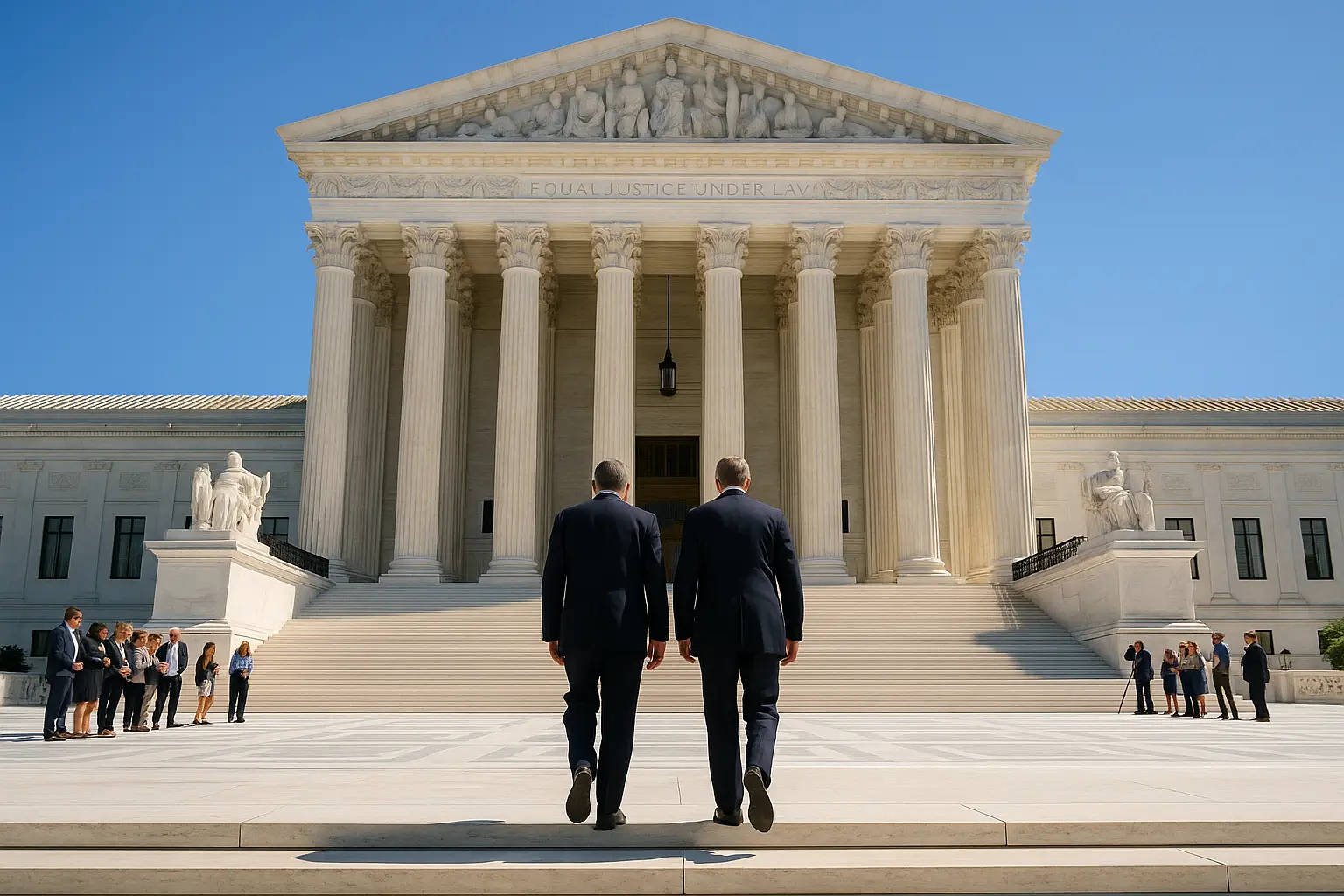
Supreme Court Shock: Thomas, Alito Refuse to Retire, Closing Door on Trump’s Next Pick
‘The strength of the American republic depends on steady hands and unwavering convictions.’ Those words from a senior Republican strategist echo across a conservative movement that just collectively exhaled: the Supreme Court’s iron-willed titans, Justices Clarence Thomas and Samuel Alito, are not going anywhere. In one of 2026’s biggest judicial bombshells, sources verified Friday that neither justice plans to step down at the end of the Supreme Court’s term. For President Trump, Senate Republicans, and the entire balance of constitutional power, the stakes could not be higher-and this decision will impact the midterms and our nation for years to come.
No Retirement, No Surrender: Alito and Thomas Defy Beltway Hysteria
The chatter in D.C. was relentless. Swirling rumors hinted at retirement plans as Justice Alito, age 76, faced a health scare at a Federalist Society dinner this March. Yet, while the mainstream press speculated, conservative circles knew better. Alito bounced back in just days-sources say he was treated for dehydration and resumed his duties the following Monday, utterly unfazed by the storm of media hype.
Emphasizing his drive to continue, Alito has already committed to “his full complement of law clerks for the coming term,” according to Fox News. For those uncertain about the justice’s intentions, the message is crystal clear: Alito is here to stay, driving originalist jurisprudence forward when America needs it most.
Justice Clarence Thomas, 77, has been a continual force on the Court since his confirmation over three decades ago. Despite constant left-wing pressure campaigns and frequent questions from Beltway pundits, Thomas has offered “no public indication that he plans to retire this year,” as reported by Business Recorder. Instead, those close to both justices claim their resolve is stronger than ever, fueled by a sense of duty in what may be the most consequential period in decades for the Supreme Court.
“It’s typical for the opposition to dream about flipping the Court, but the conservative majority is as strong-and as stable-as America has ever seen,” said one senior Federalist Society fellow.
The decision by Thomas and Alito to remain effectively ends any speculation about a surprise vacancy before this year’s pivotal midterms. For Republicans, that means stability; for Democrats, a bitter defeat.
Trump’s Fourth Nomination: Window Closes for an Epic Showdown
Speculation about a historic Trump pick has reached fever pitch in recent months, with the president himself stoking the flames. In a now-viral interview, Trump openly mused: “In theory, it’s two-you just read the statistics-it could be two, could be three, could be one… I’m prepared to do it.” He even lauded Alito as a “great justice,” sending D.C. insiders into overdrive just weeks ago.
Now, with Thomas and Alito refusing to step aside, Trump’s immediate opportunity to further cement his conservative stamp on the Court is off the table. As the only modern president to have seated three originalists in a single term, Trump’s influence already looms large. But sources on Capitol Hill confirm that no fourth nomination is in the cards-at least not before the November midterms. Senate Majority Leader John Thune made clear to the Washington Examiner that “Republicans would be prepared to confirm” a new justice if required, vowing that any vote would be held without delay, election-season drama be damned.
The timing is everything. If Thomas or Alito were to retire now, Trump would likely have enough GOP support in the Senate to push another nominee through-even with the chamber’s control up for grabs. But their decision locks in the Court’s 6-3 conservative majority, insulating it against partisan swings and judicial activism from the left.
“This isn’t just a win for originalism-it’s a generational shield for constitutional liberty,” a leading Heritage Foundation analyst told RedPledgeInfo. “With Thomas and Alito holding firm, President Trump’s legacy is safe, and the Court remains a bulwark against overreach.”
The ramifications reverberate beyond judicial appointments. For grassroots conservatives, the move brings reassurance: America’s constitutional foundation won’t teeter-no matter how hard progressives push. The window for a fourth Trump nomination is now officially closed, putting the onus on voters and lawmakers to defend the majorities that protect the Court.
What’s at Stake: The Future of the Court, the Midterms, and the Nation
This isn’t just another D.C. parlor game. The refusal of Thomas and Alito to budge comes as the Court prepares to issue critical rulings by late June or early July-including cases on mail-in ballots, deportation protections, and even birthright citizenship. All are issues with direct implications for American elections, border security, and the scope of executive power.
For the GOP base, the Supreme Court’s role as an arbiter of constitutional sanity has never been more important. Without the specter of a sudden vacancy, Republicans can focus resources on winning critical Senate seats and defending their hard-won majority, instead of being distracted by a bruising confirmation war. Grassroots energy is surging, with Trump himself promising he’s “prepared” for any situation but reminding supporters that “every Senate seat is vital for the courts.”
Some have questioned whether Alito’s high-profile activities-like his forthcoming book, So Ordered: An Originalist’s View of the Constitution, the Court, and the Country, due this October-hinted at a farewell. But experts say it’s nothing more than a chance for the justice to shape the legal debate, not an exit sign. In fact, as Newsweek and other outlets confirm, discerning observers interpret the book as “reaffirming” Alito’s presence, not signaling departure.
“Democrats thought they could count on time to flip the Court. Instead, they encountered the resolve of justices who see their oath as a lifelong mission,” said a Judicial Crisis Network spokesperson.
On social media, the backlash from progressive activists was immediate. Viral posts declared the news “devastating” and “a gut punch for anyone hoping for change on the Court.” Left-wing pundits fumed about “reactionary entrenchment,” while leading conservative influencers unleashed a flood of #ThankYouAlito and #StandWithThomas messages across the platforms. The contrast could not be starker: what’s agony for the left is an unqualified victory for the right.
With the Supreme Court’s conservative supermajority intact, President Trump and Senate Republicans head into the 2026 election season with a powerful legacy and a clear message: the Constitution remains protected, judicial radicals are kept at bay, and Washington’s would-be revolutionaries can only watch in frustration. The next battle shifts squarely to the polls-where the Senate majority, the future of the courts, and America’s very direction hang in the balance.