
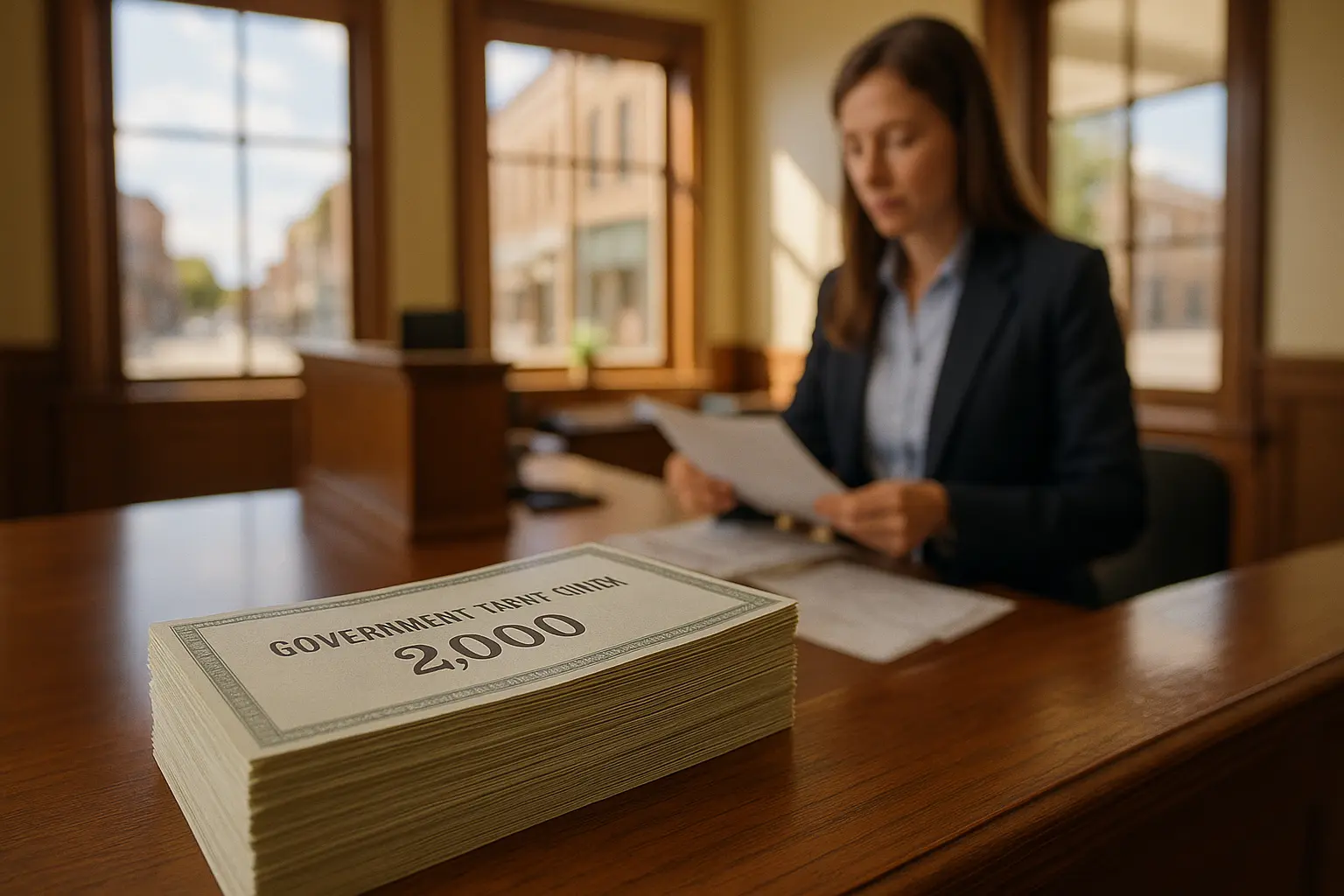
Cabinet Showdown: Trump Pushes $2,000 Tariff Checks, Fed Shake-Up, and $18 Trillion Investment Surge
‘America is winning again-big league,’ President Trump boomed, kicking off the final Cabinet meeting of 2025 with a thunderous promise that had the entire country talking. Americans across the heartland are eager to learn what Trump’s next economic blitz means for working families-and whether historic $2,000 ‘tariff dividend’ checks are really coming to their mailboxes.
Trump Drops Economic Hammer: Tariff Rebate Checks and Fed Chairman Out
If you thought the Trump Administration’s second act would be quieter, think again. This week President Donald Trump electrified the country with a marathon Cabinet meeting, unveiling a blizzard of massive initiatives that sent shockwaves from Wall Street to Main Street. Most jaw-dropping of all: his direct pledge to ship out $2,000 tariff dividend checks to Americans by mid-2026, focusing on moderate and middle-income households. The president made it clear-this cash is coming straight from the surging tariffs imposed on countries like the EU, Japan, and South Korea. No Washington gimmicks, no borrowing from the Chinese, said Trump, just hardball, America-first deals funding families back home.
But the drama did not stop at rebate checks. Trump stunned markets by announcing his intent to “find fresh leadership” at the Federal Reserve, hinting at the ouster of embattled Chairman Jerome Powell. The move followed reports that Wall Street was jittery over Powell’s reluctance to embrace Trump’s economic vision-but the President shrugged off critics. “I want a Fed that puts American growth first. No more timid, globalist bankers in charge of our money supply,” Trump fired. Boasting about $18 trillion in new investment commitments secured under his watch, the president hammered home his belief that the U.S. economy is on an unprecedented winning streak. “That’s 18 times what the previous administration ever dreamed of,” Trump bragged, referencing the anemic investment numbers under Biden.
Cabinet members lined up to echo the president’s triumphs. Defense Secretary Pete Hegseth reported “historic” recruiting and retention in U.S. forces, crediting Trump’s axing of divisive ‘diversity, equity, and inclusion’ initiatives and a refocused war against the drug cartels. Hegseth was unapologetic about authorizing a daring strike on a suspected narco-vessel, stating, “We can’t fight 21st-century threats with 20th-century restraint.” Trump nodded approvingly, saying, “The world will learn not to mess with us.”
“By next year, Americans will have tangible proof of our winning trade war: $2,000 made-in-America checks in their mailboxes-funded by our tariffs, not your taxes,” Trump declared.
While the base cheered, some D.C. insiders whispered anxiety. Treasury Secretary Scott Bessent and a handful of Republican senators have voiced concerns about using tariff cash for massive rebates, arguing the funds should instead help narrow the national deficit. “America’s books still must balance,” Bessent carefully warned. But for Trump, the answer is simple: “Send it back to the people. Let families, not bureaucrats, decide how to spend America’s winnings.”
Behind the $2,000 Tariff Checks: Boon for Main Street or Political Gambit?
What will it really take to put $2,000 per American into kitchen-table budgets? According to Treasury officials, the plan could target tens of millions, likely focusing on households earning under $150,000 a year. The president’s economic team confirmed the first round of checks could arrive by summer 2026-yes, just in time for the heat of the next midterm elections. It’s a bold new spin on ‘trickle-down economics’: money isn’t trickling, it’s roaring out in direct payments.
However, not every expert is convinced the tariff revenue war-chest is deep enough. Economists point out that tariff revenues for 2025 are estimated between $200 and $300 billion, while Trump’s proposal could cost $600 billion or more annually for universal payments. The administration has countered by emphasizing new deals are boosting tariff flows at a stunning pace and that restricting payments to moderate-income brackets could make the numbers workable. Still, some Congressional Republicans are urging the White House to consider deficit reduction before writing massive checks-while populist conservatives hail the direct rebate as a defining blow against globalist trade policies.
The checks themselves aren’t the only headline-grabbers. President Trump dropped a second economic bomb, telling Cabinet members he envisions a near future where tariff income could “potentially eliminate or drastically reduce the need for income taxes.” In a stunning comment reported by Fox 5 DC, Trump theorized, “We’re taking in so much from these tariffs, we might just…lower or end the income tax for working families in a few years.” It’s an audacious promise straight out of the conservative wish-list-and sure to become a main line of attack in the coming campaign cycle.
“Some people doubted we could ever bring jobs and factories back. Now we’re returning the money-real, tangible money-straight to American families,” Trump insisted as Cabinet members nodded along.
Yet as details swirl, there are hurdles ahead. The Supreme Court is reviewing the legality of the current tariff structure, with critics charging that Trump’s use of emergency powers may stretch legal boundaries. And crucially, Treasury Secretary Bessent acknowledged that Congressional approval will be required for the $2,000 checks-a process sure to bring bruising debates on Capitol Hill, where Democrats are already lining up to call the rebates a “political bribe” ahead of the midterms.
Americans React: Populist Cheers, Beltway Pushback, and the Countdown to 2026
The real shockwaves may not be rippling through think tanks or boardrooms-but in American living rooms, on social media, and across the battleground states.
Shortly after the Cabinet meeting’s livestream, #TariffDividend trended on X (formerly Twitter), with users like @HeartlandMom cheering, “MAGA means cash in my mailbox. About time politicians took care of us instead of China!” Others, like @FiscalConserv88, voiced skepticism: “This sounds great until the bill comes due. Hope Congress keeps an eye on the bottom line.” Left-leaning influencers naturally dismissed the plan as “legalized election buying,” but they failed to stem the digital excitement rolling through conservative, working-class communities. Even die-hard skeptics admit: if Trump delivers, his political capital will soar.
In battleground states like Pennsylvania and Wisconsin, union members and small business owners find themselves wary but hopeful. “I’d rather see money from tariffs than a new welfare handout,” said Tom, a machinist from western Pennsylvania. “It feels like we’re finally getting our share.” Similar enthusiasm echoed from the Sun Belt, with suburban swing voters openly debating what a $2,000 lump sum could mean for family budgets battered by inflation and global uncertainty.
“I want my dividend check! Make China pay!” posted a user from Michigan, capturing the defiant populist mood that powered Trump back to the White House in 2024.
Meanwhile, Trump’s Cabinet hammered home less-publicized but hard-hitting wins. The president crowed about massive price declines on groceries: Thanksgiving turkeys were down 33% from last year and egg prices had plummeted 86%, blowing up the establishment narrative of ‘runaway inflation’. These wins, Trump argued, are the tangible fruits of America-first policies that the “D.C. globalist elite said would never work.”
Even as economic naysayers fret, Trump’s team is betting that these ‘dividend checks’ become a permanent new feature of conservative populism, strengthening his team’s prospects in next year’s pivotal congressional showdowns. The big questions remaining: Can the legal, fiscal, and political hurdles be overcome? And if so, does the rest of Washington dare to block direct payments to Main Street-right as the MAGA machine gears up for the 2026 midterms?
With the debate heating up, one thing is certain: Trump’s plan to turn global trade battles into kitchen-table victories has energized a conservative base and forced a reckoning about who really benefits in America’s Third Economic Revolution. On the streets, at town halls, and across social media, the question is growing louder: Is this just a headline-or the start of a genuine worker-first transformation?
Stay tuned to RedPledgeInfo as we track the very latest on the proposed $2,000 tariff dividend checks, ongoing Fed shake-ups, and the political fireworks already building for 2026. When Main Street wins, America wins.