Elon Musk Calls for the EU’s Abolition After X Faces Huge Politicized Fine
‘A faceless bureaucracy in Brussels tramples freedom of speech while hiding behind empty slogans. Time to return power to the people.’ – Elon Musk, on X, Dec. 6, 2025
Billionaire Revolt: Why Musk Declared War on the EU’s Political Machine
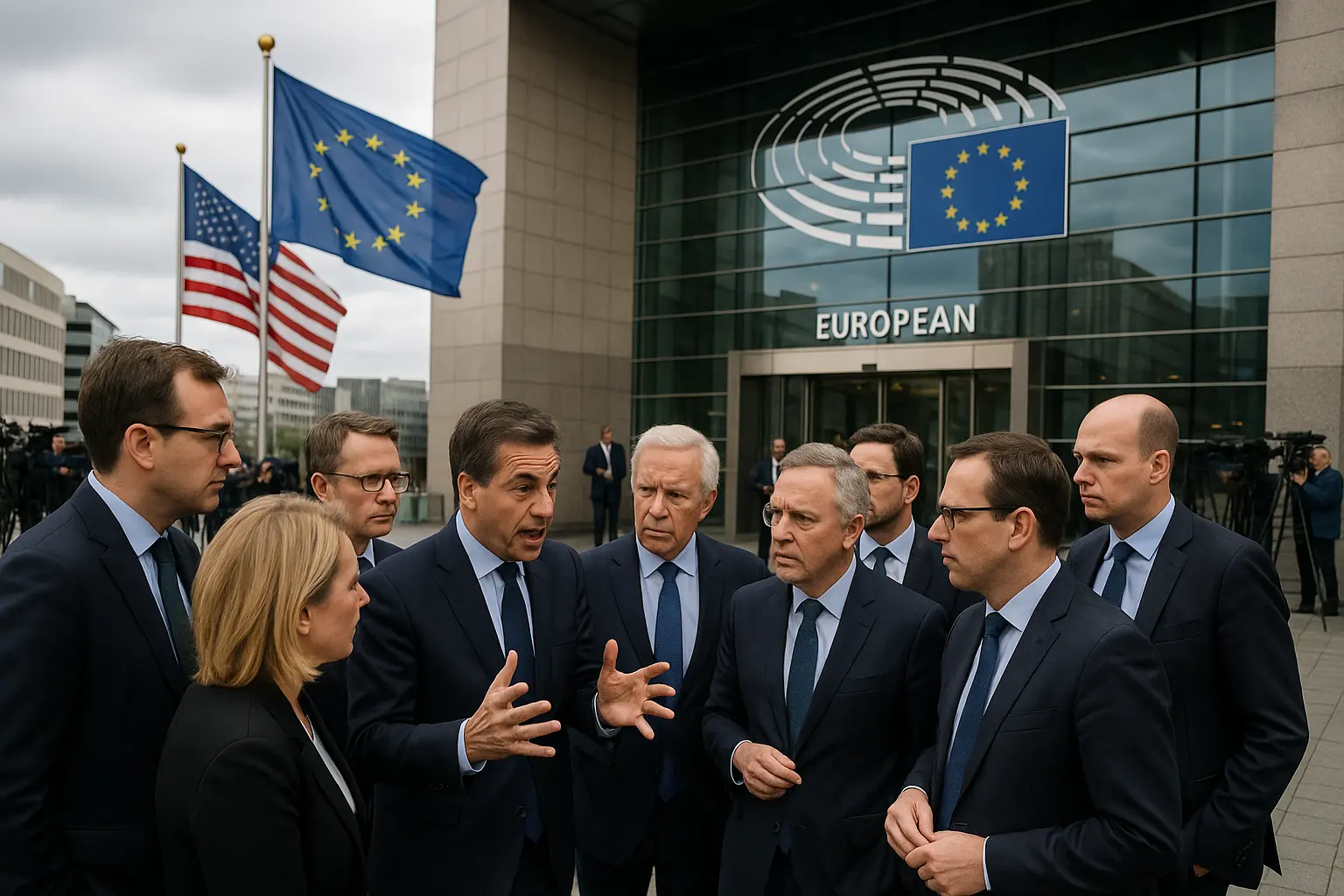
This week, American entrepreneur and X (formerly Twitter) owner Elon Musk set the political world on fire, demanding nothing less than the total abolition of the European Union and the return of sovereignty to individual European countries. Musk’s bombshell comes on the heels of a jaw-dropping €120 million fine slapped on his X platform by the European Commission-a penalty many are calling a weaponized attack against free speech and American tech dominance.
According to Cadena SER, Musk’s call for the end of the EU arrived fast and furious after European officials accused X of breaching the Digital Services Act. The fine, announced December 6, 2025, is being widely interpreted as political retaliation from Brussels, furious over Musk’s relentless refusal to censor speech the bureaucrats find inconvenient.
The Digital Services Act (DSA), a mammoth regulatory framework passed by the unelected technocrats of the EU, famously targets so-called “misinformation” and compels Big Tech companies to police thought online-a direct affront to the American notion of the First Amendment. The European Commission claimed X failed to comply with several aspects of the DSA: a “misleading” blue badge verification system, lack of transparency in records of paid advertising, and failure to provide researchers with access to public data. But Musk’s defenders say these are flimsy pretexts designed to punish X for questioning EU orthodoxy.
Musk did not mince words in his latest post: “Abolish the EU. Give sovereignty back to nation-states. Central planners should not dictate speech for millions. Freedom matters more than bureaucrats.” The statement lit up global headlines and social media feeds, with opponents accusing Musk of overreach and supporters hailing him as a freedom fighter taking on the colossus of woke Europe.
And the firestorm is only growing. U.S. politicians are piling in, with rumors swirling that the White House pressured Brussels to back off the fine in private, anxious about what a full-blown transatlantic tech war could mean for the 2026 election.
Washington Versus Brussels: American Leaders Slam EU’s Aggressive Attack on X
The EU’s crackdown was not lost on American lawmakers, many of whom see the fine as an existential threat to both U.S. technology companies and fundamental rights. Within hours of the decision, U.S. Secretary of State Marco Rubio blasted Brussels’ move as “an attack on not only American tech, but the rights of the American people being trampled by foreign governments.” Deputy Secretary Christopher Landau piled on, slamming the growing rift between NATO partnership and EU antagonism, declaring, “transatlantic relations are at risk from heavy-handed EU policies”.
The White House, meanwhile, is walking a tightrope. On one hand, President Trump and his administration remain bullish on NATO’s security guarantees, stressing the U.S. commitment to European defense. On the other, the administration is privately furious that the EU’s unaccountable bureaucrats have chosen to target American businesses-in what many view as a naked power grab designed to advance anti-American and pro-globalist interests.
One senior national security official was overheard in Washington cocktail circles: “The EU’s crusade for censorship and economic suicide-climate fanaticism, open borders, stifling innovation-runs counter to everything that made both America and Europe successful. We’re not going to stand for American speech being micromanaged from Brussels.”
Meanwhile, on Capitol Hill, conservative lawmakers are openly calling for reciprocal action. Some, emboldened by Musk’s rebellious stance, are urging Washington to impose targeted sanctions on EU digital officials and restrict their access to American-made technology. The gloves, it seems, are finally coming off.
But not everyone is thrilled by this newfound American assertiveness. Polish Prime Minister Donald Tusk shamelessly leapt to the EU’s defense, grandstanding that Europe is America’s “closest ally” and that “cooperation is essential for shared security.” Polish liberals have been quick to demand that Musk apologize, while transatlantic NGOs accuse the billionaire of emboldening “extremist” and “populist” movements across the continent.
Europe in Turmoil: Nationalists Cheer as EU’s Grip Wobbles Under Scrutiny
It’s not just Silicon Valley and Washington that are paying attention. Ordinary Europeans-especially those already weary of years of escalating EU overreach-are rallying behind Musk and openly challenging their governments to put sovereignty back on the agenda. Nationalist and populist parties in France, Italy, Germany, and Spain have seized on Musk’s words, flooding social media with calls to dissolve the union and restore local control.
Dmitry Medvedev, Deputy Chairman of the Russian Security Council, wasted no time embracing Musk’s pitch. Medvedev declared the EU project “irreparably broken,” cheering that “sovereignty should never have been ceded in the first place-let every country stand tall again.” Predictably, legacy media outlets shrieked that Musk is “interfering in foreign policy” and even compared him to infamous Brexit campaigners. But Musk’s supporters see vindication in these reactions: he’s forcing uncomfortable truths into the spotlight.
The EU’s so-called Digital Services Act was always a Trojan Horse for thought control. The law, as reported by The Atlantic, is billed as a tool to “curb illegal content, increase transparency, and tackle disinformation,” but activists on both sides of the Atlantic warn it’s really about stifling dissent and crushing conservative voices under the weight of globalist red tape. X has faced probe after probe since Musk’s liberation of the platform, each one more clearly designed to intimidate and shame those who won’t play ball with the EU’s central planners.
Eyebrows are being raised across Europe as even top diplomats question the wisdom of Brussels’ current power grab. Quietly-sometimes not so quietly-Paris is whispering that French sovereignty must come before EU dictates, Berlin is grumbling about “economic suicide” masquerading as climate policy, and in Madrid, right-wing parties are demanding a referendum on EU membership. With European Parliament elections just months away, Brussels’ empire looks shakier than ever.
The timing couldn’t be more explosive: Nationalist parties have gained ground in polls from Amsterdam to Vilnius, promising to “take back control” and rejecting the meddling of unaccountable technocrats. If the EU’s bullying of Elon Musk was supposed to send a message, it may have backfired spectacularly-inspiring the continent’s next great sovereignty movement.
Europe’s Future at Stake: 2026 Election Looms Amid Calls for Sovereignty
Beyond the headlines and hashtags, one thing is clear: Europe’s future direction will be shaped by the fights unfolding around this historic moment. The choice couldn’t be starker-globalist consolidation, censorship, ever-deeper integration under Brussels, or a return to genuine national democracies, accountable only to the people they serve.
As the EU’s defenders try to play down the political earthquake unleashed by Musk, the surge in conversations around sovereignty and free speech is impossible to ignore. Social media is brimming with hashtags like #AbolishTheEU and #SovereigntyNow, with X users from the U.S., Poland, Hungary, and even Sweden demanding a new era of accountable leadership. Old guard eurocrats scoff, but a new generation is simply not buying the old narratives.
“Elon Musk said what millions are thinking: It’s time to take our countries back,” commented one viral post from Spain. “Brussels had its chance. Enough is enough.”
As European Parliament elections approach in 2026, voters are watching. Will the continent cling to crumbling institutions? Or will bold voices-energized by figures like Elon Musk-steamroll the status quo and force a reckoning over what freedom, sovereignty, and democracy mean in the 21st century?
With the Trump administration already turning up the heat on Brussels and new nationalist coalitions forming by the month, the answer may be closer than the eurocrats fear. And as Musk’s critics and admirers alike know all too well, once the battle for sovereignty begins, it rarely ends quietly.