
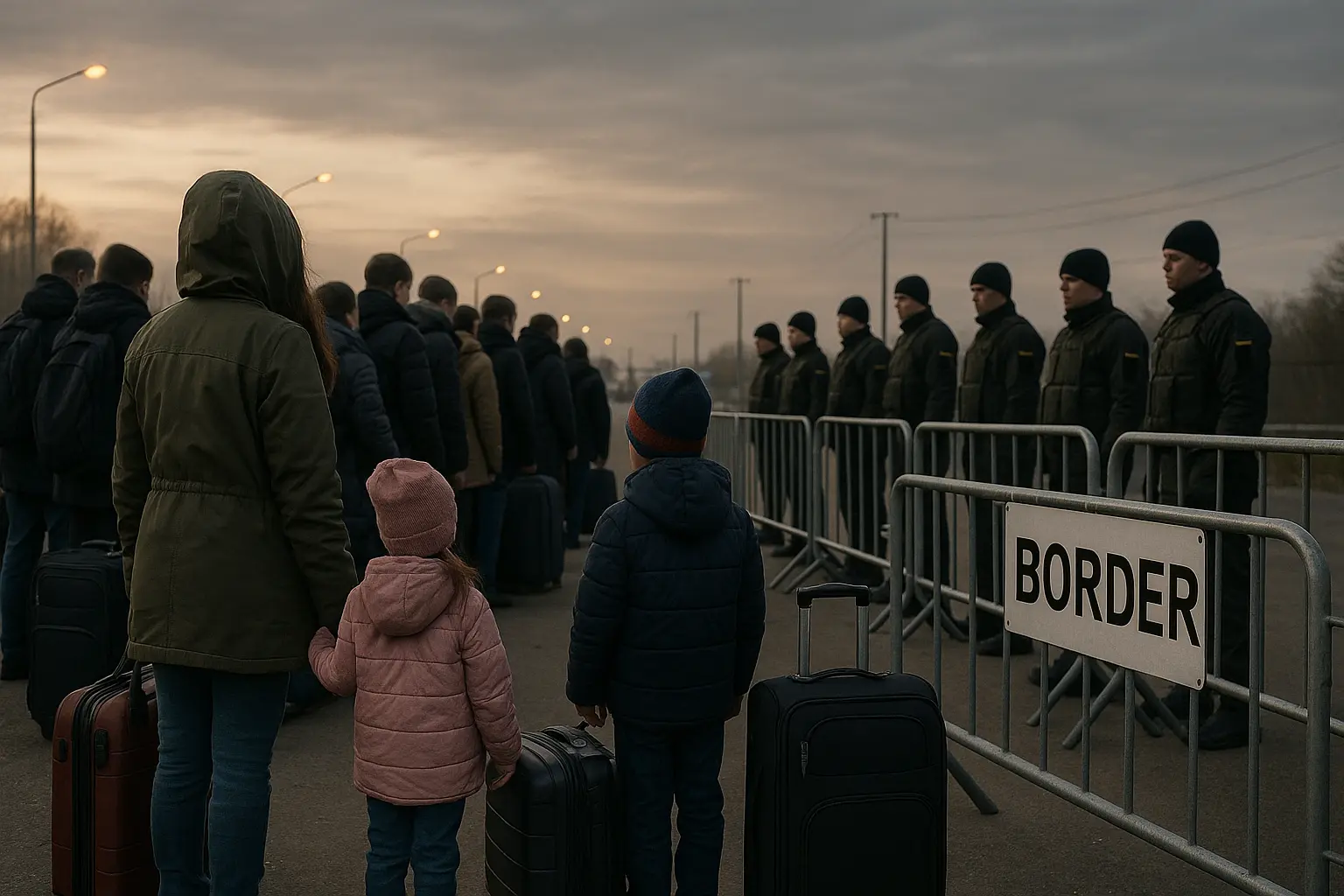
Trump’s DHS Slams Door on Family Reunification Parole, Cites Massive Security Threat
The End of Open-Door Loopholes: DHS Delivers on National Security Promises
“The desire to reunite families does not override our responsibility to keep America safe,” declared the Department of Homeland Security this Friday, sounding the final death knell for controversial family reunification parole (FRP) programs that have quietly let untold thousands dodge rigorous immigration scrutiny for years. President Trump’s administration made good on a central campaign pledge by halting all categorical FRP programs for would-be migrants from Colombia, Cuba, Ecuador, El Salvador, Guatemala, Haiti, and Honduras-a move that throws the brakes on an Obama-era relic that immigration hardliners have long decried as a backdoor for abuse and fraud.
Why the sudden urgency? DHS head honchos say it’s about plugging gaping holes in our borders, tightening national security, and ending years of unchecked loopholes. Beneficiaries of approved immigration petitions from the affected countries had been able to enter the U.S. before their cases were finalized, simply based on government “parole”-a discretionary authority meant for individual emergencies, not wholesale processing of tens of thousands.
“Poorly vetted and questionably processed, these programs allowed people to leapfrog the system and exposed Americans to serious risks,”
The new cutoff date is as blunt as the message: for those in the U.S. on this now-defunct status, the clock stops on January 14, 2026. If eligible family members have not applied for permanent residency by December 15, 2025, it’s pack your bags and say goodbye. According to NBC 6 South Florida, the DHS officially signed the order Friday, ending the program for all seven countries. It’s a reset long demanded by conservative lawmakers, border agents, and families alarmed by rising crime and overwhelmed schools and hospitals.
Blowback Begins: Immigration Advocates Rage as DHS Cites National Security and Fraud Threats
Lawyers, left-wing activists, and immigration advocates are already sounding the alarm bells. Miami immigration attorney Patricia Elizée fumed, “These people were invited to come to the U.S. by the government and followed all of the regulations, and now they are being pushed out.” That refrain, echoed by pro-immigration groups nationwide, glosses over the reality: the FRP programs made it far too easy for would-be migrants to bypass the very security checks designed to protect Americans. Instead of a sober, case-by-case approach to humanitarian parole, the programs operated like a revolving door.
Behind the public outcry, DHS painted a clear picture of just how reckless and out-of-control things had become. Fox News highlighted the agency’s warning that poorly vetted individuals were slipping through the cracks, leaving the U.S. wide open to exploitation by malicious actors. The parole authority, originally designed for exceptional situations, had been warped into a mass migration machine, and-according to DHS-an unacceptable national security risk.
“We cannot prioritize convenience over security. The threshold must be higher,”
insisted a senior official. DHS did not mince words: all employment authorization tied to these parolees will also be revoked on January 14. Those who fail to file for adjustment of status by mid-December next year will have to leave or face removal proceedings-a long-overdue assertion of law and order in a system many felt had become lawless.
Social media reaction to the announcement was predictably divided. While liberal activists blasted the move as “cruel,” swarms of conservative users applauded, arguing that the reunification parole program had been an open invitation to fraudulent actors and overwhelming costs. The hashtag #SecureOurBorders surged to the top of X (formerly Twitter), with thousands calling this Trump policy shift the “first real crackdown in years.”
Inside the Policy Shift: What It Means for Families, Immigration, and America’s Security
The programs now facing their end let beneficiaries of approved I-130 petitions-relatives of legal residents or citizens-skip the wait overseas and enter the U.S. while their paperwork wound slowly through the system. As explained by the Catholic Legal Immigration Network, this was never the original intention of parole authority, and critics warned it left huge holes for fraud and abuse, since many applicants could not be fully and reliably vetted overseas.
DHS has now drawn a hard line, insisting that those who do not apply for adjustment of status by December 15, 2025 will lose their ability to remain in the country. Those who make the deadline can stay while their case is processed, but if their application is denied after January 14, they’ll need to leave immediately or be deported. The rollback affects employment rights as well; work permits issued under these FRP programs are headed to the shredder.
“This is about restoring Congress’ original intent and making sure only the deserving-those who follow the rules and pass security reviews-make it to our shores,”
said a DHS spokesperson. For years, critics have complained that the programs’ very structure forced Americans to absorb risk: not only possible fraud, but rapid assimilation difficulties, welfare burdens, and rising criminal infrastructure networks. The end of this era signals a dramatic change in U.S. immigration policy, one that places the American family-rather than foreign claimants-back at the center of the equation.
What comes next? Expect a flood of litigation, angry op-eds, and shrill cable news segments defending open border schemes. Yet as Trump’s reelection mandate made clear, the country is demanding clarity and security-not another round of unvetted arrivals under the dubious banner of “family unity.” On the campaign trail, Republicans are already touting the move as evidence that the president has the courage to do what’s right, even in the face of elite outrage and activist glare. As the 2026 midterms approach, one thing is certain: Americans will be watching to see whether hard-nosed security and commonsense immigration enforcement remain the winning formula.