
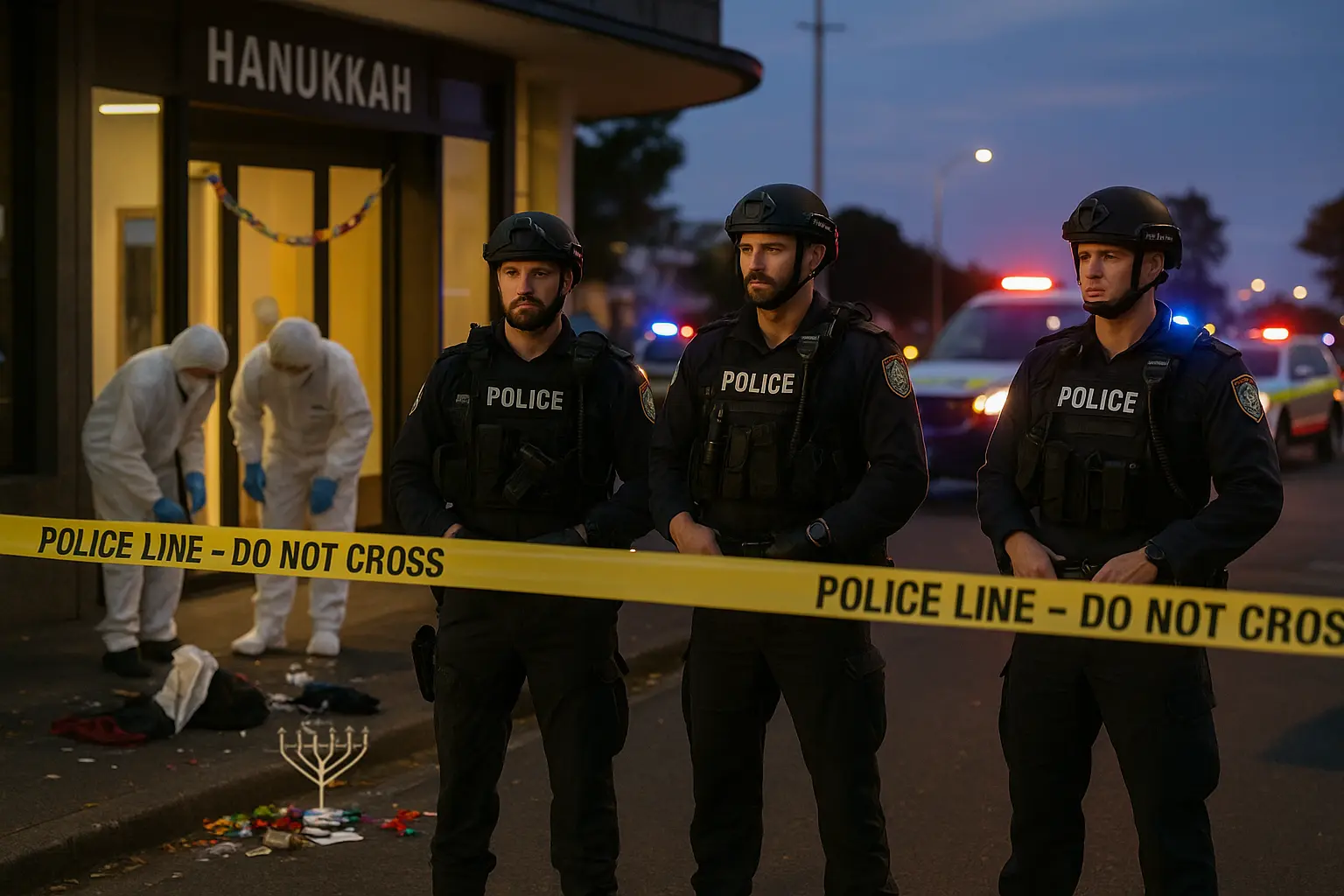
Australia Shattered: Bondi Beach Hanukkah Massacre Suspect Faces Avalanche of Terror, Murder Charges
‘It felt like the world stopped,’ a survivor told reporters-her words echoing the cold terror that washed over Bondi Beach on December 14, 2025. The aftermath is being felt around the world, especially among Jewish communities, as fresh details emerge that paint a grim picture of Australia’s deadliest mass shooting in nearly three decades.
Bondi Beach Plunged Into Chaos: How A Hanukkah Celebration Became a Terrorist Nightmare
Bondi Beach, usually the crown jewel of Sydney’s coastal life, erupted into unspeakable horror just as families gathered for a Hanukkah celebration. As dusk fell, nearly 1,000 attendees flooded Archer Park, sharing music, dancing, and prayers. Then, out of nowhere, the calm shattered: gunfire, screams, and utter chaos.
Naveed Akram, 24, has now been charged with an eye-watering 59 offenses – including 15 counts of murder, 40 counts of attempted murder, terror-related crimes, discharging firearms into a crowd, and even placing explosives at the scene. Police allege Akram, inspired by ISIS ideology, together with his father (who was killed by police at the scene), sought to inflict maximum carnage on innocent men, women, and children who were guilty of nothing except their faith and their presence.
The carnage was unsparing: victims included a beloved local rabbi and father of five, a 10-year-old girl named Matilda, and Australians of all ages. Two police officers found themselves in the line of fire, wounded as they scrambled to shield terrified onlookers. Homemade explosive devices and ISIS flags were found in the suspects’ vehicle, unmistakable evidence that the slaughter was no random act but a coldly calculated attack on Australia’s Jewish community and public safety.
“These are the kind of terrorist acts we’ve watched from afar, always hoping it would never touch our soil,” said Rabbi David Silver. “Now, Bondi Beach is a crime scene.”
Observers, security experts, and a shocked public all agree: this was Australia’s deadliest mass shooting since the infamous 1996 Port Arthur massacre. The pain is raw, the community’s scars deep- and the question echoing through every home: how did this horror unfold in the heart of supposedly safe, welcoming Sydney?
Islamist Terror and Political Failure: How Did Radicalization Slip Through the Cracks?
This attack didn’t happen overnight. Early evidence confirms the two attackers were father and son-a homegrown Australian duo who had recently returned from a trip to the southern Philippines, a region notorious for Islamic State-linked training operations. Australian authorities, already on edge from years of rising radicalization in urban centers, are now being grilled over just how these suspects evaded detection-even as investigators trawl through online posts, encrypted chat rooms, and import logs.
Police say Naveed Akram showed no remorse: he declined interrogation, providing no cooperation to detectives. His father died in a hail of police gunfire, leaving few answers for desperate families searching for closure. The Australian public is now demanding a full accounting-how could one of the youngest attackers in recent history, already exposed to foreign militant hotspots, return unchecked and plan such devastation?
NSW Police Commissioner Mal Lanyon has admitted authorities waited for Akram’s condition to stabilize before charging him, “so he would have the appropriate cognitive ability to understand proceedings,” a move that has left some victims’ families feeling frustrated. “We need him to understand what is exactly happening,” Lanyon explained. But for many, the explanation rings hollow-thousands now question why suspected terrorists ever walk the same streets as law-abiding citizens in the first place.
A social media comment summed up public anger: “How many more funerals before we actually screen these so-called refugees and radicals properly?”
With national elections looming, conservative critics argue left-wing immigration and lax law enforcement have once again failed everyday Australians. Investigators confirm both attackers had returned from areas rife with Jihadist recruiters-yet no alarms were sounded at the border, and the pair attended local mosques known for radical preaching. Neither the New South Wales Premier nor Australia’s prime minister has offered a full explanation, fueling fears that political correctness blinded authorities to simmering threats.
The Philippines government has denied being a terrorist training ground and dismissed Australian claims that militants received operational support abroad. Yet, as evidence mounts that both suspects brought back ISIS materials, many Australians are asking: Who is watching the gate-and who is really accountable for this catastrophic intelligence failure?
Shockwaves Through Australia: Jewish Communities Demand Security, Leaders Promise Action
The shock hasn’t worn off-and neither has the anger. The first funerals for victims began beneath a blanket of police protection, rabbis speaking in trembling voices about the danger facing their congregations. For Jewish Australians, this strike at a sacred holiday celebration underscores what many have feared: that homegrown terror is on the rise. Australian Federal Police Commissioner Krissy Barrett has called for solidarity, telling the community, “You do not and you should not share this grief alone.” But sympathy is not enough as trust in Australia’s promises of security wavers.
Many Jewish leaders point to global trends-attacks in Europe and America, surges in anti-Semitism on university campuses, and the growing audacity of Islamist radicals. The Bondi massacre has put fresh pressure on Canberra as faith groups demand an overhaul in law enforcement tactics, intelligence-sharing, and border security. Survivors and advocates highlight the risk of returning foreign fighters and criticize the government’s “reluctance to call Islamist terror what it is.”
Outside the synagogues, the conservative grassroots are rising. Local politicians in New South Wales have already announced legislative proposals mandating tracking bracelets for suspected returnees from terror hotspots and expanded state surveillance powers. Opposition leader Jason Turner has called for a Royal Commission into intelligence failures, while Prime Minister Anthony Richards faces fierce calls to resign from right-leaning media. High-profile conservative commentators are circulating demands for increased penalties, tougher immigration vetting, and expanded counter-terrorism funding. It’s a debate set to dominate every town hall and living room conversation as next election’s shadow looms.
“It is time to stop fearing accusations of Islamophobia and start protecting our communities,” roared radio host Greg Masters. “If we don’t, Bondi will just be the beginning.”
Meanwhile, the victims’ families are left grieving lives snuffed out in mere moments-including children, young parents, and cherished elders. With funerals underway, trauma counselors say the community may not recover for decades. One woman summed it up best: “This will haunt us. But we won’t surrender our way of life-no matter the threat.”
The charges against Naveed Akram send a clear message: terror will not go unanswered. But as Australians gather at vigils and demand new security measures, the biggest question remains: Will their leaders finally listen-or are their warnings of “never again” destined to ring hollow again in the face of future tragedy?