
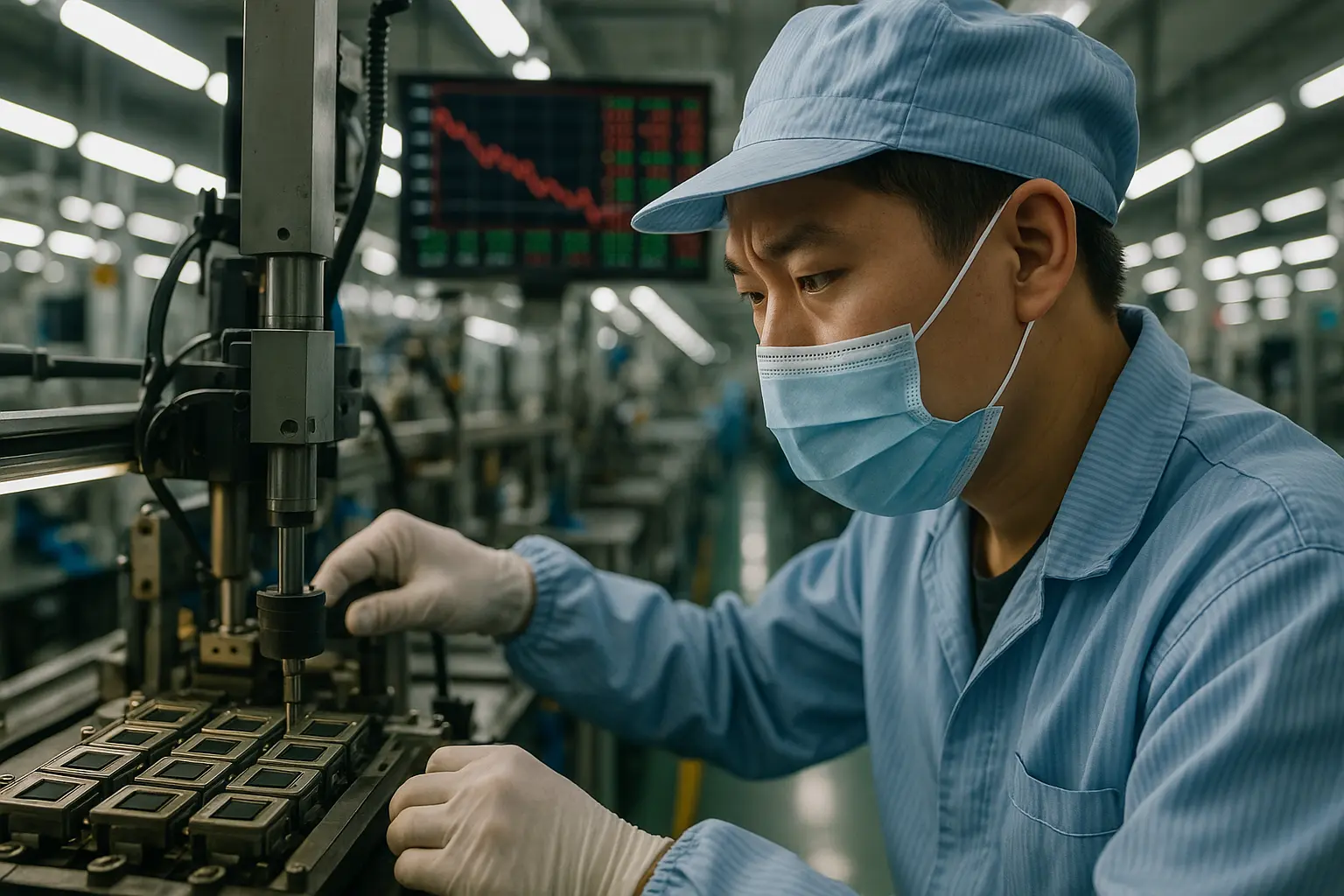
Trump Fires Back: U.S. to Slap Chinese Chip Industry With Tariffs, Ending Free Pass by 2027
“America’s future is not for sale to Beijing.” With these sharp words echoing through the halls of Washington, President Trump’s administration has stunned global markets with plans to finally slam the brakes on China’s unchecked invasion of the U.S. semiconductor sector. The message is clear: after years of free riding and backdoor market manipulation by the Chinese Communist Party, the days of 0% tariffs on Chinese semiconductors are officially numbered-ending June 23, 2027, thanks to a bold new action from the U.S. Trade Representative.
For years, U.S. tech workers and conservative voices have warned: America cannot let China buy up, copy, and dominate the backbone of high-tech manufacturing while our own commercial interests are left exposed. Now, the Office of the U.S. Trade Representative (USTR) has dropped the hammer, formally issuing a Federal Register Notice of Action that puts Beijing on notice and calls China’s state-driven push for chip dominance “unreasonable and discriminatory.”
America Draws a Red Line: Tariffs to Hit Chinese Silicon Titans
As the global superpowers jostle for supremacy in technology, the Trump administration is drawing a line in the sand. The long-overdue decision follows a bruising year-long investigation into how China’s government has illegally propped up its semiconductor supply chain, muscling out American workers and inventors with deep-pocketed state subsidies and copycat tactics-unacceptable for any free-market champion. The result: a two-stage tariff threat designed to keep Beijing-and Wall Street-guessing until the very last minute.
The U.S. Trade Representative’s Office set an initial tariff rate at 0%, but tough new penalties will automatically kick in after 18 months, with the final tariff levels and precise rules to be released at least 30 days before implementation. This gives the U.S. maximum leverage-but minimal daylight for Beijing’s game of diplomatic chicken.
Tellingly, these semiconductors targeted by the USTR have long been immune from tariffs, even after years of trade spats. According to Federal Register filings made public December 23, 2025, these chip imports face exactly 0% duties right now-a loophole U.S. conservatives and industry hawks have slammed for years as a surrender of America’s technological edge.
One Trump administration insider put it plainly: “The era of letting China cash in on America’s innovations while our own high-tech workers suffer under unfair trading conditions is over.” The new tariffs will end that, finally bringing Chinese chipmakers to heel or pushing them out of our market for good.
Bilateral Shockwaves: Will Xi Blink, or Dig In for a Semiconductor Showdown?
It’s no secret that China’s rulers have poured billions into their chip industry, trumpeting plans to outgun America in the race for global dominance in artificial intelligence, next-gen computing, and military manufacturing. The White House’s action, months in the making, comes after a sweeping Section 301 investigation revealed how Xi Jinping’s policies systematically disadvantage American firms through “non-market policies and practices”-a finding that infuriated Main Street and policy makers alike.
While the USTR’s move is explicit in its criticism of Beijing’s playbook, officials hasten to underline that the decision is “preliminary”: both the ultimate tariff rates and implementation plan remain subject to internal review and further negotiation, possibly even with the Chinese themselves if cooler heads prevail. Even so, this is a decisive moment. The U.S. is using this leverage, and the coming months will set a global precedent for what fair trade actually means.
“The United States will defend its economic interests and those of its workers,” a senior administration official said. “Our patience for China’s manipulation is at an end.”
Why wait 18 months? Some experts suspect this is a strategic olive branch, designed to honor the October trade truce reached between President Trump and Xi-signaling flexibility if China reverses course, but also putting teeth behind America’s demands if Beijing doubles down. Others argue it’s a nuclear option: unleash the tariffs only if China breaks faith before the 2028 election. Regardless, this maneuver gives Trump’s team powerful leverage as he heads into what is shaping up to be another contentious round of trade talks in 2026 and 2027.
Even as the trade war rhetoric ramps up, the markets are holding their breath. The initial announcement brought only muted tremors on Wall Street-the S&P 500 dipped just 0.07%, the Nasdaq a modest 0.2%. Investors, it seems, believe the White House means business but are gambling that tit-for-tat retaliation hasn’t begun-at least not yet. However, market watchers warn that when the real tariff levels are named, it could spark a quantum shift in tech stocks, supply chains, and even the strategic balance between the free world and China’s authoritarian ambitions.
Showdown Looms: Can American Workers Finally Compete on a Level Playing Field?
The Section 301 findings are damning: Non-market policies in China’s chip sector have “consistently disadvantaged U.S. companies and workers,” with massive state subsidies warping global pricing, stifling fair innovation, and threatening to hollow out America’s world-beating knowledge base. For years, patriotic voices have sounded the alarm-now, after comprehensive investigation and policy review, the Trump administration is answering the call.
Conservative leaders and grassroots advocates see this as not just a fight over chips, but a battle for the soul of American industry-a chance to claw back what was unfairly taken by Chinese strong-arming. Republican lawmakers-cheered by MAGA voters-say the White House’s resolve is exactly the muscle America needs, especially as the 2028 campaign looms. “This move stands up to Communist China and puts American ingenuity back in the pole position,” one senior House GOP official told RedPledgeInfo. “Finally, our chipmakers have a shot at getting off their knees.”
Social media erupted with praise from main street advocates to retired engineers. On X, one user wrote: ‘It took Trump to get tough on China. Why did the Democrats try to hand this sector over to Beijing for decades?’ Another post, with over 20,000 likes, declared: ‘American industry matters more than Wall Street feelings.’
The market reaction has been swift-even if stocks didn’t plummet, business leaders across Silicon Valley and red-state manufacturing hubs are weighing their next moves. Will American chipmakers finally ramp up capacity and bring tens of thousands of jobs home? Will China try to retaliate with cyber-attacks or squeeze rare earth exports? All eyes are watching, and voters will no doubt hold Washington to account next November if the administration backs down from this showdown.
As policymakers sharpen their rhetoric and U.S. manufacturing leaders call on Washington to stand firm, many see this as a tipping point. The future of free and fair global commerce is at stake-and, thanks to bold conservative leadership in the White House, the tide may finally be turning.
Bottom Line: This is the beginning of the end for China’s free ride. American workers and families will get a fair shot, and President Trump’s resolve ensures the U.S. is not playing second fiddle to Beijing’s ambitions. The world will be watching as the 2028 showdown approaches-will China’s chip machine blink, or does America finally have a president who stands up for Main Street?