
US Graphite Mining Returns With a Roar as Battery Demand and China Worries Collide
‘If we learned anything in the past decade, it’s this: America cannot rely on Beijing for the resources that power our future.’ – Industry Insider at Northern NY Mine
In a stunning reversal that would make the Ticonderoga pencil proud, the United States is finally dusting off its long-shuttered graphite mines to combat a swelling battery boom and rising worries about a dependency on China. After nearly 70 years of mining dormancy, the snowy woods of northern New York and other states are buzzing as shovels hit graphite-rich earth-a direct answer to a question every conservative American ought to ask: Who controls the materials behind our phones, our electric vehicles, and even our defense systems?
The stakes could not be any higher. Once content to import this mineral cheaply-thanks, in large part, to Chinese production-America has awoken to the hard lesson that strategic minerals are anything but safe in foreign hands. With graphite named a “critical mineral” by both the Department of Energy and Department of the Interior, and after President Trump’s hard-nosed negotiating caused Beijing to
‘rethink’ export controls, Republicans are demanding a secure supply chain. Now companies like Titan Mining are back in action, determined to guarantee American tech and security aren’t left in the lurch.
The Graphite Gold Rush: High-Tech Dreams and Old-School Grit
From pencils to power grids: How graphite is fueling the next American comeback
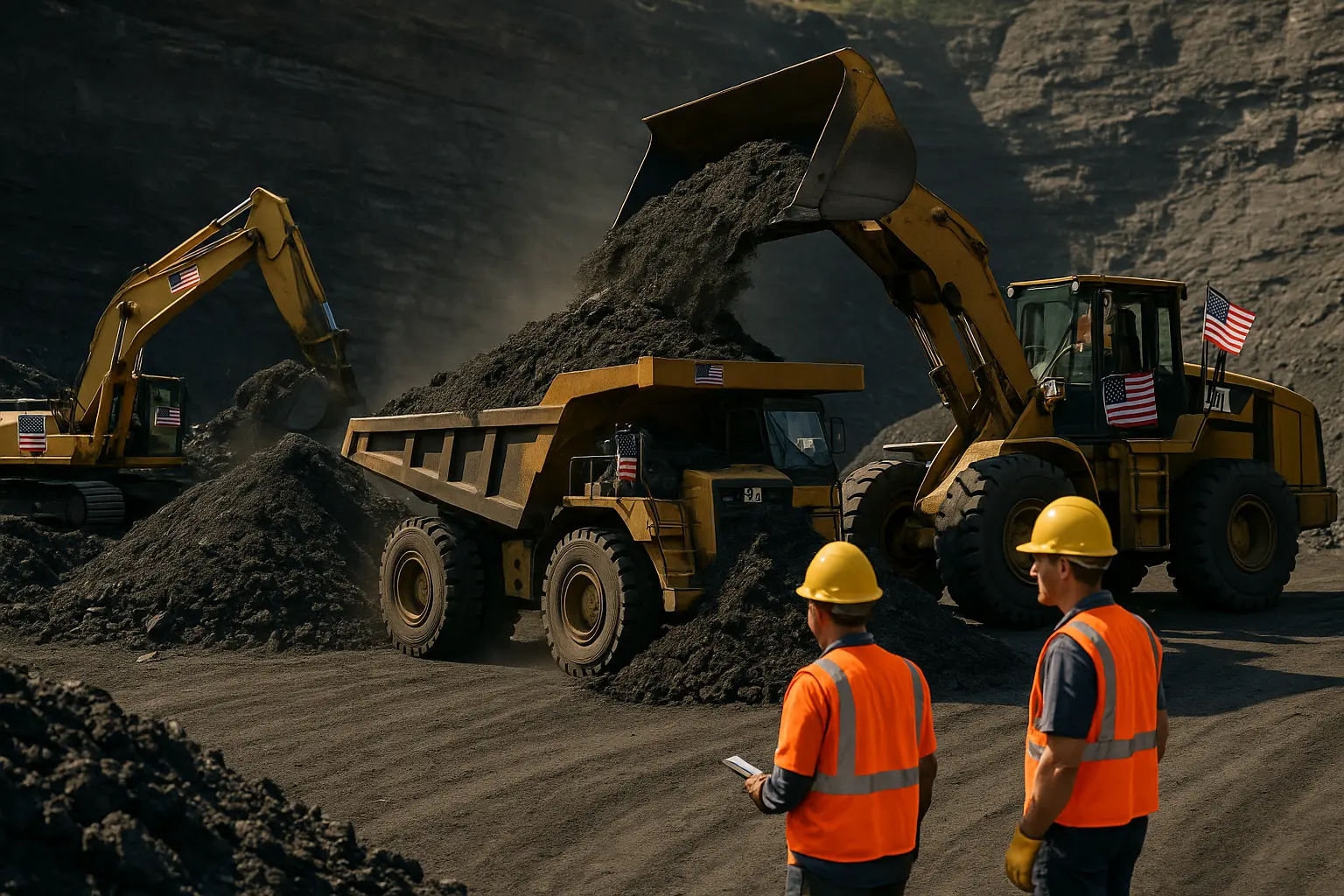
If there’s a perfect symbol of America’s innovative spirit, it’s the graphite deposit in Gouverneur, New York-where history and technology cross paths. The same region that gave rise to the name Ticonderoga for our iconic all-American pencil is now home to the most aggressive domestic mining projects seen in a generation. Titan Mining Corp. is at the center of this new rush, their vice president of operations even spotted grinning ear-to-ear while holding a hunk of freshly pulled ore, a sign that US miners are back and hungry for results.
This isn’t just about filling classrooms with pencils, either. Graphite is the heart of lithium-ion batteries, fueling not just your cousin’s flashy electric vehicle but also grid-scale energy storage and, yes, crucial defense systems. In a move that sent liberal bureaucrats in DC scrambling, Titan Mining
commenced the first natural flake graphite production in the US in over 70 years at its Kilbourne site earlier this month. And they’re not just trying-thanks to a
fresh $15 million investment from institutional backers, they’re planning to go big, aiming for commercial sales by 2028.
Industry leaders are bullish. Rita Adiani, CEO at Titan, isn’t shy about the opportunity. According to company statements, the nation’s existing infrastructure-including its nearby zinc mill-will help turbocharge graphite processing. This isn’t just new jobs for blue-collar Americans; it’s a battle on the front lines of industrial independence that every patriot can get behind.
Certain regions of Alabama, Montana, Alaska, and New York now boast five active graphite projects-proof that American grit isn’t just alive but thriving.
Social media has lit up with images of burly miners hoisting up black rocks and comments like ‘Finally-something made here, not shipped here.’ For years, the left told us to ‘go green’ with electric cars, but they forgot the crucial question: Who makes the green revolution possible? Conservatives are saying, loud and clear, it must be Americans.
China’s Grip Loosening-and Trump’s Deal-Making Pays Off
Trump delivers results as graphite becomes the front line in America’s next trade war
Remember when experts insisted China would always be our graphite supplier? That myth is now officially busted. Just over a year ago, tariffs and export controls sent global supply chains into a tailspin. While Democrats dithered, President Trump led the charge-standing firm at economic summits and forcing China to the table. In October 2024, after a tense face-off, Xi Jinping finally blinked, easing tensions. While it’s too soon to declare outright victory,
America is still pushing ahead to wrest control from Beijing.
Here’s the uncomfortable truth: While China once held the world over a barrel when it came to graphite-and still dominates the market-recent federal designations are fueling the push for American production. The Department of Energy has put graphite front-and-center on the “critical minerals” list, and the Department of the Interior has packed it among over 60 vital materials in dire need of homegrown sources. It’s a call-to-arms, and the response has been swift.
Why now? Quite simply: without domestic graphite, our entire battery supply chain runs on borrowed time. The same mineral that lets our military robots function, our grid store wind and solar, and our households flip on safe, steady power-all of it hinges on breaking China’s near-monopoly. With new export controls out of Beijing just months ago and shipping routes that feel ever more vulnerable, the rallying cry is clear: Secure American minerals means secure American jobs and secure American lives.
“If you don’t control the raw supply, you don’t control anything,” a top Republican strategist tweeted. “This is what energy security finally looks like.”
Fast-tracking federal grants and private investment backed by clear pro-business policy, the Trump administration has made clear that projects like Titan’s, and the others across Alaska, Alabama, and Montana, are critical for the nation’s future. Liberals argued for international cooperation. America-first Republicans are just getting the job done.
Can the American Comeback in Graphite Last? Patriots Say Yes-If We Keep the Pressure On
Pencil towns, unions, and offshore foes: What lies ahead in America’s graphite fight
What does this resurgence mean for everyday Americans? Besides the patriotic pride of seeing a once-dormant industry spring to life, experts forecast a wave of new jobs, regional revitalization, and a fresh burst of economic muscle in small towns hit hard since the mines closed in the 1950s. In Gouverneur and other towns, the echoes of the past-Ticonderoga pencils, factories, union halls-are meeting the ambitions of the future: drones, smart grids, and electrified highways.
Forecasters predict that global demand for graphite will soar in the next decade, with lithium battery sales leading the charge. America is catching up, fast. The Department of Energy has made it clear that our economic and defense interests are on the line.
Titan Mining’s commitment to commercialize its New York operation by 2028 means we’re racing the clock. While the rest of the world waits on Beijing’s next move, U.S. miners are driving forward, protected by pro-growth tax incentives and robust federal guidance. How long will the boom last? As long as conservative leadership keeps fighting off shortsighted “green” globalism and pushes for an America-first approach to critical minerals.
One union miner told Freedom 96.9 radio, ‘Graphite kept this region working for generations. It’s good to see New York dirt on our boots again.’
With five active projects in the works, and a proven ability to leverage local infrastructure, the U.S. is gaining-not just playing catch-up-in the world’s supply chain arms race. The focus ahead: expanding processing, protecting local jobs, and crushing red tape that’s slowed progress for decades.
This is more than an economic story; it’s a comeback narrative for American sovereignty and conservative grit. With President Trump pressing every advantage, and Republican leadership supporting investment and innovation, the message could not be more clear: We are finally taking our future back from Beijing, one chunk of black rock at a time.