
‘Bitcoin Keeps Washington Honest’: Armstrong Sends a Wake-Up Call on American Fiscal Chaos
‘If we lose discipline, the world will move on,’ Coinbase boss Brian Armstrong starkly warns. Is Bitcoin really the last thing keeping runaway inflation and Chinese ambition at bay?
In a podcast exchange with legendary music producer Rick Rubin, Coinbase CEO Brian Armstrong set the conservative media world on fire this week with a series of candid, sharply worded warnings for America’s ruling class: treat Bitcoin as a check and balance-your safety valve for spiraling inflation-or risk flattening the dollar and ceding global dominance to Beijing.
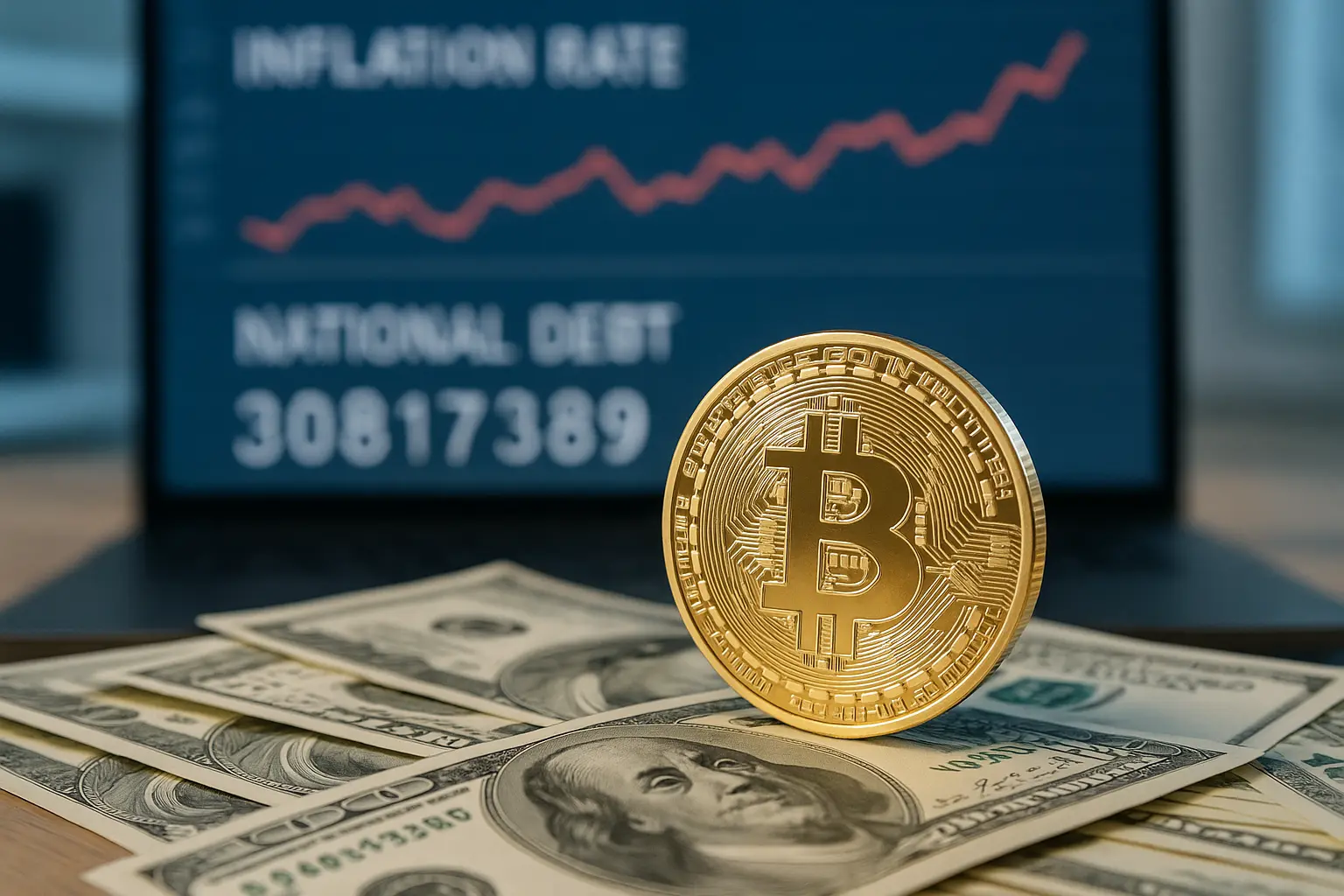
This is no idle speculation. As President Trump’s White House wrangles with a national debt now towering over $37.65 trillion and bleeding an eye-watering $4.25 million every minute, Armstrong’s message cut through the usual D.C. noise. Americans, Armstrong argued, desperately need an alternative when our politicians lose fiscal discipline-before global markets lose patience with the star-spangled buck and open the floodgates to Chinese control. Armstrong stated that Bitcoin acts as a ‘check and balance’ on the U.S. dollar by providing an alternative during periods of high deficits or inflation, encouraging fiscal discipline among policymakers.
Markets reacted quickly. While Coinbase shares (COIN) nudged down 0.4% in pre-market jitters, Bitcoin was hovering near $90,000-a 2.8% rally in 24 hours-backed by retail traders increasingly convinced digital gold is their best insurance policy against feckless politicians of either party.
‘The writing is on the wall. The political class is bankrupting our future, and Bitcoin is the smoke alarm. Ignore it, and the house burns down,’ tweeted @LibertyStacker, a conservative influencer with 150k followers.
National Debt Is Soaring. Is Bitcoin the Only Real Safety Net?
With America’s fiscal health in crisis, could Bitcoin’s unbreakable math and transparent supply force the D.C. swamp to finally face reality?
Armstrong’s blaze of caution comes as the United States struggles with a fiscal landscape that terrifies ordinary Americans: the national debt-now at a record $37.65 trillion-eclipses even military spending (and not by a little). This staggering number grows by more than $70,000 every second, more than four times the average American household income every minute. It’s a reality haunting kitchen tables from Texas to Ohio, as groceries and gasoline watches their prices climb ever higher.
The Coinbase CEO is no anarchist. He’s a capitalist through and through, but one who understands that unchecked deficit spending is the soft underbelly tyrants like Xi Jinping are drooling over. Armstrong didn’t mince words: if American inflation outstrips GDP growth-if we spend like drunken trust funders while the economy sputters-U.S. reserve currency status is in clear and present danger. The U.S. national debt has reached approximately $37.65 trillion, increasing by nearly $4.25 million per minute, raising concerns about the sustainability of the dollar’s reserve currency status.
What makes Bitcoin special, Armstrong argues, is how it operates as objective, apolitical feedback for global markets. Unlike the fiat printing press, nobody can just dial up 10,000 new bitcoins. If the dollar weakens, Bitcoin surges. If the D.C. crowd gets reckless, Americans have a place to run that politicians can’t corrupt with executive orders or central bank shenanigans.
It’s a worldview reflected by many on the right. Senator J.D. Vance (R-OH) recently called Bitcoin ‘the ultimate insurance policy for Main Street against the Wall Street-Fed cabal,’ echoing Armstrong’s argument that digital scarcity could-just maybe-force smart fiscal reforms.
‘At the end of the day, inflation is theft from working Americans. If D.C. won’t listen, then Bitcoin is the rebellion,’ wrote @Kayleigh4America, the former Trump press secretary, on Truth Social.
Stablecoins, the GENIUS Act, and Bitcoin: Can the Digital Dollar Save the Real One?
With Congress finally acting on stablecoins and crypto industry voices growing louder, has America stumbled upon a digital arsenal to save itself from its own politicians?
Armstrong’s thesis arrives just as Capitol Hill wakes up to the reality that crypto isn’t just a fad. This summer, Congress passed and President Trump signed the GENIUS Act-a sweeping framework requiring stablecoin issuers to keep 1:1 reserves against every digital dollar, build bulletproof audit trails, and report directly to the Treasury. The GENIUS Act mandates that stablecoin issuers maintain 1:1 reserves in U.S. dollars or highly liquid assets, ensuring each digital dollar is fully backed and redeemable on demand.
This act isn’t just regulation-it’s a centerpiece in Washington’s new plan to fight back against Beijing’s state-controlled digital yuan. With stablecoins clocking in at a whopping $312.6 billion market cap today-expected to soar past $2 trillion before the next presidential race-America seems to be arming up for the digital currency wars ahead.
Some say stablecoins-digital dollars supercharged for the internet age-offer more direct support for U.S. dominance than Bitcoin does. But Armstrong pushes back. He paints Bitcoin as ‘digital gold’: unique, decentralized, and trusted the world over. Brian Armstrong characterized Bitcoin as ‘digital gold,’ emphasizing its uniqueness and high trust as the original cryptocurrency. By providing competition that Washington can’t manipulate, Bitcoin could be what finally breaks Congress’s addiction to spending and forces a long-overdue return to fiscal sanity.
‘Bitcoin is built-in accountability that no lobbyist or PAC can buy off. It is, quite literally, the torchbearer of American free enterprise,’ said @CryptoHawk, a financial commentator popular in conservative circles.
Armstrong’s Warning, Trump’s Opportunity: Will Fiscal Discipline Make a Comeback in 2026?
The nation stands at a crossroads-fiat funny money or a future grounded in discipline? The next election could hang in the balance.
With President Trump heading into another brutal re-election battle against Democrats promising bigger budgets and fresh stimulus packages, the political stakes of this crypto-fueled economic reckoning have never been higher. Armstrong’s clear-eyed analysis has galvanized not just industry insiders, but everyday patriots who know that no amount of D.C. spin can print away national bankruptcy-or buy back the nation’s reputation if the dollar stumbles.
As Armstrong urges, Bitcoin offers the market discipline career politicians fear most: a way for Americans to vote with their wallets if the swamp won’t clean up its act. With the clock ticking and global competitors circling, his message is blunt: the future of the dollar-and of American leadership itself-could well depend on whether Congress, the Fed, and Wall Street wake up before it’s too late.
In an era where voters are desperate for leaders who will balance budgets, protect the dollar, and police Washington’s worst instincts, Armstrong’s bombshell may be the rallying cry the Republican grassroots needs to finally bring the reckoning to D.C.’s reckless elite. With Bitcoin as their digital backstop, Americans may finally force the change our Founders intended.