
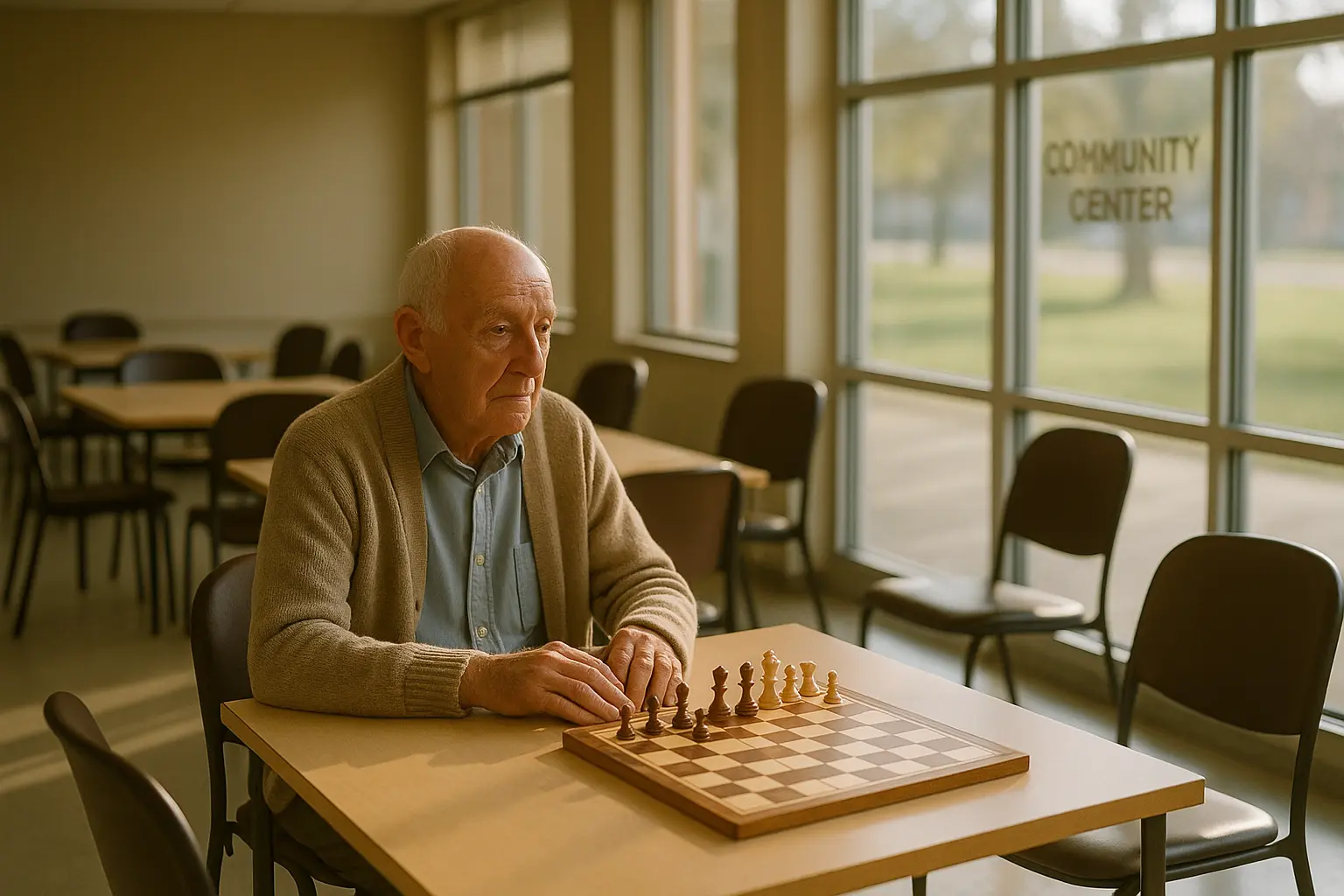
Loneliness Is Quietly Sabotaging Senior Memory, But Is Society Ignoring the Danger?
“People talk about growing old with dignity-but how can a person age gracefully when they’re ignored, isolated, and reduced to a statistic?” It’s one of the most gut-punching questions surfacing as a wave of new research exposes a silent crisis eating away at the heart-and the brains-of America’s senior citizens. As millions of older adults struggle in silence, our so-called experts tie themselves in knots, debating whether and how loneliness is slowly rewiring the brain, eroding memory, and perhaps pushing us ever closer to crisis. When will the politicians wake up and take real action?
Memory in Jeopardy: Loneliness Emerges as a Silent Threat for Older Americans
The quiet epidemic of loneliness gripping America’s seniors is not just an emotional ache-new science is revealing it’s a clear threat to memory and long-term cognition. A massive, Europe-wide study published this week tracked over 10,000 adults aged 65 and up for seven years, discovering a grim truth: those who said they felt lonelier performed worse on memory tests right from the start. Their ability to recall both immediate facts and delayed information was already hobbled when researchers first tested them.
It’s a stark wake-up call. According to Dr. Luis Carlos Venegas-Sanabria, who led one of the major studies out of Spain and Sweden, “We’re seeing that loneliness hammers initial memory performance.” The point? Loneliness may be silently eroding older adults’ memory-long before dementia even enters the picture. But here’s the catch: while lonely people had a lower memory baseline, their rate of memory decline didn’t actually speed up compared to their more socially connected peers. It’s as if the cognitive damage was already done by the time they hit old age.
Still, dismissing this as ‘harmless’ would be a grave mistake. About 8% of seniors in this survey reported high loneliness-a number experts warn will only grow as Boomers age and traditional family structures fray. Will our leaders finally tune in, or continue looking the other way as a crucial population is sidelined?
“Social hunger is a basic human need that simply goes unmet for millions. Politicians pay lip service to ‘community’-but what are they really doing?” – Ragnild Holmberg Aunsmo, Norwegian National Centre for Ageing and Health
Science Reveals: Why Loneliness Preys on the Mind-And What the Establishment Isn’t Telling You
What exactly is happening inside the lonely brain? Science is mounting a compelling case that the effects of isolation go much deeper than just feeling down in the dumps. Deep-dive analyses now suggest that social connectedness is a “high bandwidth cognitive task.” When we lose it, neural pathways start pruning themselves back, leaving our brains with less cognitive reserve to fend off Alzheimer’s and other forms of dementia.
Futura-Sciences sharply contrasts the simplistic “cortisol” story taught in academia, warning instead that without social engagement, the brain undergoes synaptic pruning-a loss of complexity that makes us sitting ducks for cognitive decline. Norwegian researchers add a chilling twist: their decades-long study confirmed that those reporting long-term loneliness faced a significantly higher risk of dementia, especially among women, the single, and people grappling with existing health problems. People aren’t just feeling blue; they’re losing ground in the battle against one of the most devastating diseases of our time.
But is it really just loneliness, or something more sinister about today’s society? An expert from NYU Grossman School, Jordan Weiss, zeroes in on cause versus effect: “The finding that lonely older adults start with worse memory but don’t decline faster is actually the most interesting part of the paper-cognitive damage from isolation likely occurs long before old age.” In other words, the rot starts early, and by the time doctors even start asking seniors how they’re feeling, irreversible damage may already be done.
“We found that long-standing isolation led to a much greater risk of dementia. This isn’t just a phase- it’s a pattern,” explains Aunsmo. “Public authorities must treat chronic loneliness as a health risk.”
Sound extreme? Not if you consider the warnings piling up from across the medical community. Studies out of Emory University and Springer Nature remind us that even social isolation itself (regardless of how lonely you feel!) may speed up cognitive decline-meaning every senior walled off by our fractured society could be at serious risk. The jury’s in: social connection isn’t just a luxury; it’s a biological necessity.
Are Our Communities Failing Seniors? Why Smaller Circles Don’t Always Mean Loneliness-And What Conservatives Know About Building Real Bonds
As liberals push high-density urban chaos and digital “connection,” ordinary Americans are reviving old lessons: real relationships matter, and quality always beats quantity. New research, including insight from UCSB’s Bella DePaulo and the Schaeffer Center for Health Policy & Economics, affirms what many of us already suspected: reaching your 60s isn’t about collecting a crowd-it’s about finally giving yourself permission to focus on genuine connections, not the phony circles encouraged by leftist social engineering.
It’s a sharp distinction: being alone by choice is not the same as feeling lonely or abandoned. The difference? Agency. Older adults who opt for a tighter, more meaningful network report more satisfaction and less loneliness, while those pushed into genuine isolation-by economic hardship, broken families, or community collapse-are the ones suffering most. Dr. DePaulo points out, “It’s not isolation, but understanding what really nourishes your spirit.” For many, government overreach and the steady erosion of faith communities and civic associations (once cornerstones of American life) have played a direct role in this crisis.
If you’re growing older with a small circle, you’re not failing-you’re succeeding at connection in a world that has forgotten what it means.
As so-called experts dither, regular folks know what’s been lost. The truth revealed by these studies? It’s not enough to just ‘have friends’ or show up for the occasional bingo night. Seniors need substantive, lasting bonds-a real community around them to ward off the twin evils of loneliness and isolation. And as churches close, Main Streets shutter, and the government gets more distant and bureaucratic, where will the new connections come from?
Unfortunately, the left’s focus on digital engagement and state-run programs misses the mark. The solution isn’t more government “checkups,” but revitalizing the kind of small-town values and personal connections that built this country from the ground up. Don’t hold your breath waiting for Washington to acknowledge that their own policies contributed to this epidemic.
The Battle for Aging Well: Will America Restore Community-or Deepen the Loneliness Epidemic?
The facts are in. New research warns that loneliness trips up older adults right from the start, damaging memory long before anyone is labeled “demented.” Yet, for all the talk, our country is teetering on the edge of a deepening loneliness epidemic-pushed by cultural change, technology, and perhaps too much faith in top-down programs over real people and real bonds.
President Trump’s renewed focus on community, faith, and rebuilding America’s small towns has never felt more urgent. As advocates urge routine screenings for loneliness in older adults, conservative voices are reminding the nation that it starts at home-with neighbors, friends, and actual togetherness, not just another government initiative. If we fail to act, we risk letting a silent crisis destroy yet another generation’s chance at dignity in old age.
The ball is in our court: Will we allow seniors to drift quietly into mental decline, or will we return to the values that made our communities strong in the first place? The 2026 midterm elections will prove whether voters want real change-or just more of the same empty promises.