
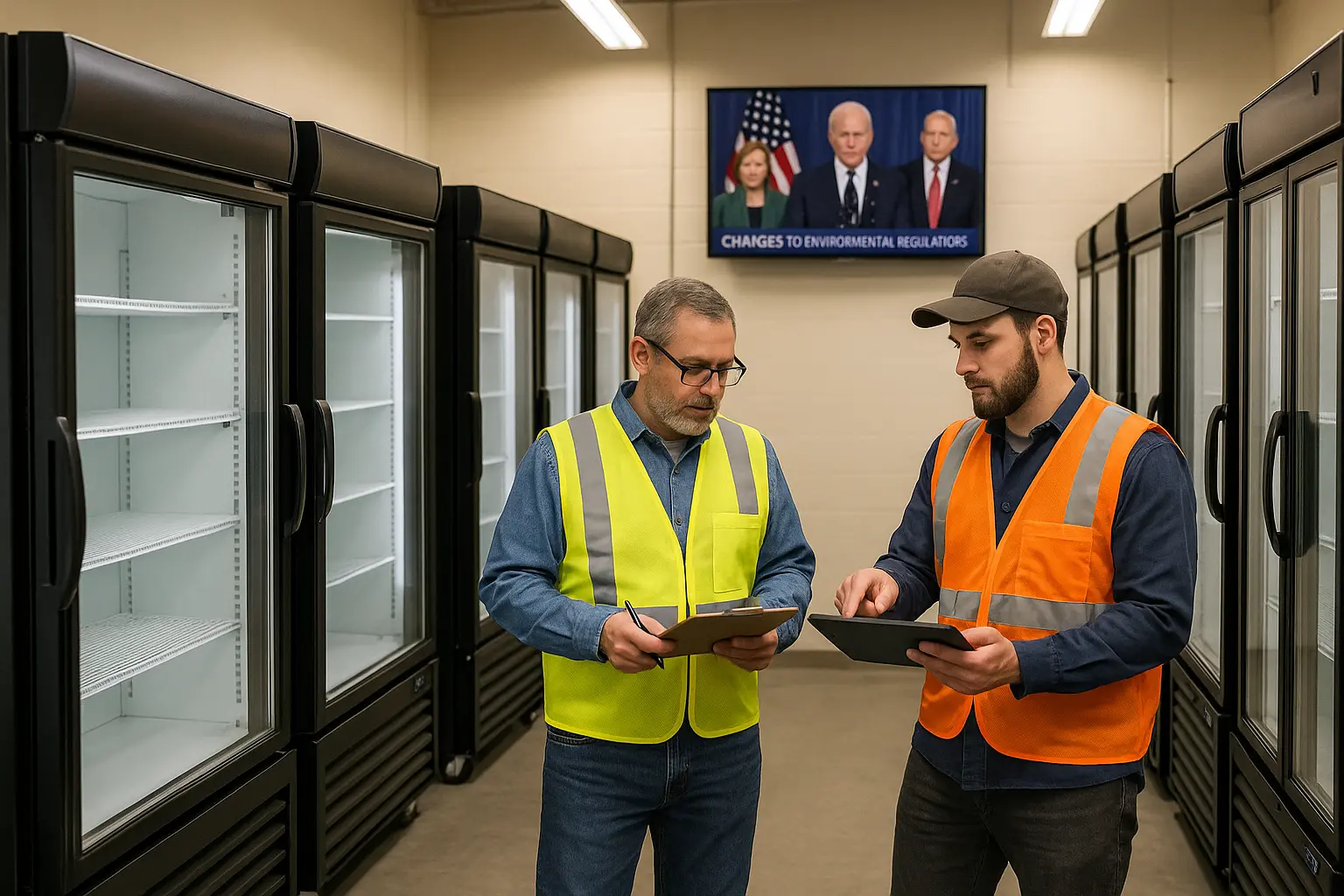
Trump, Zeldin Launch EPA Shockwave: $2.4 Billion Savings by Smashing Biden’s Refrigerant Rules
“The Biden administration’s refrigerant rules didn’t protect human health or the environment and instead piled on costly, unattainable restrictions beyond what the law requires.” – EPA Administrator Lee Zeldin
Regulation Tornado: Trump Pledges Savings for America’s Shoppers
The Biden-era war on grocery budgets is finally facing a reckoning as President Donald Trump and EPA chief Lee Zeldin unveil what White House insiders are already calling the boldest rollback of environmental overregulation in a generation. In a move that is reverberating across the supermarket aisles, the Trump administration is set to loosen a federal rule that requires grocery stores and air-conditioning companies to reduce greenhouse gases used in cooling equipment, in what officials say is a push to lower grocery costs. While progressive activists and green lobbyists scramble to protest, hard-working Americans suffering at the checkout counter are finally seeing leadership that puts their families-and their paychecks-first.
The White House predicts this deregulatory hurricane will spark over $2.4 billion in savings through two unprecedented steps: postponing the costly phase-out of so-called high Global Warming Potential (GWP) hydrofluorocarbons (HFCs) in store and industrial refrigeration, and delivering a freedom-boosting exemption for refrigerated trucks that ship most of America’s groceries. The recalibration, led by Zeldin, not only puts brakes on Biden’s runaway environmental rulebook, but also targets “razor-thin” grocery profit margins and skyrocketing shipping expenses-and comes just before November’s critical elections where skyrocketing food prices have voters fuming.
The EPA has rolled out the largest deregulatory blitz in U.S. history, blasting away with 31 initiatives that promise to turn back the regulatory tide and revive energy independence — a legacy moment for a second Trump term (ACCA HVAC Blog).
Grocery store owners are relieved. Small and family grocers in places like Ohio and Iowa who have struggled to fund the Biden-era phase-out admit it outright: “Every new regulation means less money to pay workers, less to invest in restocking shelves, and more to pass on to shoppers,” said one Midwest grocer. Lee Zeldin put it bluntly: the Biden team had imposed “costly, unattainable restrictions beyond what the law requires,” making America less competitive and driving prices even higher.
Chilling the Hype: Biden’s Rules and Why They Failed to Protect Families
Let’s rip away the spin. Biden’s refrigerant rules, sold to the public as vital climate policy, actually buried stores and truckers in costly mandates-with the price tag per grocery store topping $1 million for the upgrades demanded under the 2023 Technology Transitions Rule. Biden’s EPA stoked panic about refrigerant leaks while ignoring fiscal reality, and the injury went straight to the American household: between fuel shocks caused by the ongoing war in Iran and diesel surges, grocers were left trying to swallow costs they could never recoup. The inconvenient truth? “Supermarkets have razor-thin margins,” noted CNN, and a single new cooling system might add just enough pressure to force local stores out of business or put favorite produce out of reach for millions already stretched thin.
The Trump-Zeldin plan slashes that red tape-permitting stores to keep proven, affordable refrigerants longer and trucks (the backbone of American food supply) to keep rolling without new patchwork mandates. Axios confirms the EPA will roll back Biden-era regulations on hydrofluorocarbons (HFCs), giving businesses and families breathing room as they face inflation “outpacing wage gains.” The $2.4 billion in projected savings isn’t just bureaucratic math-it’s a bold declaration that families’ budgets matter more than elite climate crusades.
“Fresh produce prices rose sharply in April-up 6.5% from a year earlier-because the cost of shipping has soared.” (CNN business report, highlighting supply chain squeeze on ordinary Americans.)
As summer heats up, so does scrutiny of Biden’s leftover economic mess. The Associated Press bluntly connects the dots: inflation in April spiked to 3.8%-and grocery receipts keep climbing. Families are desperate for relief. And that, Trump officials say, is precisely what this EPA overhaul intends to deliver, just in time for autumn elections poised to decide which vision rules America’s kitchen table: costly climate dogma, or commonsense savings.
Bipartisan Backlash and the Road to November: Is America Ready for Deregulation?
Predictably, this deregulatory juggernaut has sent climate activists and progressive lawmakers into overdrive. Beltway insiders and blue-state governors are circulating draft lawsuits, vowing to challenge Trump’s EPA in court. Yet outside D.C., the mood is different: X (formerly Twitter) exploded overnight with blue-collar fans hailing the move as a return to kitchen-table priorities. “Finally-someone’s standing up for our wallets, not Beijing’s climate lobby,” wrote one popular conservative influencer, his post racking up over 40,000 likes in less than 12 hours.
This isn’t a new fault line. During his first term, Trump signed the very law Democrats now claim he’s gutting-evidence, his supporters say, of a pragmatic leader willing to calibrate when rules turn ruinous in practice. The truth is clear: Families and small business owners are tired of being guinea pigs in grand green experiments. As food inflation surges and energy costs bite, the political risk of inaction grows ever greater. It’s precisely why the EPA chose this moment as a showcase: the agency just announced plans to gut over two dozen environmental rules-a signal that the Trump administration’s war on regulatory overreach is far from over.
“Voter concerns over the cost of living [are] spiking before pivotal elections in November,” the Associated Press observed, noting food price hikes now outstrip wage gains (AP, May 2026).
The facts speak for themselves. According to the White House, about $900 million in savings will stem from relaxed rules on technology transitions alone-including $800 million for grocery stores that are the lifeline of rural and heartland America. Another $1.5 billion is projected as refrigerated trucking operations-critical for fresh produce and meats-get reprieve from new emissions caps. Together, these rollbacks represent one of the shrewdest, most voter-sensitive policy moves yet from Trump’s second term.
With the stakes higher than ever and every dollar at the supermarket ballot box mattering, this EPA shockwave could become the defining story of the 2026 election season. As progressives complain from the ivory tower, Main Street knows the score: when deregulation means lower costs, freedom wins-and so do American families. November will show just how hungry the nation is for a fresh, reality-based approach to regulation.