
A New Strain Hits the West: Should Arizona Residents Be Alarmed?
Most had barely finished processing the COVID echo and 2022’s mpox flare before headlines began swirling: Clade I mpox isn’t only back in the headlines-it’s right on Arizona’s doorstep. Clade I is no slouch. According to Mayo Clinic, it’s notorious for higher case-fatality rates and more severe outcomes than the Clade II version that dominated recent U.S. outbreaks. Officials assure the risk to the general public remains low. But Arizonans, especially the conservative grassroots who pride themselves on quick action, aren’t settling for easy words.
Since being confirmed in mid-July, the infected Arizona resident-whose identity remains undisclosed-has triggered a wave of local and statewide follow-ups. The patient reportedly contracted the illness while traveling abroad. No evidence so far suggests local transmission, but critics claim that’s little comfort given a now-globalized world where international travelers cycle through Arizona airports daily.
The numbers aren’t yet staggering-just 34 reported mpox cases statewide this year, with this Clade I case grabbing the big headlines. But compare that to 582 infections during the eye-opening 2022 outbreak surge, and the stakes are obvious. Americans, never quick to forget government missteps, remember the litany of contradictions and shifting advice from health officials back then-memories that strongly color the current mood.
“People are tired of bureaucratic reassurances,” said Pima County activist Brian Rossett, “We just want honest answers-what are the risks, and what protection do we actually have?”
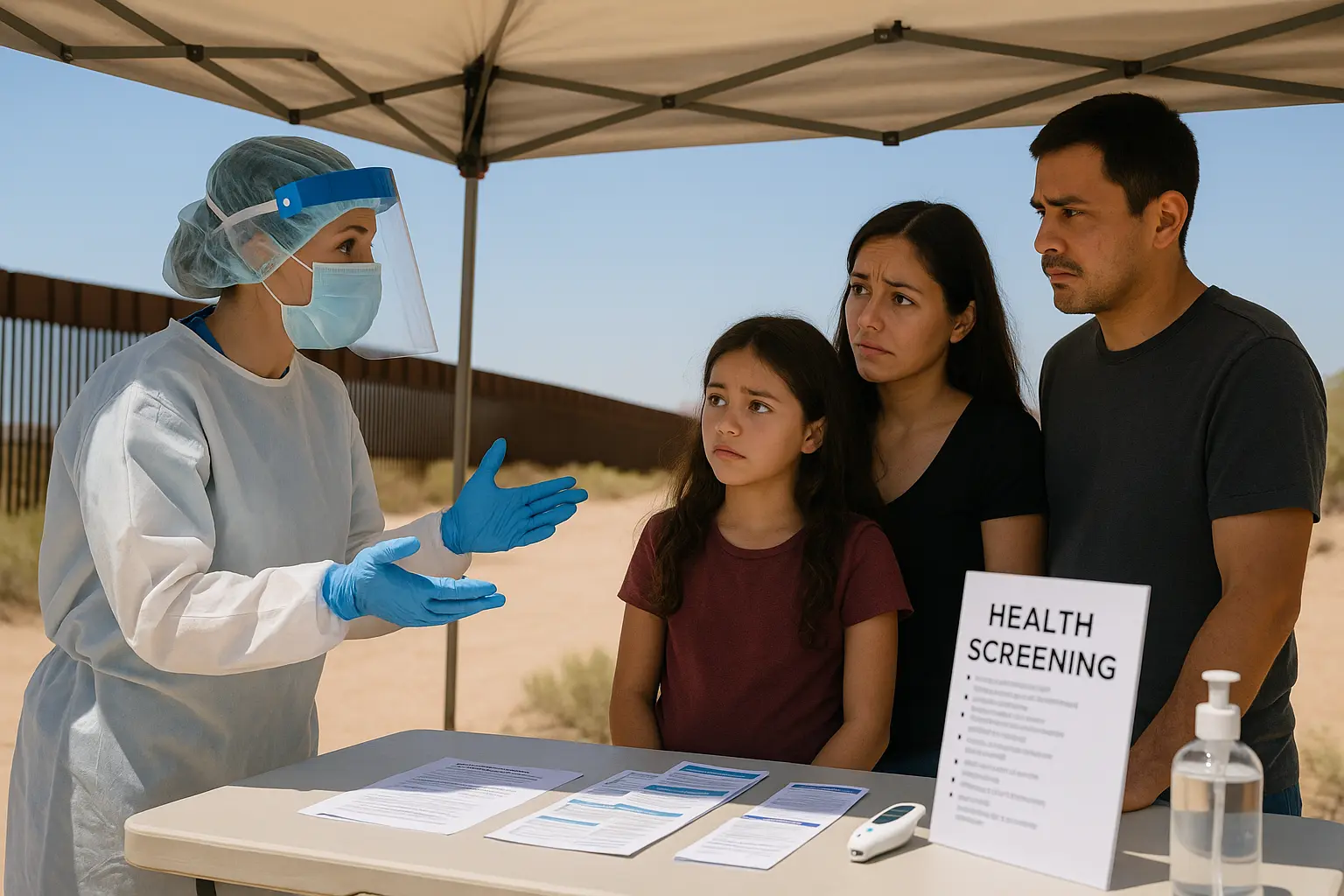
Arizona’s Department of Health did at least provide specifics: all those potentially exposed are being notified, and locals are encouraged, per usual, to play by the rules-seek testing for symptoms, consider vaccination, and avoid close personal contact with anyone diagnosed. Yet, critics can’t help but see shades of déjà vu: government advice that sometimes came too late for too many.
Clade I: Why This Virus Demands a Second Look From Arizona Families
What exactly makes Clade I so different-and so feared-by the public health establishment, and now Arizona’s close-knit communities? First, the facts: according to the World Health Organization, Clade I mpox doesn’t just pass through sexual contact. It can move between people via close household interaction, through contaminated surfaces (fomites), and even animal reservoirs-not merely person-to-person in the usual high-risk populations flagged during previous outbreaks.
This “wildcard” style transmission unnerves conservative families, many of whom remember how fast the rules shifted during past health scares: masks, then no masks, then back again; ‘two weeks to slow the spread’ that lasted two years. The average parent or grandparent-after months of lockdowns and school closures-can’t help but cast a skeptical eye on any new advisory, no matter how well-intentioned.
Further, medical experts warn the classic symptoms (fever, rash, swollen lymph nodes, fatigue, sometimes stomach distress) don’t neatly distinguish Clade I and Clade II in early stages. While the CDC carefully says risk remains “low,” they’re urging local doctors and clinics to be vigilant-especially for severe cases in children or those with weakened immune systems.
For the freedom-loving Arizonan or small business owner, a single travel-acquired case is nonetheless a sobering reminder: our borders-both state and national-are porous, and vigilance is still required. And while the current approach emphasizes no evidence of local transmission, it wasn’t long ago that similar optimism surrounded early COVID and mpox reports only to be rapidly dashed as months dragged on.
“You have to wonder about those numbers. If there’s one, are there more? Is someone watching the border?”– Mesa resident and Army veteran Carl Greer
So, with Arizona’s mpox history-582 cases in 2022, just 20 in 2023, a modest rise to 66 in 2024, and tapering to 17 in 2025, per health department records-locals want assurance policies are grounded in reality, not political correctness or wishful thinking.
Vaccination, Prevention, and the Politics of Public Health in a Divided Nation
The shadow of 2020’s political wrangling still hangs heavy over health policy-and vaccine talk remains politically fraught. In Arizona, health authorities now urge two doses of the JYNNEOS vaccine for optimal mpox protection, reporting that immunity is strongest within four days of exposure but can still help up to 14 days out according to official vaccination guidance. Yet, trust issues run deep.
For many, the very mention of a new vaccine brings flashbacks of the COVID-19 era: abrupt mandates handed down with minimal debate, critics who were deplatformed for raising concerns, and government agencies whose credibility took unprecedented hits. While health officials claim full transparency this time, grassroots groups are calling for local control, parental rights, and opt-out provisions for any future mandates.
The timing couldn’t be more crucial. With the 2026 midterm elections rapidly approaching, Republicans and conservatives across Arizona are pressing hard for clarity and accountability on public health emergencies. Multiple GOP candidates have already seized on the issue, vowing to protect Arizonans from what they call the “medical overreach industrial complex” and to keep intrusive mandates out of schools and private homes.
‘Arizona families are resilient. But we demand honest, not political, science at our statehouse.’ – Rep. Janine Stone, R-Gilbert
Bottom line: as Arizona tracks its first Clade I mpox case and the ADHS insists the risk is low, the conservative movement-parents, small business owners, faith leaders-wants facts, not platitudes. They remember too well the confusion and upheaval wrought by shifting guidance and mixed messages in previous crises.
For now, the playbook says stay calm, stay informed, and stay free. The real question for every Arizona household as election season barrels closer-whose advice do you trust when the next big outbreak lands close to home?