
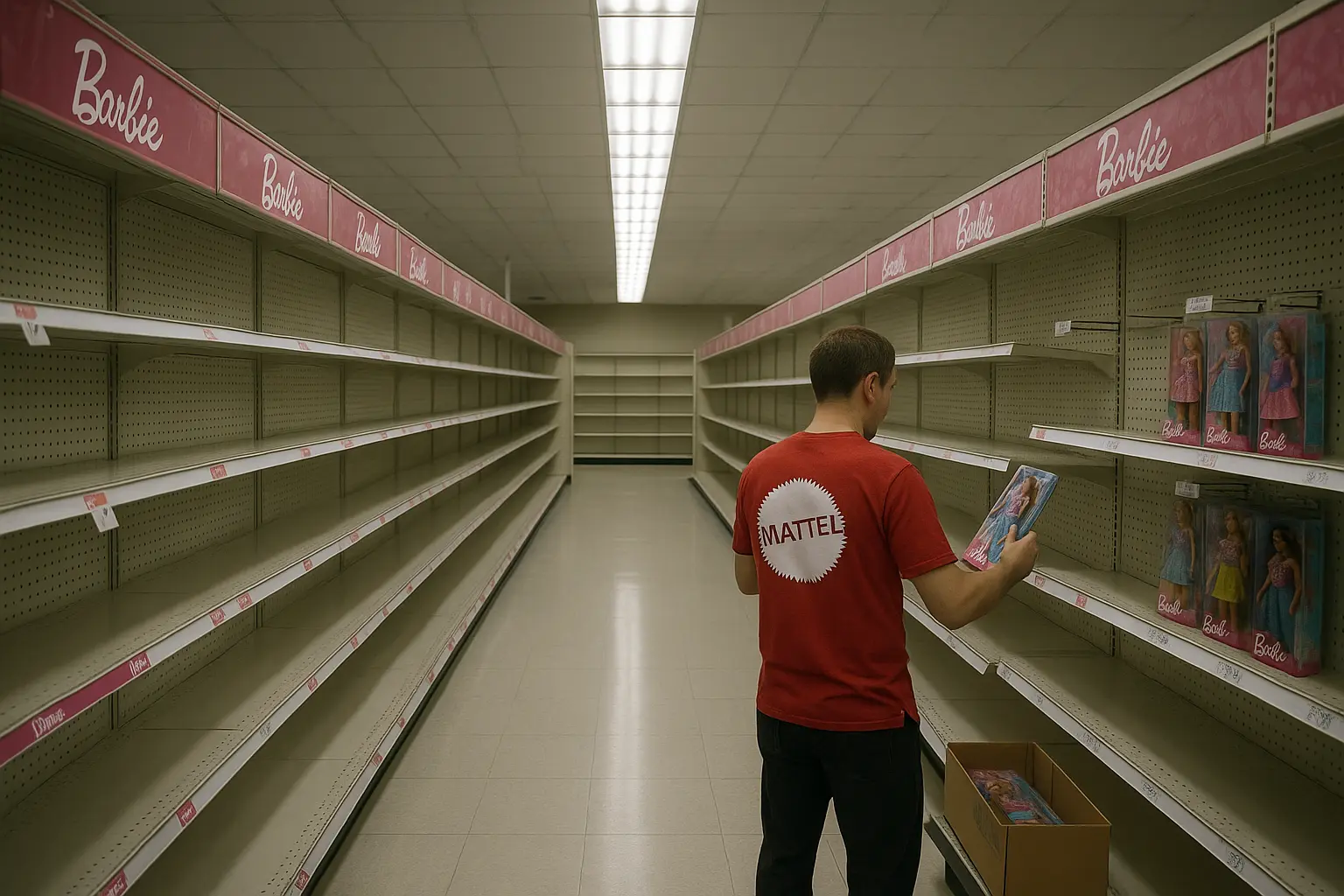
Barbie Bust: Mattel’s Sales Crash as Retailers Panic Over Trump Tariffs and Consumer Uncertainty
“Consumers just aren’t buying what they once did – and that’s sending shockwaves through Mattel’s numbers,” blasted one industry analyst on social media as shares in the toymaker slipped and panic spread among Wall Street’s usual suspects.
Tariff Tsunami and Barbie Blues: Mattel’s North America Nightmare
It’s a blockbuster bombshell few could have predicted just a year ago: Mattel’s worldwide sales have taken a nosedive, battered by a 19% collapse in global doll sales and a staggering 25% plunge in its infant, toddler, and preschool portfolio. These numbers, reported fresh this week, highlight just how far household brands like Barbie and Fisher-Price have fallen out of favor among anxious consumers who are waiting for the economic dust to settle after months of trade and tariff turmoil.
With President Trump’s renewed push for robust American manufacturing and tough trade negotiation tactics, major retailers including Walmart, Target, and Amazon enacted tight inventory controls this summer, terrified of being caught sitting on millions in product just as tariffs rise. These companies cut way back on orders, especially for toys that rely heavily on delicate (and costly) international supply chains-the bread and butter of Mattel’s empire. A stunning 16% drop in North American sales reveals the carnage from these policy and consumer habit shifts.
“This was a quarter defined by caution, uncertainty, and outright panic in the supply chain,” declared Josie Redman, a consumer analyst and frequent Fox Business contributor. Major players in retail did what they thought needed to be done: slash inventory, reduce risk, and brace for the unknown.
“Retailers got spooked by Trump’s threat to hike tariffs on cheap imports, so they punted, dodging stock build-up before the holidays. Mattel’s feeling that heat – and American jobs could be next.”
But that’s not all. Changing tastes, softer demand for Barbie after the pink-hued movie fever fizzled out, and the lasting effects of pandemic-era disruptions all played their part. The bottom line: American families are tighter with their budgets and less interested in pricey toys made overseas.
Still, the Mattel drama didn’t end with American woes. International sales rose 7%, with some markets showing resilience even as the U.S. market shriveled. Many executives are holding out hope that global diversification can offset, at least partially, the homegrown headwinds for the year ahead.
Mattel’s Math: Missed Targets, But a Silver Lining for Investors?
How bad was it? Mattel’s latest earnings report couldn’t hide the brutal numbers: sales fell 6% to $1.02 billion-a far cry from analyst predictions, which barely imagined more than a 2.7% dip. For longtime shareholders (and plenty of American workers counting on the company’s success), every percentage point stings. Adjusted operating income dropped by $8 million year on year, landing at $88 million for this volatile quarter.
But here’s the spin you didn’t expect: Mattel’s adjusted earnings per share came in well above Wall Street’s dire predictions, beating estimates by more than 21%. Operational “discipline” and a relentless focus on margins worked some financial magic. Mattel’s gross margin surged to 51.2% this quarter-up a solid 200 basis points from last year-even as its core U.S. business withered. The company used cost-cutting and smarter inventory management to shield investors from the worst of the supply chain meltdown.
“This was a tale of two businesses: American families pulling back and foreign markets-especially in Asia and Europe-picking up the slack,” said a source close to Mattel’s board.
If the company’s playbook holds, Mattel is now predicting a tiny rise in 2025 sales-just 1% to 3%. For context, earlier forecasts promised 2% or more. No wonder Wall Street is staying cautious, with price targets hovering around $21–$24 and investors demanding real proof the ship is steadying for good.
Backstory: Trump’s Tariffs and American Industry at a Crossroads
To understand the seismic rift shaking Mattel-and, by extension, the American toy industry-look no further than the Trump administration’s tough new approach to foreign trade and tariffs. When President Trump’s White House paused previous guidance this spring in response to shifting global policy, companies across the sector were left in disarray. Mattel was no exception: its 2025 outlook was yanked just two months ago, leaving Wall Street and the industry stunned and scrambling for answers.
This week’s return to guidance-albeit a much dimmer one-speaks to the “shock and awe” effect of new America-first economics. Retailers, forced to adapt on the fly, accelerated order timing and slashed overall buying from firms seen as exposed to China’s rising labor and logistics costs. The same companies who once championed globalization are now rethinking everything, from where they buy to what they’re willing to stock.
Yet while many in the business media are quick to lambast Trump’s stance, conservatives see a different angle: a reckoning long overdue. After decades of outsourcing and foreign dependency, these new policy shifts are exposing the brittle backbone of America’s consumer economy. Some say, if the pain for legacy giants like Mattel means a return to domestic production and American-strength brands, it’s a price worth paying.
“We’re seeing the consequences of globalism-in real time-every time a U.S. company like Mattel gets a rude awakening. Maybe it’s time to start making more toys in America.”
For the families and factory workers tracking this drama, the message is clear: the days of easy profits from overseas supply chains are over. As President Trump eyes additional tariffs and puts America first, the big players must retool or risk getting left in the dust. The Trump economy is forcing tough choices and will continue to do so as we barrel toward November’s elections.
Forecast or Fantasy? The Battle for Mattel’s Future
So what happens next? Financially, Mattel is in no immediate danger-cash on hand rose to $870 million, up from $722 million last year, and the toymaker sports a solid leverage ratio of 2.2x. But these balance-sheet bright spots won’t guarantee better years unless the company finds a way to reconnect with cost-conscious, America-first buyers-and overcome what one board member described as “the most challenging trade climate in decades.”
Mattel saw Hot Wheels surge 10% worldwide (proof that timeless, action-packed brands can still sizzle), but its iconic Barbie line was the obvious casualty-a cringe-inducing 19% dive, far from its days as a cultural powerhouse. With younger families turning to electronics, innovative domestic brands, and affordable American-made options, Mattel’s management is under pressure like never before.
“Barbie just isn’t what she used to be, and American families aren’t buying hype. They want value and they want jobs brought back home,” says conservative commentator Mia Lockwood.
As stores build out their holiday shelves and the 2025 elections take center stage, voters and consumers alike will be asking tough questions. Can legacy toy brands survive-and even thrive-if they put American workers before cheap overseas sourcing? Or will we continue to watch blow after blow delivered to what was once the heart of childhood in the United States?
As the dust settles from Mattel’s tumultuous quarter and American confidence returns under President Trump’s second term, RedPledgeInfo will keep fighting to deliver the latest-so you don’t have to trust mainstream spin or globalist despair. Stay tuned. The battle for America’s economic soul, and for the future of every family business, is just heating up.