
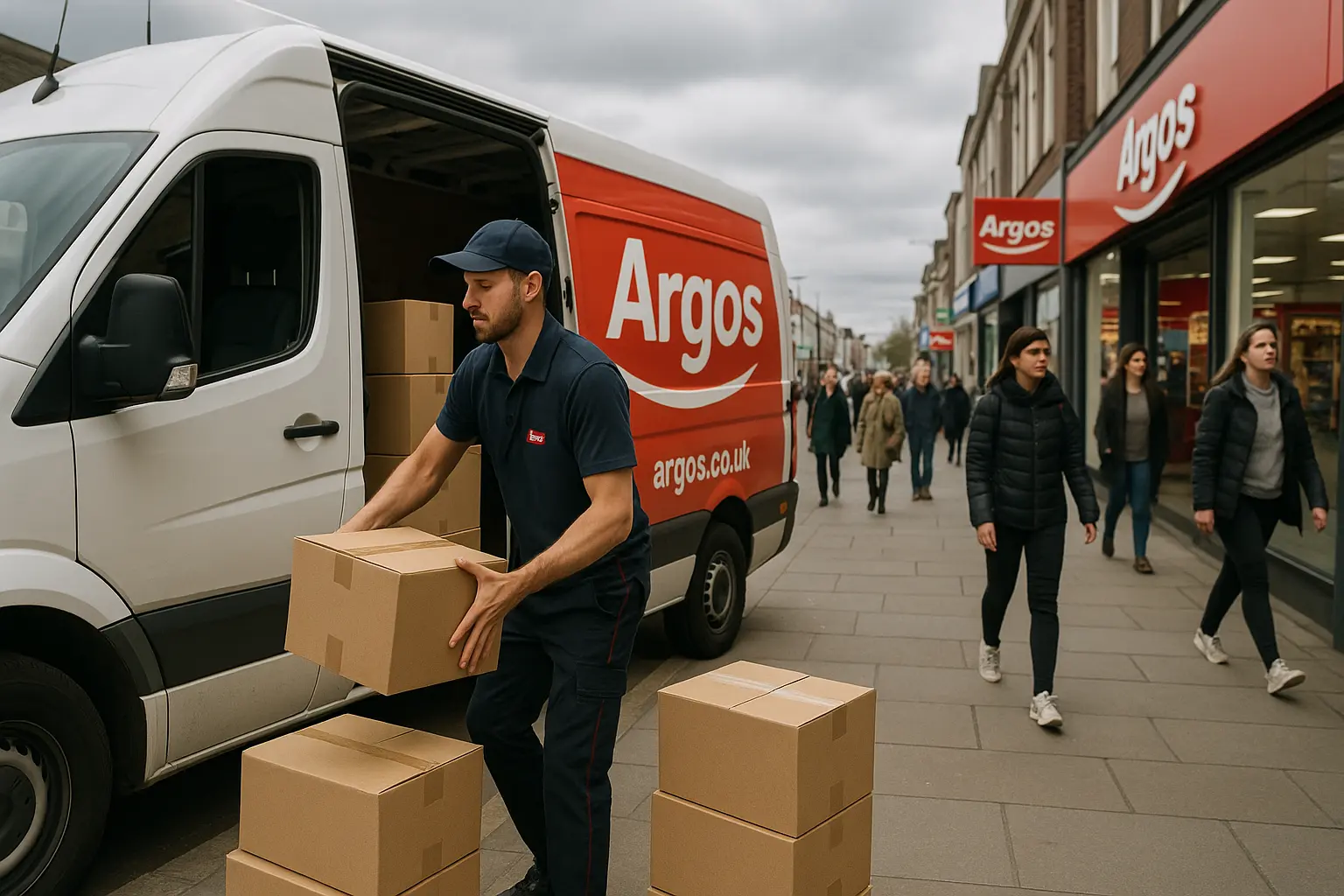
British Retail Icon at Risk: Argos Faces Chinese Takeover as Sainsbury’s Courts JD.com
“When you sell off the family silver, don’t be surprised when the house feels emptier.”
That’s the refrain now echoing through Britain’s high streets as the bombshell news breaks: Sainsbury’s is in the middle of serious talks to sell Argos to Chinese e-commerce Goliath JD.com. With Argos standing as the UK’s second largest general merchandise retailer – and a national institution – the deal is already sparking concern, debate, and raw outrage in living rooms, business boardrooms, and Downing Street alike.
China Eyes Argos: Sainsbury’s Throws Open the Door to a Foreign Takeover Frenzy
The shock talks emerged just days ago, ripping the Band-Aid off the long-festering wound at Sainsbury’s. The FTSE 100 supermarket group, which famously snapped up Argos in 2016 for £1.1 billion, is now reportedly deep in negotiations to offload the one-time catalog king to China’s JD.com-an e-commerce juggernaut valued at a jaw-dropping $48 billion. If finalized, the deal would be the biggest incursion yet by a Chinese giant onto British retail soil. Argos, with its sprawling 1,100 collection points and a web presence that sits just behind Amazon and eBay, is a jewel ripe for international ambition.
The would-be acquirer is hardly an unknown, but the sheer scale of JD.com’s global ambitions has British business leaders and shoppers alike raising their eyebrows. Just months ago, JD.com aimed for an eye-popping €2.2 billion takeover of German electronics retailer Ceconomy. Now, their bid for Argos appears to be less a random acquisition and more a deliberate power play. JD.com’s “Retail as a Service” empire already boasts 600 million annual active customers worldwide. Swallowing Argos would instantly grant them a massive British footprint-and a possible springboard into all of Europe.
“Sainsbury’s is tossing British jobs and consumer interests to the wind, all for the promise of a short-term cash injection from Communist China. This is a dark day for British retail independence.” – UK business activist on X
Stirring the pot further? The talks come on the heels of the first high-level UK-China trade discussions since 2018. As Business Secretary Peter Kyle met with Beijing officials in an effort to address £1 billion in trade barriers, critics are questioning if Argos amounts to a “peace offering” – or, as skeptics warn, an outright surrender.
From Catalog Classic to Political Football: What’s Really Driving the Sainsbury’s Sell-Off?
Peel back the layers, and the motivations start to glare. Since his leadership began, Sainsbury’s CEO Simon Roberts has sung the gospel of a “food first” strategy. For Roberts, Argos-a £1.1 billion gamble from 2016-became, in the words of one analyst, an “albatross around the neck” of the supermarket’s core food business. While Sainsbury’s invested heavily in digitizing the Argos model and boasted about “More Argos, more often,” the cold, hard truth is that the retail giants have slowly backed themselves into a corner. Cost pressures from inflation, competition from both Aldi and Lidl, and changing British shopper habits have all made general merchandise branding a tricky business for a food retailer to get right.
Still, it’s not just about the numbers. Sainsbury’s went on to trumpet JD.com’s world-class “technology and logistics expertise” in the deal, promising this would only benefit Argos customers. Yet industry insiders aren’t buying it. If this takeover closes, it would turn the tables on over a century of locally-sourced British commerce. Argos would become the crown jewel of a Beijing-based megacorp-and for many, that’s a price too high to pay.
“I grew up circling toys in the Argos catalog. Now we’re one click away from letting China decide what my grandkids will have for Christmas.” – Disgruntled UK parent, in a viral Facebook post
JD.com, flush with global cash and expansionist zeal, clearly sees Argos as a gateway drug for dominating UK high street shopping. The move falls in line with increasing Chinese activity in core Western retail sectors. First with Germany, now the UK-who’s next? Where does loyalty to local businesses and British workers fit in?
Just this April, JD.com quietly beta-tested its “joybuy.com” platform in Britain, which now looks suspiciously like a prelude to this giant leap. While Sainsbury’s claims the talks will help “colleagues, customers, and partners,” the British public can’t help but see the warning signs of a wider sellout.
Backroom Deals and Vague Promises: Will British Shoppers and Workers Be the Losers?
No deal is done yet, but the writing is plain on the wall. Industry sources report that negotiations are advanced and urgency is high as Sainsbury’s tries to put its food-first vision into action. With tens of thousands employed across Argos’s 1,100 collection points, fears are growing about where ultimate decisions will be made-and who will benefit most.
Some on the left may scoff at the bought-and-sold outrage, but conservative voices are sounding the alarm: What does it say about modern Britain that an iconic high street brand can be so casually bartered away? Will Argos jobs, IT, and management soon be centralized in Shanghai or Beijing? How “world-class” is it, exactly, for Britain’s digital infrastructure-and customer data-to be in the hands of a foreign conglomerate with deep ties to the Chinese state?
“This could be the tip of the iceberg. Today it’s Argos, tomorrow it’s every British brand not nailed down. Selling out to China will become the new normal unless policymakers wake up.” – Business columnist, The Spectator
For critics, the optics could not be worse. Less than a week after a historic sit-down between UK and Chinese officials in Beijing, British retail heavyweights appear to be lining up new ‘partnerships’ that just happen to transfer major assets overseas. Peter Kyle’s team says the trade talks aimed to cut “£1 billion in trade barriers” over the next five years, but the word from Whitehall is that these Argos discussions were not on the official agenda. Or so they say.
Meanwhile, Sainsbury’s maintains there’s “no certainty” any transaction will happen. But with shareholders itching for a payday, and multinational players circling, the clock is ticking. What will happen to customer choice? What will happen to the famously quirky British innovation that Argos once represented? And perhaps most importantly, who gets to call the shots in the new world order of British retail?
The reality is that, whether the deal is signed a week from now or fizzles in the press, the floodgates have opened. Argos isn’t just a store-it’s a symbol. To some, watching it auctioned off to the highest foreign bidder feels like a page torn from a dystopian script: globalism unchecked, local jobs on the block, and national pride quietly set aside for boardroom expediency. As election season ramps up, expect to see Britain’s retail soul-and foreign policy backbone-tested like never before.