
‘Leadership? More Like Witch Hunt’: CISA’s Polygraph Firestorm Blasts D.C.
“This is a disgrace. I have never seen morale so low – everyone is looking over their shoulder,” shared one senior cybersecurity official, igniting a growing chorus of outrage inside Washington’s embattled cyber agency. The Cybersecurity and Infrastructure Security Agency (CISA), the very outfit charged with defending critical American infrastructure, now finds itself tearing at the seams in the aftermath of a polygraph debacle involving its acting director and a sweeping suspension of veteran staff. With trust evaporating evaporated and accusations flying, all eyes are on DHS and the White House: Can CISA recover or is this just the latest example of swamp dysfunction pushing American security further to the edge?
If you missed the summer’s hottest Beltway bombshell, here’s the rundown. In late July, at least six career staffers organized a polygraph test for Acting CISA Director Madhu Gottumukkala after he reportedly requested access to ultra-sensitive cyber intelligence-operations so classified, even agency heads must jump through hoops. The test was the real deal: a counterintelligence-style grilling, reportedly meant to guard U.S. secrets from potential inside threats. But what happened next shook the agency and the Trump administration alike: Gottumukkala failed the test. Almost immediately, the staff involved were placed on administrative leave. According to multiple accounts and breaking reports, CISA now stands on shakier ground than ever as the dust refuses to settle.
At the center is a deepening war between career government experts and appointees scrambling to save face. Critics on social media, especially in patriotic and conservative circles, erupted with #CISAlive and #SwampGames trending, accusing entrenched federal employees of orchestrating a witch hunt. As one viral post blasted: “We put the fox in charge of the henhouse, and now there’s chicken feathers everywhere.” Far from being a minor HR dispute, this polygraph controversy is now putting the entire future of U.S. cyber defense and federal hiring practices under the microscope.
“It is not just about who failed what test – it’s about who America can trust to guard our crown jewels from cyber and political attack,” a former DHS advisor posted. “If the acting leader can’t pass a standard security screen, we need more than empty statements from the top.”
Agency Meltdown: A Leadership Vacuum as Trump’s Reforms Shake Up CISA
The current drama lays bare an agency already staggering under relentless change. For nearly a year, CISA has operated without a permanent, Senate-confirmed leader – a fact many see as a calculated move from the Trump administration to streamline and toughen national cyber defense. Former Director Jen Easterly’s resignation in January left Gottumukkala serving in an acting capacity, his authority questioned from the start as a wave of resignations, reassignments, and forced departures reshuffled CISA’s ranks. Nearly one in three employees has left the agency since January, as political appointees pushed for shifting staff to border security and immigration roles elsewhere inside DHS.
Moreover, CISA’s $3 billion budget is under intense scrutiny, with not only fiscal conservatives but Trump loyalists demanding more accountability and tangible results. Whether it was an overzealous crew of bureaucrats or a legitimate protocol, the so-called “unsanctioned” polygraph debacle has become a flashpoint for critics eager to expose what they claim are cracks in the system. DHS spokesperson Tricia McLaughlin struck back hard in press briefings, labeling the whole event as a rogue operation: “Random bureaucrats can’t just order a polygraph.” But that hasn’t cooled public skepticism one bit.
According to insiders who spoke only under cover of anonymity – and with good reason, considering that six staffers are now suspended with pay and facing a career crossroads – morale has “never been lower” inside CISA’s headquarters. Conservative lawmakers on Capitol Hill are already demanding both transparency and a strict accounting from the White House and DHS: Why was an acting director seeking top-level intelligence without passing proper vetting, and why is whistleblower retaliation the agency’s new reflex?
“There’s a reason nearly one-third of CISA staff are gone. This agency was designed to serve, not to act like a clique guarding their turf,” wrote a Trump-aligned committee member on Truth Social. “Who exactly is driving the bus, and where are they steering our national security – off a cliff?”
Unmasking the Real Risks: Polygraph Controversy and America’s Cybersecurity Future
While the political mudslinging continues, national security risks just keep mounting. As every conservative knows, reliable vetting procedures are not some bureaucratic formality; they are a defense line between classified information and a hostile, ever-evolving global threat. Polygraphs, while controversial, have long been used across the Pentagon and intelligence agencies to weed out individuals whose backgrounds could put sensitive data at risk – especially in the cyber domain where foreign infiltration can be invisible until disaster strikes. Polygraph tests are common for top clearances, but the process is tightly regulated because results are – and should be – closely scrutinized for reliability.
Here’s the kicker: Even as internal DHS critics point to “unsanctioned” testing and the questionable reliability of polygraph exams (which rarely stand up in court), the undeniable facts remain. CISA is America’s digital fortress – and for that fortress to hold, its leaders must not only pass background checks, but have the trust of both their teams and the public. Instead, we’re left with headlines about loyalty tests, retaliatory suspensions, and an agency in chaos just as cyber risks hit new highs across government, finance, and infrastructure.
What’s more, Gottumukkala was only seeking higher access after an unnamed U.S. intelligence agency shared tightly-restricted cyber threat intel. Instead of clarity, Americans now face a fog of conflicting stories: Did career specialists act to protect national secrets, or did they weaponize protocol to undermine the acting director and exact revenge for political reforms? Either way, the DHS investigation rages on, with no indication that staff morale or public trust will recover anytime soon.
“You can strip away the pay, raid the agency, but you can’t escape the truth – weak leadership invites crisis,” one cybersecurity veteran told RedPledgeInfo. “It’s time for real oversight and Trump-style accountability.”
What’s Next: Trump’s DHS, 2026 Midterms, and a Battle for America’s Cyber Soul
As DHS battles it out behind closed doors, the implications are plain: America’s enemies are watching, and internal division is their top ally. President Donald Trump, whose administration continues to reshape every aspect of federal bureaucracy, has made no public comment yet – but insiders expect stricter policies on vetting, discipline, and agency-wide loyalty checks before the 2026 midterms roll around.
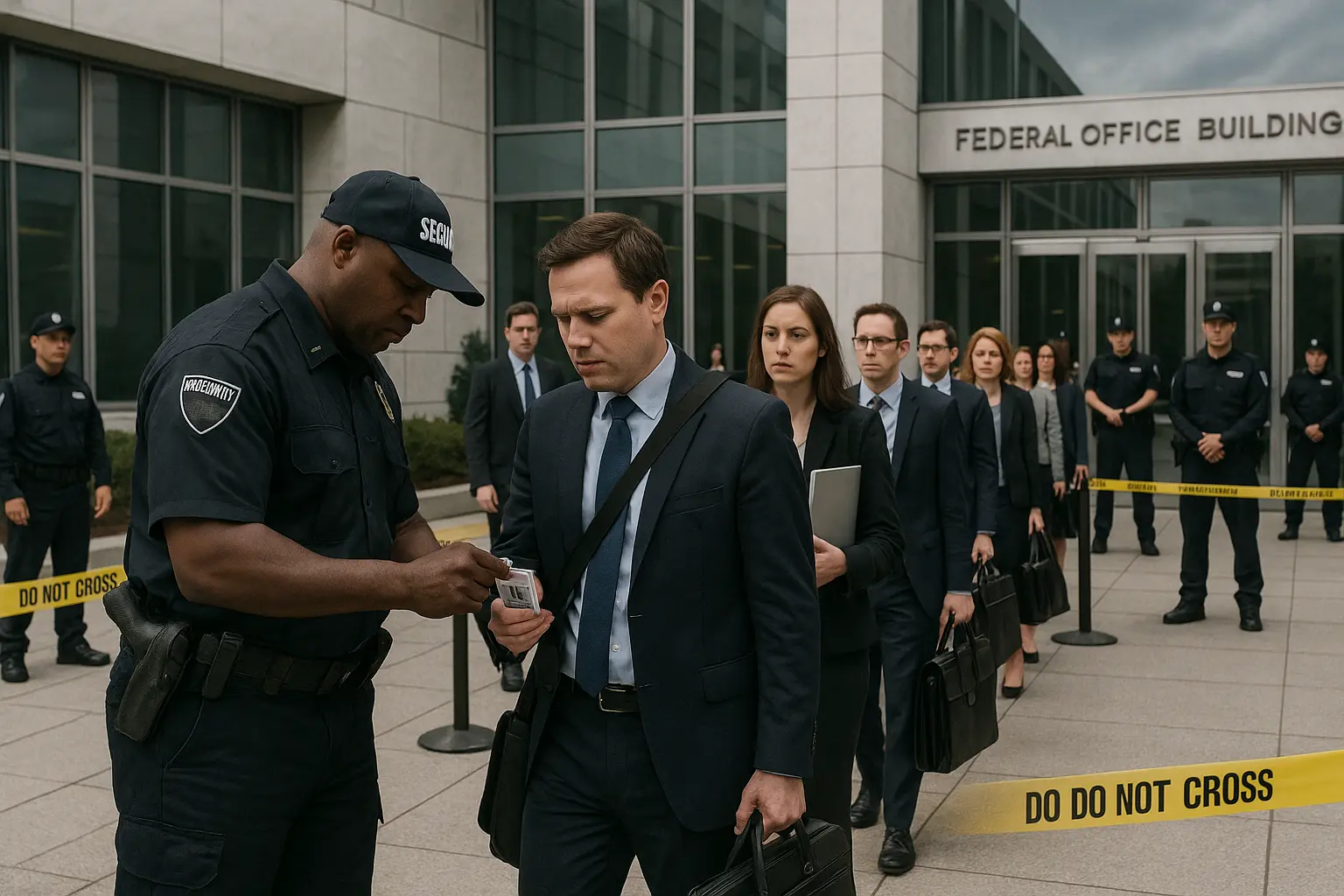
Meanwhile, conservative activists and lawmakers are using the moment to push for fresh hearings, whistleblower protections, and strict budgetary controls on agencies they see as “runaway fiefdoms.” Some senior Republicans have gone so far as to suggest CISA’s entire mission be refocused, or even decentralized, in light of the agency’s failure to keep its own house in order. “If DHS can’t manage its own security gate, what hope do Americans have that Washington can defend Main Street or the electric grid?” asked Rep. Mark West (R-TX) in a fiery Capitol Hill speech.
The stakes have never been higher: CISA’s leadership challenge is now a referendum on how America fights digital warfare – not just against hackers and foreign agents, but against bureaucratic inertia and toxic politics. For the families and businesses counting on stable, patriotic government, this scandal is one more reason to call for greater transparency, real accountability, and rock-solid American leadership in every agency. Because when America’s defenses start feuding, it’s always the people’s security that gets left in the crossfire.
“We trust our cybersecurity to these people? Maybe Congress should polygraph them all before they spend another dime,” one conservative voter posted. “Drain the swamp – and plug the cybersecurity holes while you’re at it!”
Stay tuned: with DHS’s investigation far from over, fallout from this CISA meltdown could influence federal hiring, security policy and even the 2026 elections. As RedPledgeInfo continues to follow every developing detail, one thing’s certain – in the new Washington, no one’s secrets are safe for long.