
DHS Shockwaves: Trump’s Customs Threat Aims To Shake Up Sanctuary City Airports Nationwide
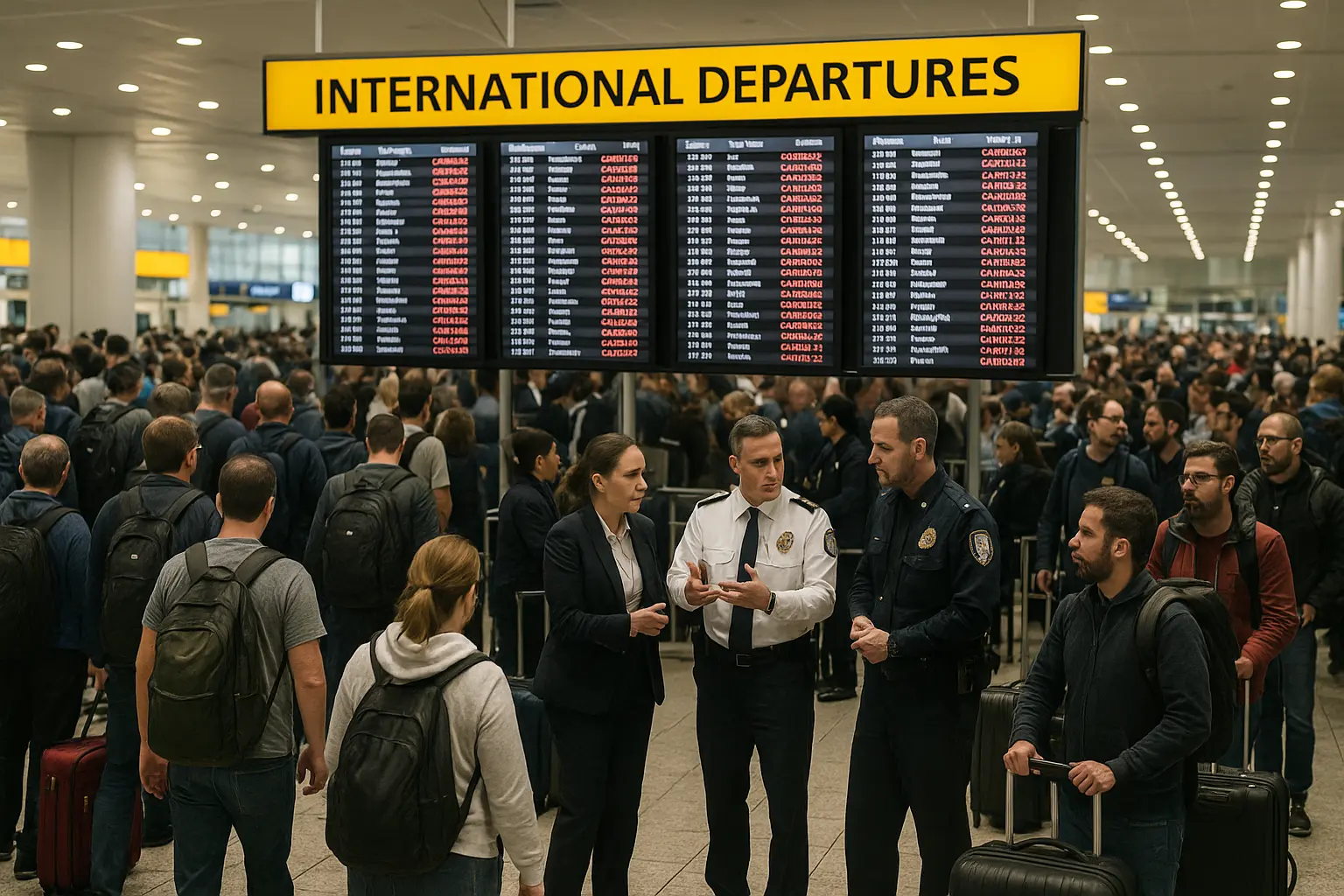
‘They want the rights, but not the responsibilities.’ That’s what one airline executive muttered off-record after Homeland Security Secretary Markwayne Mullin dropped one of the most seismic threats in modern air travel: No more U.S. customs for airports in ‘sanctuary cities’. If officials don’t start cooperating with federal law, Mullin has said, the Biden-era free ride ends the moment the 2026 World Cup wraps. JFK, LAX, Chicago O’Hare, and more could face international chaos overnight – all in the name of enforcing America’s borders and pushing back against sanctuary city defiance.
Looming Deadline: World Cup’s End Brings the Hammer Down
With only weeks left before soccer’s biggest tournament leaves U.S. soil, DHS is making it clear: sanctuary city airports are on borrowed time. Last week, Secretary Mullin privately warned top airline execs that Customs and Border Protection (CBP) could be yanked from major international gateways – effectively halting ALL international flights at non-compliant airports. Let’s be clear: This is not an idle threat. Mullin, speaking on Fox News and in backroom conversations, has repeatedly said that if local Democrats refuse to partner with federal authorities at arrival gates, ‘hard decisions’ are coming.
The airports believed to be on the chopping block read like a who’s who of American travel: JFK and Newark in New York, LAX in Los Angeles, Chicago O’Hare, as well as major hubs in San Francisco, Seattle, Boston, Denver, Philadelphia, Washington Dulles, and Portland. The scale is eye-watering. As reported in April, over 50 million travelers landed at the three New York City airports in just one year. Imagine all of that traffic, cargo, and commerce forced to reroute – or grind to a halt.
“If they’re a sanctuary city … maybe we need a hard look at whether they can be trusted with border security,” Mullin said on Fox News.
Mullin’s team ties the crackdown to a renewed emphasis on law and order under President Trump’s second term. ‘If you don’t honor our immigration law, you lose the privilege to serve as America’s front door,’ a senior DHS aide explained. On background, White House insiders describe the plan as a ‘performance of federal authority rarely seen in peacetime’ designed to finally end years of blue-city refusal to cooperate with ICE detainers and federal investigations.
Catastrophic or Courageous? Airline Industry and Democrats Sound Off
Tense closed-door meetings erupted last week as airline lobbies and big city Democrats reeled from the threat – and the economy braced for aftershocks. Major carriers, through their trade group Airlines for America, have argued that removing customs practically means shutting airports out of international business altogether. “International flights can’t legally disembark in the U.S. without federal customs on site,” says one industry official. The impact? Thousands of jobs risk vanishing, supply chains freezing, massive reroutes or cancellations, and billions in lost tourism and export income.
Blue-state governors, led by California’s Gavin Newsom, erupted with outrage. Newsom called it “a stupid idea” that hurts working families more than politicians. Senate Democrats blasted the move as ‘borderline extortion’, saying it would punish lawful travelers returning from overseas – not just illegal migrants. The outcry spread fast on social media, with #AmericansGrounded trending as travelers and flight crews voiced panic over canceled vacation plans and summer bookings in limbo.
“Trump’s people think they can squeeze America’s cities with economic blackmail, but it’s not going to work,” tweeted a prominent New York congresswoman.
But at the same time, grassroots conservatives are cheering the move. Fed up with open-border policies, many see the crackdown as common sense tough love. ‘Why should sanctuary cities get the benefits of world trade and travel if they won’t enforce the law?’ a Texas Republican strategist told RedPledgeInfo. Online, conservative groups applauded the administration for finally doing what ‘weak Washington insiders wouldn’t dare’ in years past.
Transportation Secretary Sean Duffy made headlines distancing himself from the plan, telling Congress he opposed politicizing air travel: ‘We shouldn’t shut down airports just because we disagree with local elected officials.’ But critics fired back, saying Duffy’s comments miss the point. ‘This is about public safety, not politics. No one should use American airports as a loophole for illegal entry,’ a DHS official countered.
Sanctuary City Politics Hit America’s Gateways: What Happens Next?
The fireworks over customs are the latest front in President Trump’s multi-pronged battle with sanctuary jurisdictions – and the stakes have never been higher. For years, Democratic mayors in cities like New York, Chicago, and Los Angeles have refused to let police help ICE detain and deport criminal aliens. Now, with millions of migrants entering post-pandemic, the administration is leveraging its ultimate pressure point: choke points at the border, including the nation’s busiest airports.
As The Atlantic detailed just this week, the list of potential targets isn’t limited to the coasts. Denver, Philadelphia, and Portland, Oregon, among others, are reportedly on Mullin’s list. Critics warn that restricting customs at such a wide range of airports, especially following the traffic surge of the World Cup, could shock the economy from coast to coast. Yet administration officials dismiss these warnings as ‘fearmongering.’
“Sanctuary policies have real-world consequences – and if that means rerouting some flights until law and order is restored, so be it,” said a senior DHS adviser.
Republicans champion the move as long-overdue accountability. ‘Under Trump, we finally have a government that won’t be bullied by blue states cozying up to illegal aliens,’ a Senate GOP aide argued. By threatening the economic lifeline of noncompliant cities, the White House hopes to force local politicians to choose: real cooperation with border enforcement or facing the consequences at home.
Political eyes are now glued to a hot summer of negotiations. Airlines are pleading for compromise before the July customs cutbacks go into effect, quietly warning that the impact could ricochet into everything from logistics to the presidential campaign. Democrats insist the courts will eventually block the move, positioning themselves as defenders of business and civil liberties – but so far, Trump’s DHS has shown little interest in backing down.
Meanwhile, as the World Cup puts America squarely in the international spotlight, the administration’s messaging is crystal clear: play ball with federal immigration, or get cut off from the world.
Will the nation stand strong for sovereignty, or will blue cities bend under the weight of lost dollars and grounded flights? One thing is certain: after July, the battle over U.S. borders may be fought not at the Rio Grande – but right at the arrival gates of America’s busiest airports.