
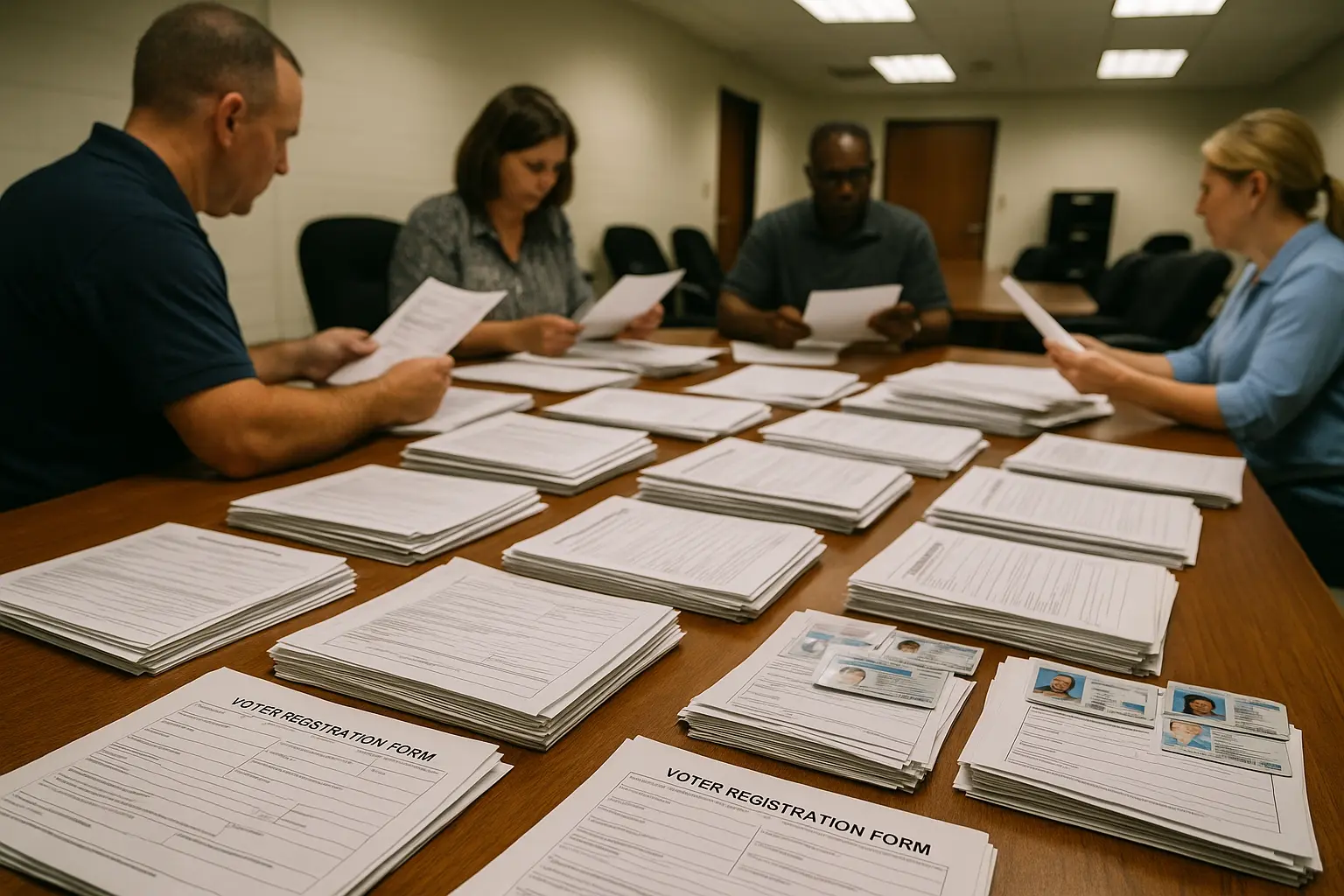
DHS Uncovers Massive Surge: Over 250,000 Noncitizens Found on Voter Rolls in Four Critical States
‘This is an election integrity crisis the American people cannot ignore,’ declares prominent conservative pundit Liz Wheeler, setting the stage for what could be the most shocking revelation of the 2026 election cycle. With President Donald Trump preparing a blockbuster primetime address, the Department of Homeland Security (DHS) is now blowing the whistle on a bombshell: more than a quarter-million potential noncitizens could be lurking on U.S. voter rolls, a staggering figure threatening to shake the very bedrock of American democracy.
State-by-State: California Leads the Pack as Noncitizen Registrations Skyrocket
The Department of Homeland Security has set off political fireworks nationwide with letters sent to state election officials revealing a tidal wave of potential noncitizen registrations. According to the latest DHS findings, California stands at the epicenter. An estimated 190,832 potential noncitizens are registered to vote in the Golden State alone, eclipsing the combined totals of New Jersey, Nevada, and Pennsylvania. New Jersey trails with a jaw-dropping 35,152, followed by Nevada with 15,903, and Pennsylvania with 14,576. And those numbers are just the tip of the iceberg, as the agency also found tens of thousands more voters whose identities match federal immigration records based on names, Social Security numbers, and addresses.
“Election integrity isn’t just a buzzword. If these numbers from DHS are accurate, it means there are hundreds of thousands of vulnerabilities in our most sacred process. That’s unacceptable,” says Congressman Jim Jordan (R-OH), echoing a wave of similar outrage flooding conservative media.
What’s truly jaw-dropping is that these numbers could be on the conservative side. The department’s review only covers a handful of states-and with such staggering figures, it’s no wonder questions about the overall integrity of the U.S. electoral system are boiling over. President Trump is slated to address the nation in a live primetime event this weekend, where senior sources say he will highlight these vulnerabilities and lay out his bold plan for restoring trust in the ballot box.
Election officials in the four flagged states have now been urged to quickly verify the identities of these registrants, with DHS Secretary Markwayne Mullin underscoring the gravity of the findings. Yet the agency admits that many matches arose from common identifiers or stretches of clerical error-meaning state-level verification is crucial. Even so, the sheer magnitude of these numbers has already sent shockwaves through social media and the halls of Congress.
Behind the DHS Numbers: Data Debates and Calls for Action Heat Up
While the DHS report is explosive, competing voices are turning up the heat on the agency’s methods and data accuracy. Critics from within the Democratic Party and various voting rights groups are on the defense, claiming the federal SAVE program-used to crosscheck federal immigration databases with state voter rolls-is far from perfect. Flawed methods, they argue, could potentially disenfranchise legal voters whose records aren’t up-to-date or erroneously flagged.
“We cannot allow fear-mongering or bureaucratic error to strip eligible Americans of their voting rights,” thundered Rep. Alexandria Ocasio-Cortez (D-NY) in a heated House hearing, reflecting the growing partisan divide. But does this line of attack hold water? The White House even acknowledged that many of these matches were based on commercially available databases-and not strictly government-validated sources-raising honest questions on both sides of the aisle about reliability and intent. Still, DHS stands by its findings, with Secretary Mullin urging greater collaboration with states to verify identities and crack down on vulnerabilities.
“The fastest path to restoring faith in our elections is working hand-in-glove with officials to separate fact from fiction. We have the data and we’re sharing it. The rest is up to the states,” said Secretary Mullin in a televised briefing.
For conservatives and Trump supporters, this is a clarion call for tougher election security-stricter voter ID requirements, clean-up of voter rolls, and aggressive monitoring of registration systems. Voting rights groups, meanwhile, warn that the heightened focus risks sweeping up innocent Americans and further polarizing an already divided nation. But when it comes to restoring confidence-especially in swing states-the pressure is now squarely on state officials to act, and to act fast.
Implications for 2026: Trump’s Election Integrity Offensive and the Battle for America’s Soul
The political implications could not be more dramatic. As President Trump gears up for his televised address, speculation swirls about whether he’ll announce new, far-reaching executive orders or even push for congressional action to tighten voting laws nationwide. The administration is already defending its aggressive expansion of the SAVE program-despite facing criticism, including recent court battles over the methods used to identify noncitizens on the rolls.
Just last month, a federal judge ruled some of the administration’s SAVE program changes illegal on privacy grounds, but the Justice Department is mounting a vigorous defense. Conservative leaders argue these legal roadblocks are nothing more than desperate attempts to block reform and maintain the status quo that led to this crisis. Meanwhile, DHS officials caution that the numbers are preliminary, but stress the urgency cannot be overstated. Phase two of their analysis is set to roll out later this summer, which could snare even more states in the crosshairs-potentially raising the noncitizen total even higher.
“If we can’t ensure only citizens vote, we’ve already lost our country. Any politician standing in the way of serious verification measures is abdicating their duty,” warns former White House strategist Stephen Miller in response to the latest revelations.
The stage is set for a must-watch showdown-Trump’s primetime address could set the tone for the remainder of his second term, as he seeks to put election integrity front and center on the national agenda. The base is energized, demanding action. As one viral post on X (formerly Twitter) put it: ‘If we don’t secure our elections now, what’s the point of 2028?’
Critics point to possible data flaws or incomplete reporting, but for millions of Americans, these new numbers confirm what they’ve long suspected: the integrity of our elections is under siege. With less than six months before the critical midterms, the fight over the nation’s voting system is about to reach its boiling point. Every American should be paying attention-because this could shape our republic for generations to come.