
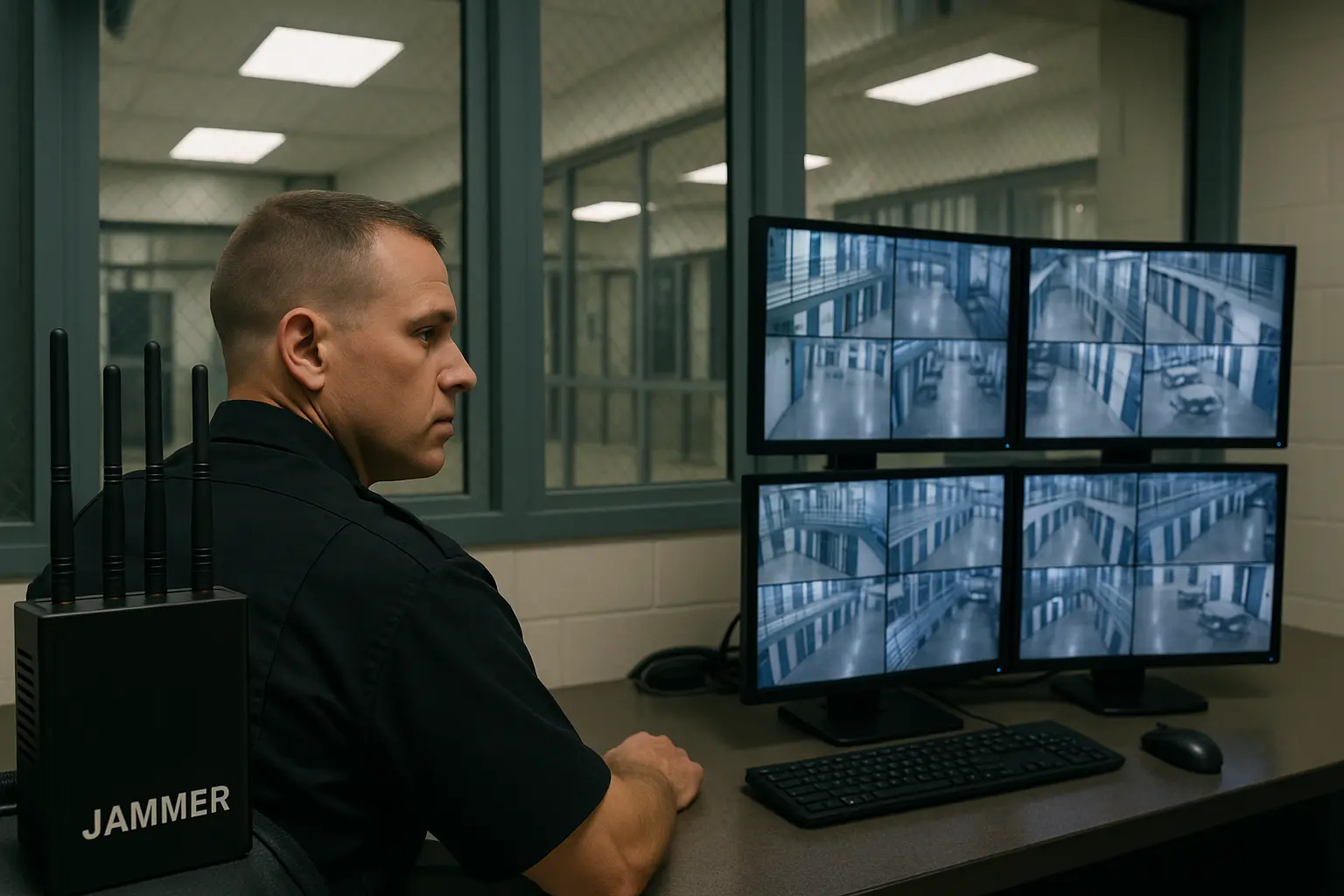
FCC Poised to Let Prisons Jam Contraband Phones, Ending Crime Rings Behind Bars
‘If we don’t stop the phones, we can’t stop the crime.’ – Robert Johnson, prison safety advocate
Big news from Washington could spell the end for prison kingpins running crime from behind bars. Federal officials are on the verge of taking action that many law-abiding Americans say is long overdue: giving state and federal prisons the green light to jam cellphone signals within their walls. This bold move by the Federal Communications Commission-set for a decisive vote on September 30-could revolutionize security in our nation’s correctional facilities, finally cutting off the lifelines criminals use to continue their dark business from the inside. Read more about the upcoming FCC vote here.
Prisons Turned into Crime Networks: Contraband Phones at the Heart of the Crisis
It’s not just a handful of smuggled cellphones-it’s an epidemic. Across the United States, inmates have turned to increasingly brazen tactics to sneak phones past the gates. From high-flying drones dropping payloads into prison yards, to hollowed-out footballs tossed over razor wire, to corrupt staff turning a blind eye, the flood of illicit cellphones has become a national scandal. With unfettered access to communication, inmates have seized the opportunity to expand their criminal reach: orchestrating drug deals, running fraud schemes, facilitating sex trafficking, and even organizing deadly riots-all from so-called “correctional” institutions.
Consider the grim warning from Georgia, where more than 15,500 contraband cellphones were seized in 2024 alone. In fact, in one year, the Georgia Department of Corrections conducted 126 full prison shakedowns and found over 23,000 pieces of contraband; cellphones made up a huge portion of the haul. Every confiscated device is one less tool for criminals, but for every phone discovered, countless more stay hidden-used to keep illicit empires thriving behind bars.
“Inmates are running criminal enterprises and putting lives at risk with just a few clicks. We cannot stand idly by while prisons become headquarters for organized crime.” – Rep. David Kustoff (R-TN)
These phones aren’t just a nuisance-they’re the nerve center of criminal activity. Former South Carolina correctional officer Robert Johnson knows better than anyone: after surviving a hit ordered by inmates using contraband phones, he’s become the nation’s most outspoken advocate for blocking illegal cellphone communications in prisons. The challenge is immense-but the solution could finally be at hand.
Cellphone Jamming: The Breakthrough Conservatives Have Fought For
For nearly a century, federal law has blocked state and federal prisons from jamming wireless signals. The intention behind the law was to protect public communications. But in our high-tech age, that well-intentioned ban has become a massive liability-one that criminals exploit shamelessly. Now, thanks to dogged pressure from conservative lawmakers, victims’ advocates, and prison staff, the FCC is on the cusp of changing everything.
Leading this charge is FCC Chairman Brendan Carr, who-backed by support from solid conservatives like Sen. Tom Cotton (R-AR) and Arkansas Gov. Sarah Huckabee Sanders-has made it his mission to put safety first. Under the new proposal, prisons would be permitted to operate targeted jamming systems that stop illegal cellphones cold. These solutions would be narrowly tailored to ensure critical outside communications (like emergency calls made near prison walls) are not affected, a concern that previously stopped reform in its tracks.
The proof is in the testing: a groundbreaking pilot program in South Carolina made jaws drop, showing that micro-jamming technology could block illicit cellphone signals inside prison housing units-without blocking legitimate communications just outside the fence. Armed with this evidence, lawmakers and families of crime victims are demanding action and pointing to the massive success in states like South Carolina, which in 2023 became the first to be licensed by the FCC to identify and disable illegal phones at scale. This led to a surge in confiscations and an unprecedented expansion of interdiction programs, with the state funneling nearly $11 million into new technologies just last year. South Carolina’s licensing breakthrough turned heads and gave fresh hope to prison officials coast to coast.
“We need to put an end to criminal masterminds orchestrating chaos from their jail cells. With jamming, we’re striking at the heart of organized crime.” – Gov. Sarah Huckabee Sanders (R-AR)
It’s worth noting-the push for prison jamming isn’t just about theory. In 2018, a South Carolina riot, executed via contraband cellphones, left seven dead. That bloodbath forced even the most skeptical officials to admit the status quo has failed. Since then, officials in places like South Carolina and Georgia have invested millions in cutting-edge detection technology, but these piecemeal efforts haven’t closed all the loopholes. As FCC Chairman Carr himself said, “Cellphone jamming may not be the answer for every facility, but for many, it would instantly make staff and inmates safer.”
Red States Lead the Charge While Liberals Drag Their Feet on Real Prison Reform
If it sounds like common sense, that’s because it is. But let’s get real: Democrats and their allies in the tech industry have stonewalled and slow-walked efforts to allow prisons to use jamming technology. Their arguments about “potential interference” with public cell signals are losing credibility, especially after recent successful micro-jamming pilots proved seamless operation. Conservatives across the country, however, are making it clear: Enough is enough. No more coddling criminals with gadgets that let them terrorize law-abiding citizens from the inside.
The Cellphone Jamming Reform Act, hailed by prison officials, prosecutors, and crime survivors alike, is finally getting its day in the sun. With Rep. David Kustoff (R-TN) and others leading the charge in Congress, and with a vital FCC vote looming on September 30, confidence is sky-high that President Trump’s law-and-order mandate will soon extend into every correctional facility in America. As AG Tim Griffin points out, “Thousands of contraband phones are being used to plan violence. This proposal will save lives.”
“For too long, our hands have been tied. This vote is a chance for Congress to untie them and put power back in the hands of law enforcement-where it belongs.” – FCC Chairman Brendan Carr
The public is speaking out, too-especially on conservative social media. Online reaction has been fierce:
- “Why did it take so long for common sense to prevail?” – @RedStateMom
- “Bet the libs start whining about ‘prisoners’ rights’ when no one is talking about victims’ rights!” – @TrueTexasPatriot
- “Great job, President Trump & FCC! Closing another loophole the Left ignored for years.” – @EagleForAmerica
This national debate is set to explode as the FCC convenes on September 30. Support for prison jamming is mounting, with calls for lawmakers to resist the usual lobbyist and progressive pressure and instead back law enforcement and American families. If the measure passes, the U.S. could finally slam the door on criminals taking their crime sprees digital-and send a strong message that when you do hard time, you lose your grip on the outside world, period.
Prison Jamming: Trump’s Law-and-Order Legacy in Action
This isn’t just another bureaucratic shuffle. With the 2026 midterms on the horizon and law and order once again polling as a top concern, Republicans are rallying around the jamming effort as a signature victory of President Trump’s second term. It’s the definitive answer to years of hollow promises and soft-on-crime policies that put ordinary Americans last. The choice is clear: either stand with law enforcement and our communities, or side with the lobbyists and criminals who want to keep backdoor crime alive in America’s prisons.
President Trump’s iron resolve and the unified push from conservative leaders have brought us to this turning point. The upcoming FCC vote isn’t just a technical adjustment-it’s a beacon of hope for millions of Americans sick and tired of crime proliferating inside supposedly secure facilities. Backed by mountains of data and years of evidence, this is the moment Congress, the FCC, and state governments can finally break the cycle and prove once and for all that our correctional system is more than a revolving door for organized crime.
“Victory for public safety is within reach, and it’s time for lawmakers to stop talking and start acting. The safety of our nation depends on it.” – Sen. Tom Cotton (R-AR)
Conservatives have been demanding action, not excuses. On September 30, America will see if its leaders are ready to cut the cord on criminal command centers inside our prisons and restore true justice for hardworking families everywhere.