
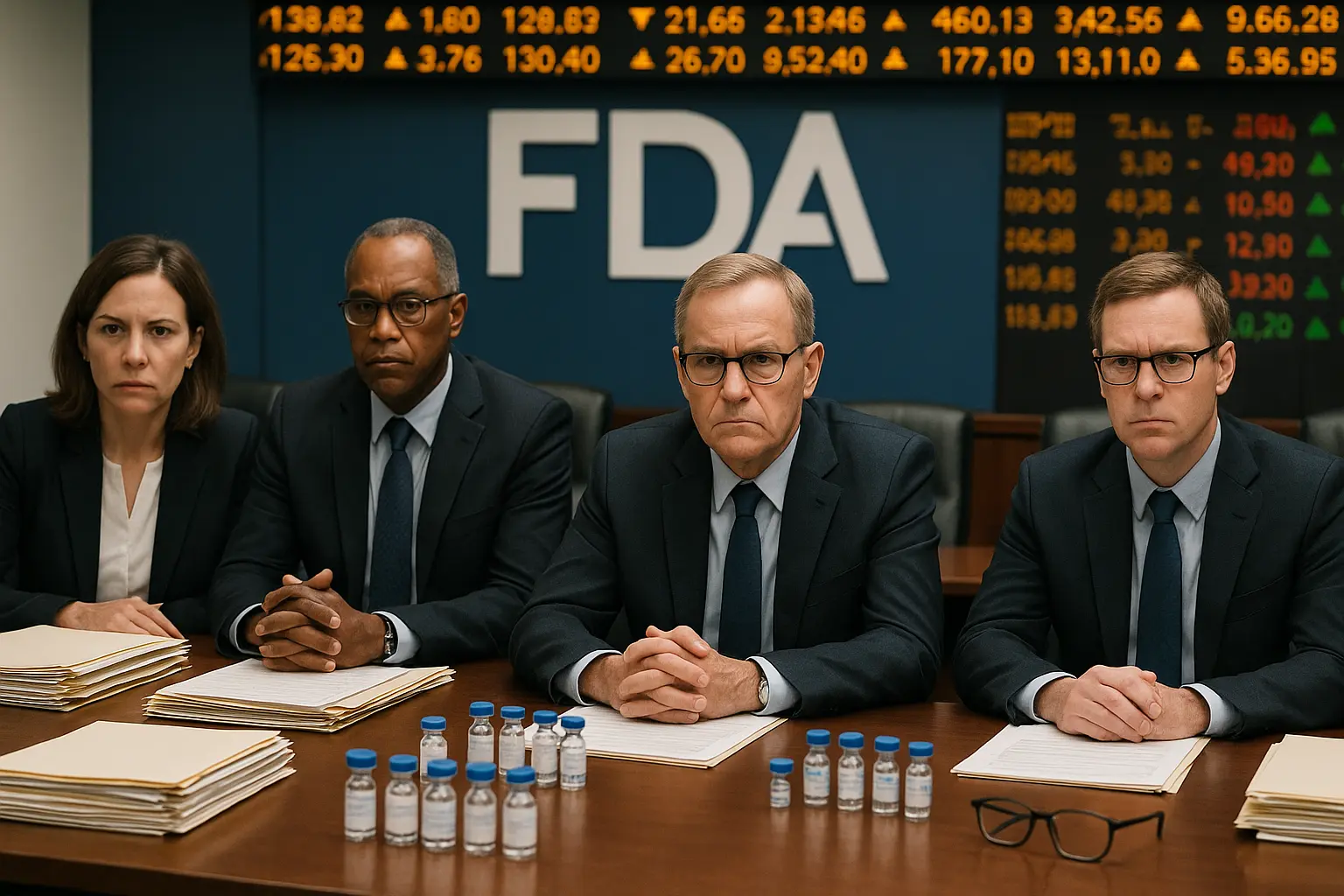
This roller-coaster FDA reversal not only delivers a second shot in the arm to the FTSE 100 pharma giant, but also thrusts American cancer patients and taxpayers squarely into the high-stakes world of international drug politics. The decision, split and controversial, sets the stage for more aggressive regulatory wrangling as trillion-dollar biopharma conglomerates test the boundaries of U.S. health policy under President Trump’s administration.
If you’ve never heard of Blenrep, here’s why you should care: By approving it as a third-line treatment for relapsed or treatment-resistant myeloma patients, the FDA has-at least on paper-opened a rare weapon for those battling this deadly blood cancer. But with Wall Street instantly souring and European bureaucrats waiting in the wings, is this a win for patients, or just another handout for Big Pharma?
Big Pharma’s Big Gamble: Blenrep’s Comeback Raises Eyebrows-and Stocks Tumble
There’s no hiding it: the FDA’s split verdict turned GSK’s U.S.-listed shares south almost instantly, sending them down nearly 5% in premarket trading the very morning following the approval news. According to a Reuters market recap, London shares also saw a 2% dip-hardly the sort of investor confidence you’d expect from a supposed miracle-cancer treatment.
Why the hesitation? It comes down to just how narrow the FDA approval is. Blenrep, or belantamab mafodotin, can only be prescribed in combo with chemo (bortezomib) and dexamethasone for adults who have already failed at least two other lines of treatment. The FDA flatly rejected another combination sought by GSK, meaning doctors and desperate patients are stuck with just one narrow option-and those who qualify face serious side effects.
Blenrep’s own advisory panel overwhelmingly voted 7-1 against its approval before the FDA’s decision, with outside experts and even internal FDA reviewers highlighting the “high rates of ocular toxicity and unclear clinical benefits” in the studies presented (source).
The risk didn’t scare off the regulators, but analysts were quick to throw cold water on the hype. Barclays analysts called the nod an “initially bounded U.S. re-entry,” while others, like Guggenheim, cautioned GSK will need to streamline red tape and prove the drug is worth the cost before blockbuster sales can happen.
Social media, meanwhile, erupted. Conservative commentators lampooned the FDA for “politicizing lifesaving drugs,” while others asked pointed questions about conflicts of interest, the lack of clear survival benefit, and whether this approval was more about appeasing international partners than serving American patients. The optics? Not great for the so-called science establishment.
Split Science, Split Decision: Inside the DREAMM-7 Data and FDA Drama
To justify letting Blenrep boomerang back to the American marketplace, the FDA leaned hard into new data from the DREAMM-7 Phase III clinical trial. Per Reuters, this study found Blenrep cut the risk of death for relapsed or refractory myeloma patients by 51% and tripled how long they lived before their disease got worse compared with a rival therapy from Johnson & Johnson.
That sounds impressive, until you peel back the layers. For one, these stats only applied to a small niche of patients, and-critically-the therapies come with a slew of concerning side effects. Chief among them: vision problems so serious, the FDA is requiring a Risk Evaluation and Mitigation Strategy (REMS) to keep tabs on dosing, eye health, and patient safety at every step (FDA).
“This is a significant milestone for the myeloma community,” cheered GSK’s Tony Wood, touting the need for “new and novel therapies, especially where prior treatments keep failing.” But behind the pharmaceutical PR, the reality is simple: Americans are being asked to trust a drug that European countries approved with far less fanfare-and considerably less pushback from their version of the FDA.
Notably, Blenrep combos are already available in the UK, EU, and Japan, with further approvals pending from regulators in China and elsewhere. Some industry watchers are now warning that U.S. patients could be unfairly used as pawns in a bigger global strategy-testing risky new treatments on one continent while quietly mopping up profits overseas.
U.S. Patients in the Crossfire: Who Really Wins with Blenrep’s Return?
As the 2026 election season heats up and President Trump’s health reform agenda drives controversy, the Blenrep saga begs a pointed question: Who stands to benefit from this high-profile biotech comeback?
For patients battling advanced multiple myeloma, this approval could spell hope-albeit with strict rules, limited access, and a looming specter of long-term eye damage. For GSK shareholders, however, the market’s chilly response suggests investors see more risk than reward, especially as competitors race to develop drugs with cleaner safety profiles and broader potential.
Industry analysts predict GSK’s blood cancer franchise could rake in billions internationally, but only if it avoids regulatory landmines in the United States-and wins over skeptical doctors and wary payers (Reuters).
So what’s next? In the coming year, watch for the White House and conservative lawmakers to demand more oversight of the FDA’s approval process, increased transparency about clinical trial results, and tougher negotiation on price controls for drugs launched after years in regulatory limbo. With Blenrep’s narrow comeback shining a spotlight on global pharma politics, voters will be looking closely at whether American patients and taxpayers are actually winning-or if this is just another win for faceless executives in London and Brussels.
Stay tuned, RedPledgeInfo readers-the war over drug approvals, patient choice, and Big Pharma profits is just heating up, and 2026 is shaping up to be the most consequential year for American healthcare since Trump’s historic reelection.