
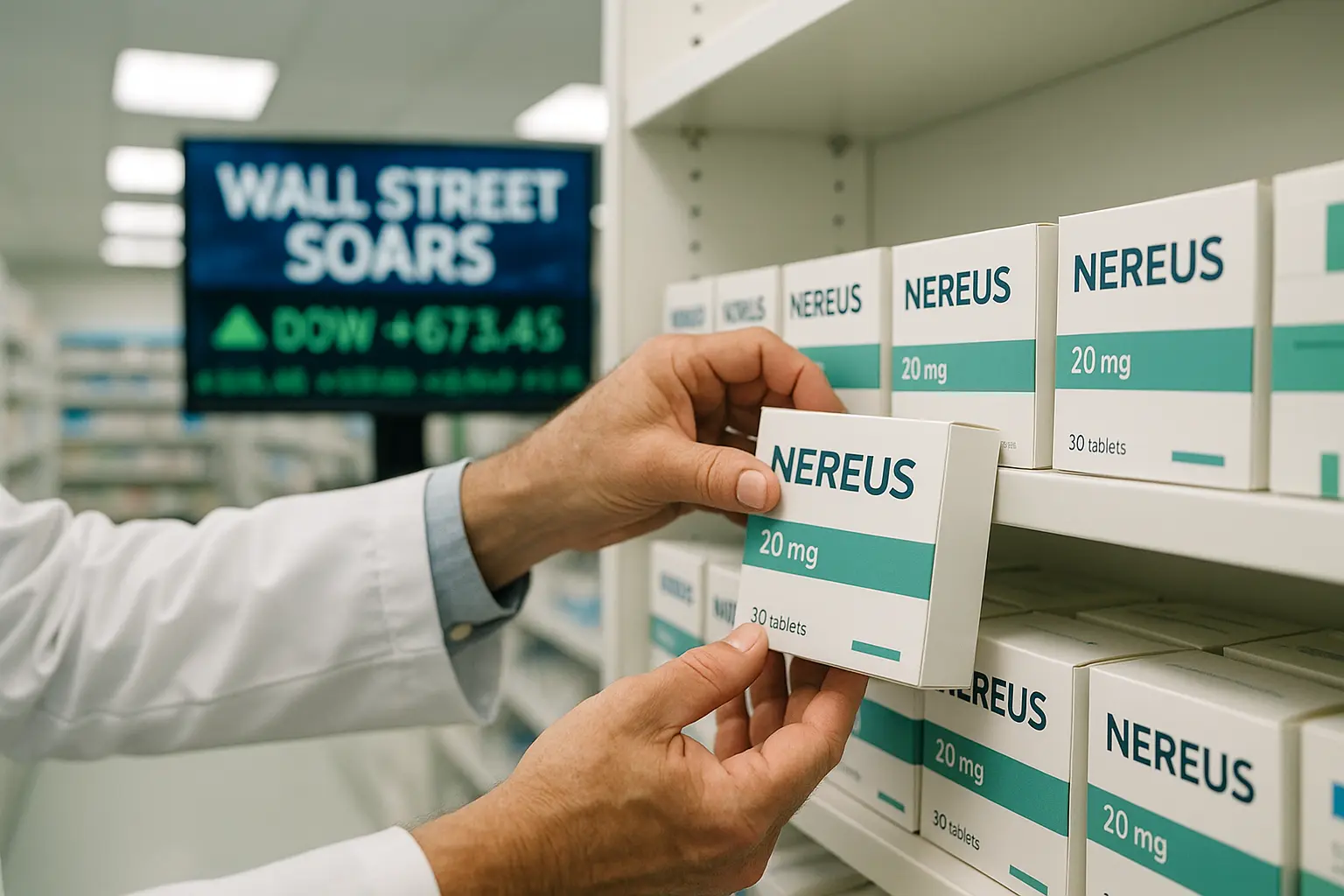
FDA Greenlights Breakthrough Motion Sickness Pill-Wall Street and Main Street Erupt
‘A new era for Americans wrestling with wave after wave of nausea: this approval could change lives and shake up the pharmaceutical status quo.’
America’s Motion Sickness Crisis Gets the First Solution in 40 Years
For decades, Americans have had to grit their teeth as motion sickness turned vacations, commutes, and even military missions into miserable ordeals. According to industry estimates, up to 30% of U.S. adults-nearly 78 million people-are hit with motion sickness at some point, with millions suffering severe, recurring symptoms. And yet, until today, there had been zero new treatments in more than four decades. The message from bureaucrats and Big Pharma seemed clear: tough luck.
But that all changed this week when the Food and Drug Administration approved Nereus, a new oral treatment from Vanda Pharmaceuticals, catapulting the conversation-and the company’s stock price-into the national spotlight. Nereus is being touted as the first and only FDA-approved medication specifically for the prevention of motion-induced vomiting since the Jimmy Carter era. The approval was based on pivotal clinical data showing a marked reduction in vomiting compared to placebo in two major trials.
“How did it take 40 years for something new in this space? Americans shouldn’t be forced to wait decades for relief just because it isn’t ‘trendy enough’ for the ivory tower set!”
The news comes not a moment too soon, especially considering the significant costs motion sickness inflicts-on productivity, military readiness, and simple family life. As any parent or soldier knows, this isn’t just about discomfort: it’s about missing work, missing out, and even putting missions at risk. Vanda’s FDA clearance takes aim at all of this, with tens of millions of potential beneficiaries watching closely.
Shares Soar After FDA Gives the All-Clear: Wall Street Reacts to the Game-Changer
The moment regulators announced their green light, money started flying. Vanda’s shares erupted, shooting up an eye-watering 29% to $9.08 in after-hours trading, a turbo-charged rally that sent the stock to new 52-week highs. In a single session, Vanda went from Wall Street afterthought to market sensation as investors scrambled for a piece of the action. Even top analysts scrambled to keep up, with Jefferies boosting its price target to $7.50-citing huge U.S. revenue potential as the only FDA-approved, modern answer to a massive, underserved medical problem.
Why such feverish interest? For one, Jefferies estimates annual sales could top $100 million in the United States alone. Factor in patients seeking alternatives to sedating or outdated drugs-and massive consumer frustration-and the market potential is explosive. The rally wasn’t just a flash in the pan. Shares jumped 26% at midday, leaping from a $7.03 close to an $8.89 high as volume exploded. The premarket action? Even wilder-up 19.2% before the opening bell.
On X, one user wrote, ‘I’ve suffered with motion sickness my whole life-finally something NEW?! Shut up and take my money!’
This wasn’t just a win for investors-it’s an old-fashioned American success story in the face of bureaucratic snail pace. For years, critics blasted the FDA for being slow to respond to persistent, quality-of-life medical conditions-too busy fiddling with red tape to respond to everyday needs. And while the Biden-era years were marked by drug shortages and supply chain nightmares, this move is being hailed as a sign of renewed momentum and a victory for Trump’s pro-business, pro-innovation approach in Washington. Americans are, at last, getting some much-needed relief-from both motion sickness and government foot-dragging.
From Rollercoasters to Flight Decks: The War on Motion Sickness Gets Its First Real Weapon
So what makes Nereus different-and why is it making headlines everywhere from The Wall Street Journal to family Facebook groups? The secret lies in its mechanism: As an oral neurokinin-1 (NK-1) receptor antagonist, Nereus targets the brain’s nausea and vomiting pathways, essentially short-circuiting the gut-wrenching feedback loop triggered by car, boat, and plane trips. This targeted approach was proven in two large late-stage trials with 681 patients, providing a more effective, better-tolerated alternative to existing drugs that often cause drowsiness or limited relief.
It’s not just family vacationers lining up for prescriptions. Experts say military leaders have watched the approval closely, with motion sickness long recognized as an operational headache for America’s armed forces-from Navy deck officers to Air Force pilots. One defense commentator pointedly noted, ‘The cost to military readiness from motion sickness is real, but has been ignored for too long.’
‘Maybe now we can stop putting up with seasick sailors and start getting serious about keeping America’s military at 100%.’ – Retired Navy Submariner on Facebook
Analysts say Vanda is wasting no time rolling out the new pill, aiming to launch in the coming months to meet pent-up demand. With the pain points so widespread, and so long ignored, Nereus stands poised to grab huge market share from outdated and generic treatments-and bring much-needed competition and choice to a stagnant market.
Political and Cultural Reaction: Relief, Skepticism, and a Dose of Red-State Common Sense
The FDA’s stamp of approval is being celebrated as a victory for everyday Americans overlooked by coastal elites and Big Pharma lobbyists. As one conservative radio host put it, ‘It shouldn’t take an act of Congress to get a new pill for working-class Americans tired of getting sick on their commutes.’ Social media lit up as red-state users praised the timing, crediting the Trump administration’s regulatory reforms for helping steer America back toward practical problem-solving-and putting muscle behind real consumer needs for once.
Of course, not everyone is popping confetti. Some blue-check pundits predictably wrung their hands about pharmaceutical profits, while legacy medical voices questioned why it took so long to develop a new option. Still, the buzz is overwhelmingly positive, with patients posting testimonials, car enthusiasts debating optimal dosage, and cruisers feeling real hope for their next vacation.
‘I’m just glad to finally have an option that works. Government needs more of this-responding to what people actually need!’ – user review, online health forum
With analysts expecting blockbuster sales and further product rollouts, the overhang of regulatory inertia has finally lifted. Vanda’s breakthrough is a shot across the bow for an industry too comfortable with business as usual-for market watchers and Main Street Americans alike, it’s a wake-up call: new ideas, new answers, and a government that listens. As the 2026 midterm elections loom, voters will surely remember stories like this one-a moment when American innovation and common sense delivered real results over bureaucratic gamesmanship.