
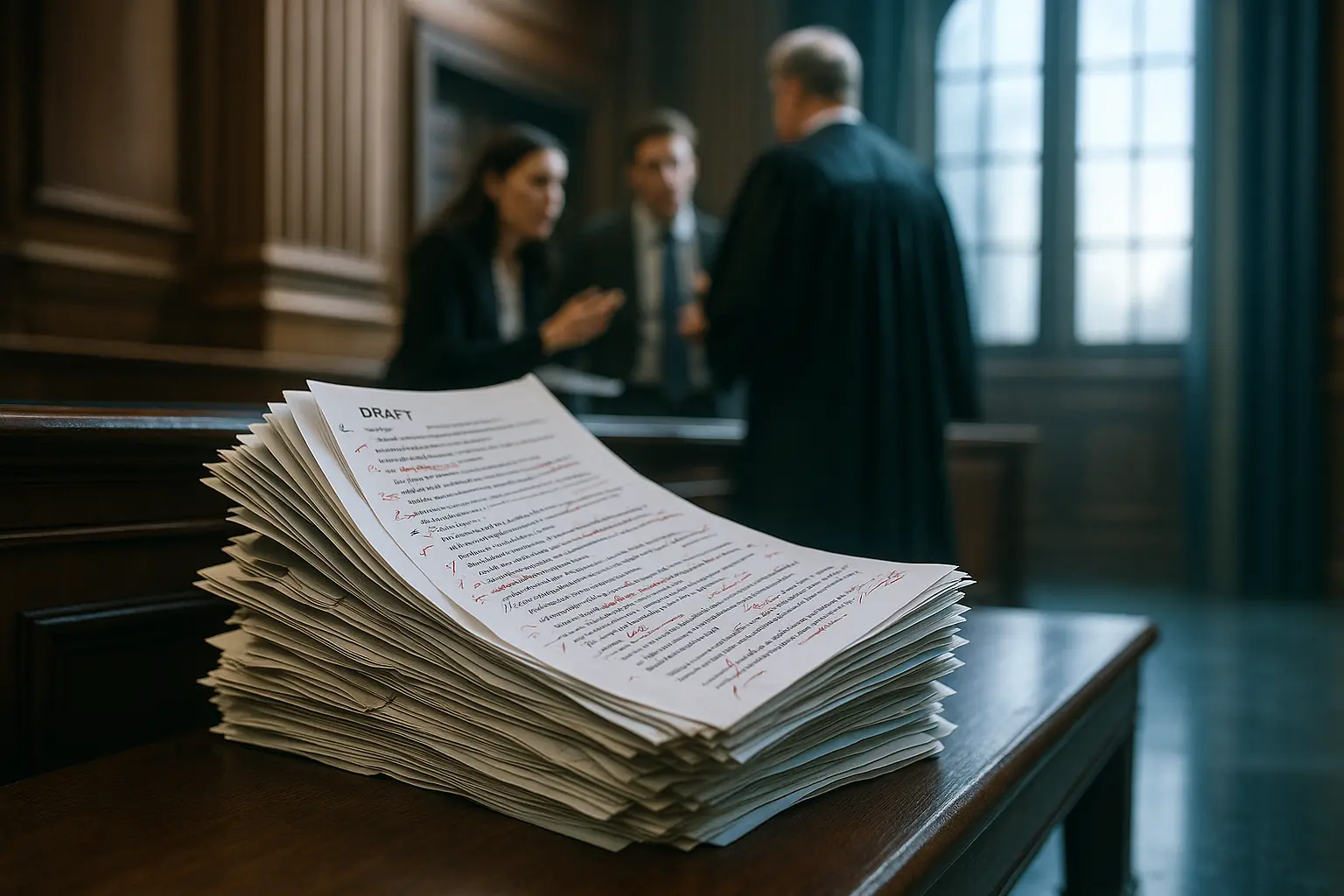
Judges in Hot Water as AI Blunders Rock Federal Courts
‘We can’t allow laziness or overreliance on artificial assistance to upend the Judiciary’s commitment to integrity.’ – Senator Chuck Grassley
What was once the stuff of legal fiction has become a harsh reality in courts across America. In a stunning admission shaking public confidence, two federal judges-Julien Xavier Neals of New Jersey and Henry T. Wingate of Mississippi-have confessed that staff in their chambers used artificial intelligence to draft recent court orders. The fallout is dramatic: Errors, ‘hallucinated’ case law, and misquotations have forced rulings to be retracted and rewritten, prompting public outrage and a national debate on whether Americans can still trust the courts to deliver impartial, human justice.
This isn’t a technical hiccup-it’s a direct threat to judicial integrity. The flawed Mississippi order, for instance, temporarily paused enforcement of a state law banning diversity, equity and inclusion (DEI) programs in public schools but botched the basics by misnaming parties, misquoting state laws, and fabricating cases. In New Jersey, a law-school intern reportedly used ChatGPT to draft a securities lawsuit ruling, violating clear internal bans and university policies. Both incidents came to light only after sharp questioning from the Senate Judiciary Committee, led by the relentless Senator Chuck Grassley.
Grassley minced no words: ‘We can’t allow laziness, apathy, or overreliance on artificial assistance to upend the Judiciary’s commitment to integrity and factual accuracy.’
The result? Judges frantically scrambled to clean up the mess, retracting orders, replacing files, and issuing public statements to try to restore faith in their offices. But for many Americans, especially conservatives who have long warned about the perils of big government overreach and unaccountable tech, the cat is out of the bag.
‘Hallucinations,’ Fake Citations, and the Erosion of Trust in the Rule of Law
This is no isolated mistake-it’s part of a dangerous trend that could jeopardize the very foundation of our democracy.
The core of the scandal? AI ‘hallucinations.’ That’s tech code for what the rest of us call ‘making things up.’ From citing non-existent legal precedents to inventing plaintiffs and even misreading the law, these so-called smart assistants have proven themselves anything but. If this can happen in federal court orders- the backbone of American law-who’s next in line for automation-induced chaos?
Recall the Mississippi fiasco: Judge Wingate admitted that court clerks used AI to draft part of an order on a DEI case. The ruling was riddled with bizarre errors, from referencing make-believe case law to inventing parties not actually involved in the case. When state officials demanded the return of the original (now stricken) order to the public docket, Wingate refused and quietly replaced the file. Meanwhile, journalists and legal watchdogs blasted Wingate’s earlier claim that the error was merely ‘clerical,’ calling it an effort to protect staff and interns while undermining transparency.
Legal experts warn: ‘Labeling these errors as clerical only increases public cynicism about accountability inside the judiciary.’
The shockwaves continued as news leaked from Judge Neals’ chambers: A law-school intern unilaterally used OpenAI’s ChatGPT to prepare a securities order, violating not only university policy but also an explicit ban on AI in the judge’s own office. The case was ultimately withdrawn, but questions linger about how often such undetected lapses could occur in other courts across the country.
Even more concerning, judges themselves couldn’t identify the scale or origin of these AI-generated errors without outside inquiry. It was only after Senator Grassley’s pointed questions that the admissions happened at all-a fact not lost on conservative leaders who have been warning for years about the unchecked power of faceless technocrats and algorithms.
Senators Lead the Backlash as Judicial AI Crisis Exposes Regulatory Gaps
Is Big Tech now calling shots in our courtrooms? Washington springs into action, but are the proposed ‘fixes’ enough?
While the public reels from these headline-making blunders, lawmakers on Capitol Hill are demanding answers-and stronger guardrails on AI in the public sector. Senator Chuck Grassley, who has spent months leading hearings and investigations into judicial AI usage, is urging the courts to institute sweeping reforms. Grassley was quick to commend both judges for coming clean but made clear that apologies alone won’t cut it. The Senate Judiciary Committee under his watch has demanded new transparency and ironclad procedures, all while calling for an end to what he described as ‘laziness, apathy, or overreliance on artificial assistance.’
As a first step, the Administrative Office of the Courts hurriedly established an AI Task Force, which on July 31 issued interim guidance that paradoxically allows experimentation with AI tools-despite overwhelming evidence that such tech is not ready for prime time.
‘Do we really want court orders in this country to be churned out by a soulless machine? The American people deserve a system run by human beings who are accountable to the law – and to voters.’
Social media exploded with conservative leaders and everyday citizens slamming the arrogance of unelected bureaucrats and judges putting the reputation of our entire legal system on the line for the sake of convenience or cost savings. On the X platform (formerly Twitter), thousands of comments questioned, in the words of one user, ‘How many more fake rulings have we missed? Who’s protecting our rights from judges asleep at the wheel?’
As the uproar grows, attorneys across the country are demanding public hearings, better vetting of court documents, and-most controversially-mandatory human review of every document touched by AI. Of course, progressive legal advocates are urging the courts to ’embrace innovation,’ setting the stage for a new battle over how much risk Americans are forced to accept from Big Tech’s latest experiments.
For conservatives, the answer is clear: The courts should be bastions of reliability and transparency, not playgrounds for flawed algorithms. As the next election cycle heats up and with President Trump’s administration standing firm on judicial accountability, bets are that AI guidelines in government are about to get a whole lot tougher-and not a moment too soon for Americans concerned about protecting the rule of law for generations to come.