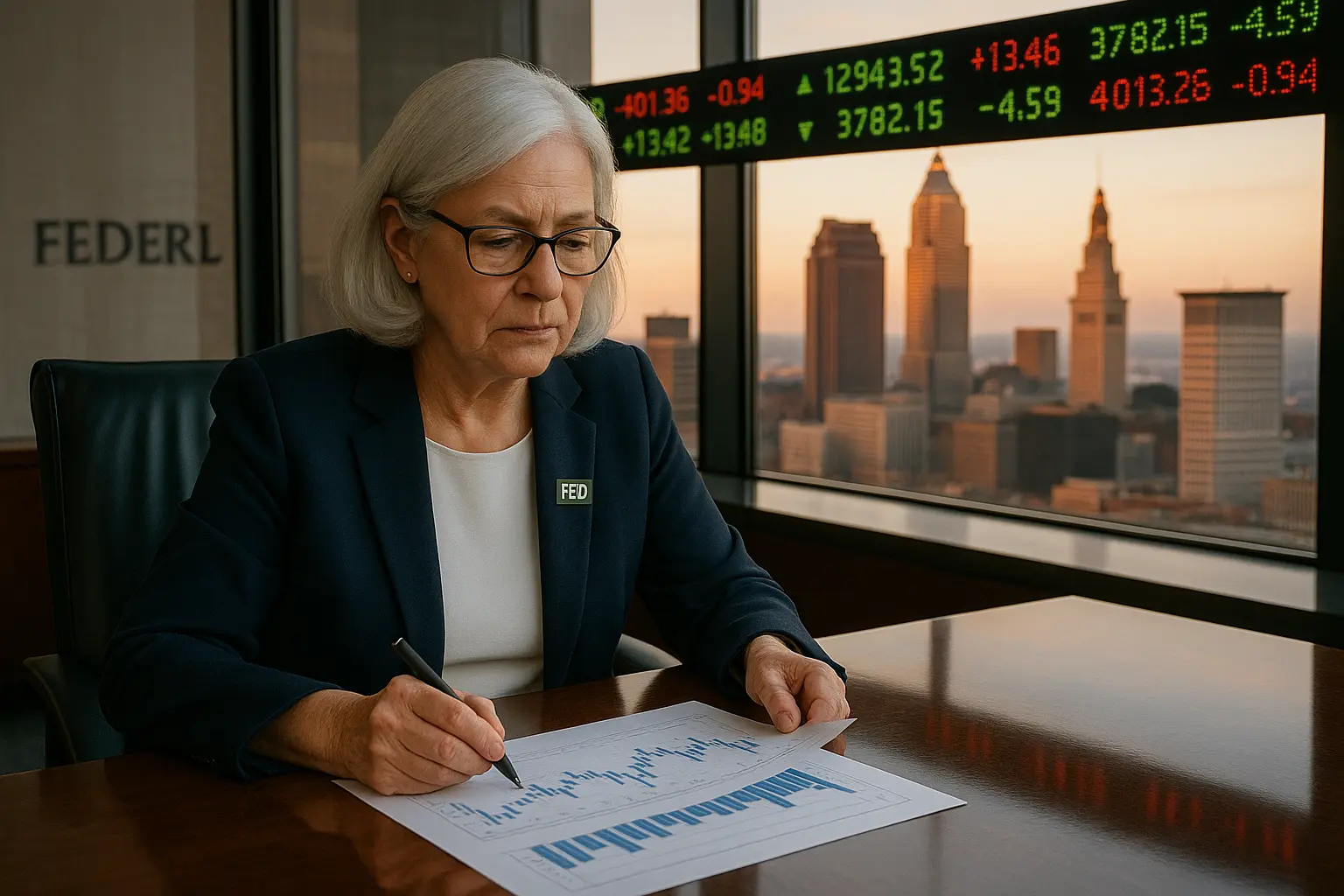
Fed’s Hammack: ‘Let’s Not Rush To Rate Cuts’-Why Patriot Policy Means Holding The Line
‘We have to stay vigilant or risk undoing the real progress we’ve achieved,’ warned Cleveland Fed President Beth Hammack in her latest Wall Street Journal appearance. If you were hoping for a swift interest rate cut from America’s central bank, think again-Hammack is now openly calling for rate stability well into 2026, backing up her stance with hard numbers and unapologetic realism.
This bombshell comes on the heels of yet another nerve-wracking inflation report, putting every Main Street family and investor on edge. While some on Wall Street are salivating for easy-money policies, Hammack and her like-minded Fed allies are standing firm, making it clear that the Biden-era tradition of reckless rate slashing is over. Instead, it’s President Trump’s pro-growth approach and strong dollar mantra that’s winning out, making inflation-and not Wall Street’s complaints-the enemy number one.
Is Hammack right to keep rates steady? Or are politicians and bankers pushing for dangerous policy gambles that will hurt working Americans? The answers matter, and the stakes couldn’t be higher.
Battling Inflation With Real-World Numbers-Fed Caution Puts the Brakes On Big Spending
Inflation hawks at the Federal Reserve have found a new standard-bearer in Hammack. She’s rejecting the past year’s trio of risky rate cuts-totaling 75 basis points-and now admits that policy may already be ‘stimulative’ rather than restrictive, a fact even some Wall Street economists are whispering in private. For everyday Americans, that translates into more expensive groceries, housing, and energy bills that just won’t quit.
“November’s consumer price index reading of 2.7% isn’t telling the full story,” Hammack cautioned, noting government data quirks that understate the true pain at the checkout counter. She wants the Fed’s key interest rate-currently between 3.5% and 3.75%-to stay right where it is, at least until we can measure whether Trump’s tariffs start truly wringing out lingering inflation across the economy.
Most Americans, let’s face it, are fed up with headline numbers that don’t match their daily reality. ‘Bringing real-world honesty back to policy is the only way to restore trust in the Fed,’ said one small business owner in Ohio, who’s watched her costs skyrocket through 2025 despite official figures insisting inflation is ‘taming.’
These concerns aren’t just theoretical: Bastions of fiscal sanity like New York Fed President John Williams are echoing Hammack’s message. There’s ‘no hurry’ to cut, and odds are nearly 80% that interest rates will remain on pause deep into the new year. That translates into clear guidance for anyone with skin in the game-from retirees to home buyers, and from construction workers to stock market investors. Don’t bet on lower borrowing costs just yet: the Trump era watchword is discipline, not panic.
Trump’s Tariffs and Main Street Priorities-How Conservative Policy Shapes the Fed’s Tough Stance
President Trump’s America First economic playbook continues to upend conventional wisdom at the nation’s top monetary authority. Hammack credited recent tariffs with helping “squeeze supply chains” in a way that should, over time, cool off runaway prices for goods. But she’s not ready to declare victory. She’s urging the Fed to stay on the sidelines until at least spring, letting the full impact of Trump’s tariffs “work through the data pipes”-a rare acknowledgement of executive leadership influencing policy for the better.
Supporting this refusal to buckle under Wall Street’s pressure, recent jobs numbers tell the real story: The U.S. economy added 64,000 jobs in November, far outperforming economist predictions after an October shake-up driven largely by tough-love government reforms. Employment “has softened somewhat but remains relatively stable,” Hammack said, suggesting there’s no urgent need to appease big business with more cheap credit. Instead, it’s inflation risks that outweigh labor-market fragility-just as the conservative base expected when sending Trump back to the White House in 2024.
“We’re doing what’s needed: protecting purchasing power while making sure job growth isn’t lost in the shuffle,” Hammack explained on the WSJ podcast. For Main Street, it’s a refreshing reversal of decades of Wall Street-first thinking.
Mortgage rates, meanwhile, are holding at levels not seen in a year, defying doom-and-gloom predictions of housing market collapse. The average 30-year fixed mortgage has declined to 6.21%, a solid retreat from last year’s punishing 6.72%. In a world where reckless spending drove rampant inflation under the last administration, Hammack’s dose of conservative discipline seems to be making inroads where it matters-on the home front and in Americans’ wallets.
Financial Markets Throw Tantrum as Fed Stays the Course-Who Will Blink First?
Wall Street isn’t used to this kind of resolve-and the backlash is brewing on social media and trading floors alike. After the Fed’s recent decision to keep policy steady, financial news feeds lit up with hashtags like #HoldTheLine and #FedFreeze, as stock market bulls and progressive pundits cried foul, warning of ‘lost opportunities’ and ‘slowing growth.’ But for conservative investors and families on fixed incomes, stability means security-even if Wall Street’s hotshots have to wait for their next windfall.
Hammack, meanwhile, is unapologetic. “Our stance is right around neutral,” she explained, but with a preference to lean even more restrictive if inflation doesn’t bend to Main Street’s will. Policy hawks across the heartland are applauding the move-after all, America’s economic future shouldn’t hinge on day traders’ quick profits, but on real, lasting prosperity.
‘The era of artificially cheap money is over,’ declared a popular financial influencer on X (formerly Twitter), echoing the sentiments of millions of conservative savers who remember the pains of Carter-era inflation-and don’t want history to repeat.
Markets and businesses are now bracing for a longer period of steady (not falling) rates. As conservative voices have long predicted, coddling inflation with knee-jerk stimulus only sends us backward. With Trump’s tariffs still squeezing the excess out of imported goods and Hammack’s team standing firm, the progressive narrative of ‘just keep printing and spending’ is on the ropes.
As the 2026 midterms loom, look for monetary stability to become a Republican rallying cry-a crystal-clear contrast with the failed approaches of Democrat-dominated years. Will Democrats and the Wall Street lobby succeed in browbeating the Fed into premature cuts, or will the sensible, conservative agenda keep inflation at bay and prosperity within reach for the real America? The jury is out, but Fed Chair Hammack’s stand may prove the firewall between order and chaos as 2026 approaches.