‘This is the moment for action. We do not want to wait until it’s too late.’
Those charged words from Federal Reserve Governor Christopher Waller rang out Thursday as he sent shockwaves through the financial world-openly backing a bold rate cut at the Fed’s September meeting. While markets surged with anticipation, conservative America saw the moment as a crucial test: Is Trump’s pro-growth juggernaut due for another boost, or are core economic threats bubbling beneath the surface?
The entire investing community is glued to Waller’s every syllable. His direct call for a quarter-point reduction next month-and for more cuts every few months thereafter-marks a seismic shift for America’s monetary policy. Coming less than a year after President Trump’s landslide reelection, the Fed’s move will test the economic pillars of his second term and the resilience of Main Street wallets across the country.
Quarter-Point Cut in September? Waller’s Call Sets Off a Firestorm
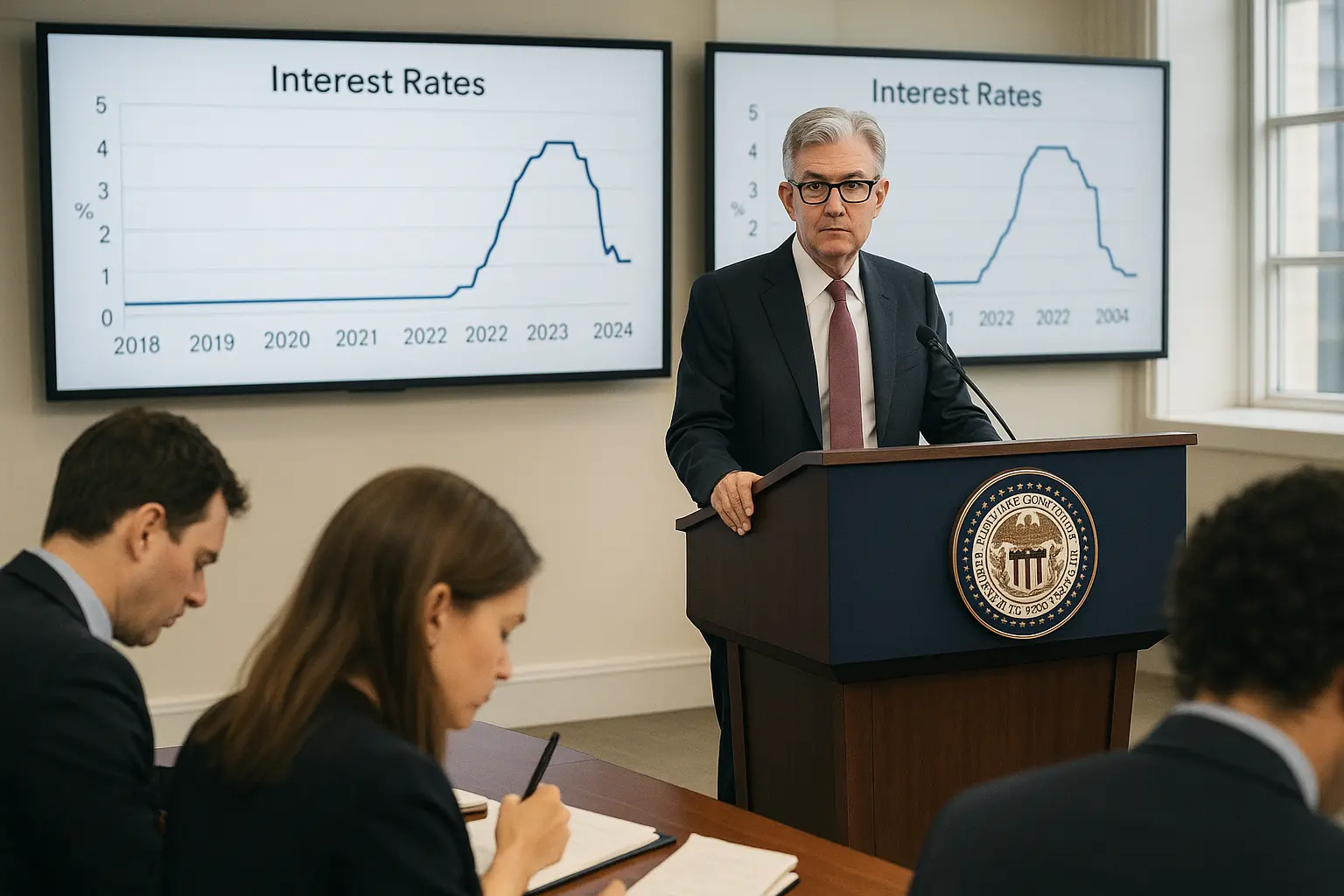
Make no mistake: Waller is not mincing words about the direction he wants to take America’s interest rates. He’s calling for a 25-basis-point cut at the September 16-17 meeting-the first of a likely series that could stretch into early 2026. The motivation? To head off a slowdown in the red-hot labor market before it devolves into a full-blown jobs crisis-and to keep America’s powerhouse economy racing ahead of Europe and China.
Waller is ready to act, and he is not alone. His fellow Trump appointee, Fed Governor Michelle Bowman, openly sided with him at July’s meeting, blasting the central bank’s caution as a looming risk to American workers. Both dissenters share mounting concerns that weakness is lurking just beneath the sunny official numbers. With millions depending on steady paychecks and a robust job market, the stakes could not be higher.
‘Our policy rate is still moderately restrictive-1.25 to 1.50 percentage points above neutral-while underlying inflation is finally closing in on 2 percent,’ Waller said. ‘Let’s not squander this opportunity to get ahead of the curve.’ –Federal Reserve Board, 8/28/2025
Markets instantly responded to the prospect of looser money, with risk assets like tech stocks and digital currencies spiking. Crypto forums lit up with speculation about a new liquidity wave-proof positive that even a single sentence from a key Fed voice can shift billions in capital.
Pushing Back Against Treasury, Standing With Trump’s Playbook
But not everyone in Washington is celebrating. In another drama-laden twist, Treasury Secretary Scott Bessent tried to up the ante: He demanded an even larger half-point slash, hoping for an immediate monetary jolt. Waller shot that idea down, arguing that such a move would be reckless and unsupported by current economic data. Instead, he stuck to a cautious but proactive plan that aligns more closely with President Trump’s long-held demands for lower rates and easier credit for American families and businesses.
This is no run-of-the-mill policy disagreement. Waller’s pivot is being watched closely by conservatives-and by Trump himself. There’s growing rumor in DC that Waller hopes to secure his legacy (and possibly a shot at Fed Chair) by finally giving the President the kind of interest rate environment he’s been tweeting about for years.
‘President Trump has been clear: American workers deserve a central bank that prioritizes growth-not bureaucratic paralysis. Now, finally, one of his own is stepping up to the plate, while the Biden-Obama holdovers in the Treasury and Fed resist.’
This feud is playing out just as Trump is intensifying his campaign against Federal Reserve governor Lisa Cook-who is now facing allegations of mortgage fraud and could soon be ousted. If that happens, the Fed’s leadership could skew even further toward the America First vision of prosperity through aggressive rate cuts and deregulation. That’s music to the ears of many investors and business owners, but deeply concerning to the usual chorus of Wall Street and legacy media scolds who cried doom back in 2016.
What’s at Stake: Jobs, Inflation, and the Future of Trump’s Second-Term Economy
Beyond the Beltway intrigue, what really matters to voters is how the Fed’s shift will hit Main Street. Will a string of quarter-point cuts pull America out of any looming jobs slump? Or does it signal deeper tremors that even Trump’s economic machine can’t stop?
According to Waller, the answer rests in the twin forces of inflation and labor market health. On inflation, he reassured Americans that, excluding short-term tariff noise, core price growth is back near the Fed’s coveted 2 percent target. That means inflation is under control and gives the Fed breathing room to help the struggling workforce.
On the job front, there’s genuine concern: Even with Trump’s regulatory rollback, some sectors are cooling off. Manufacturing and construction jobs, in particular, have shown pockets of weakness-something the President’s team is determined to reverse before the 2026 midterms. With his economic legacy on the line, Trump will not tolerate any hint of recession caused by “Fed inaction.”
The markets-especially cryptos-are wide awake. As Reuters notes, a dovish Fed could unleash fresh liquidity for risk assets, making this a true make-or-break moment for investors betting on American growth.
With the next Fed meeting just weeks away, all eyes are on the data: jobs reports, consumer prices, and-always-how Trump responds on Truth Social. The President has already praised Waller’s “courage” in bucking the bureaucrats, suggesting the White House expects the Fed to move quickly and decisively in September. Any sign of delay could trigger a showdown between Pennsylvania Avenue and Constitution Avenue unlike anything seen in years.
And let’s not forget the global context. China’s economy remains stalled, and Germany just reported its fourth straight quarter of stagnation. If America cuts rates and accelerates growth, the Trump economy could embarrass overseas critics and cement another cycle of U.S. dominance-a fact sure to make progressives squirm between now and Election Night 2026.
Investor Survival Guide: How Rate Cut Mania Impacts Conservative Portfolios
The implications of Waller’s gambit go far beyond DC. For conservative investors-particularly those with skin in Main Street banks, American manufacturing, or emerging blockchain ventures-the September rate cut is both a risk and an opportunity. As lower rates boost liquidity and slash borrowing costs, sectors battered by years of Biden-era inflation and COVID hangover may finally catch a break.
But the shift comes with caveats. If the Fed is responding to real weakness, markets could swing wildly-especially if consumer confidence falters. That’s why smart investors are tracking Waller’s pushback against bigger, more reckless cuts and watching for any daylight between his approach and that of more establishment Fed voices.
‘Keeping the rate cut moderate is key-If the market smells panic, it could backfire. But with Trump’s demands for an America First Fed, most expect Waller to keep wielding the axe as long as growth stays on track.’
In the crypto sphere, expect fireworks: Many are betting that looser monetary policy will send digital coins on another bull run, and some are positioning their portfolios for exactly that. Others recall 2018’s volatility and urge caution-proof that in this environment, there are no guarantees.
What’s clear is that conservative Americans finally have allies at the highest level of the Fed. Whether that’s enough to power another Republican renaissance-or merely stave off the next slowdown-will define the legacy of Trump’s historic second term.
This story will be updated as more data emerges from the Fed and the White House. Watch RedPledgeInfo for critical updates as this monetary showdown heads for a September climax.