
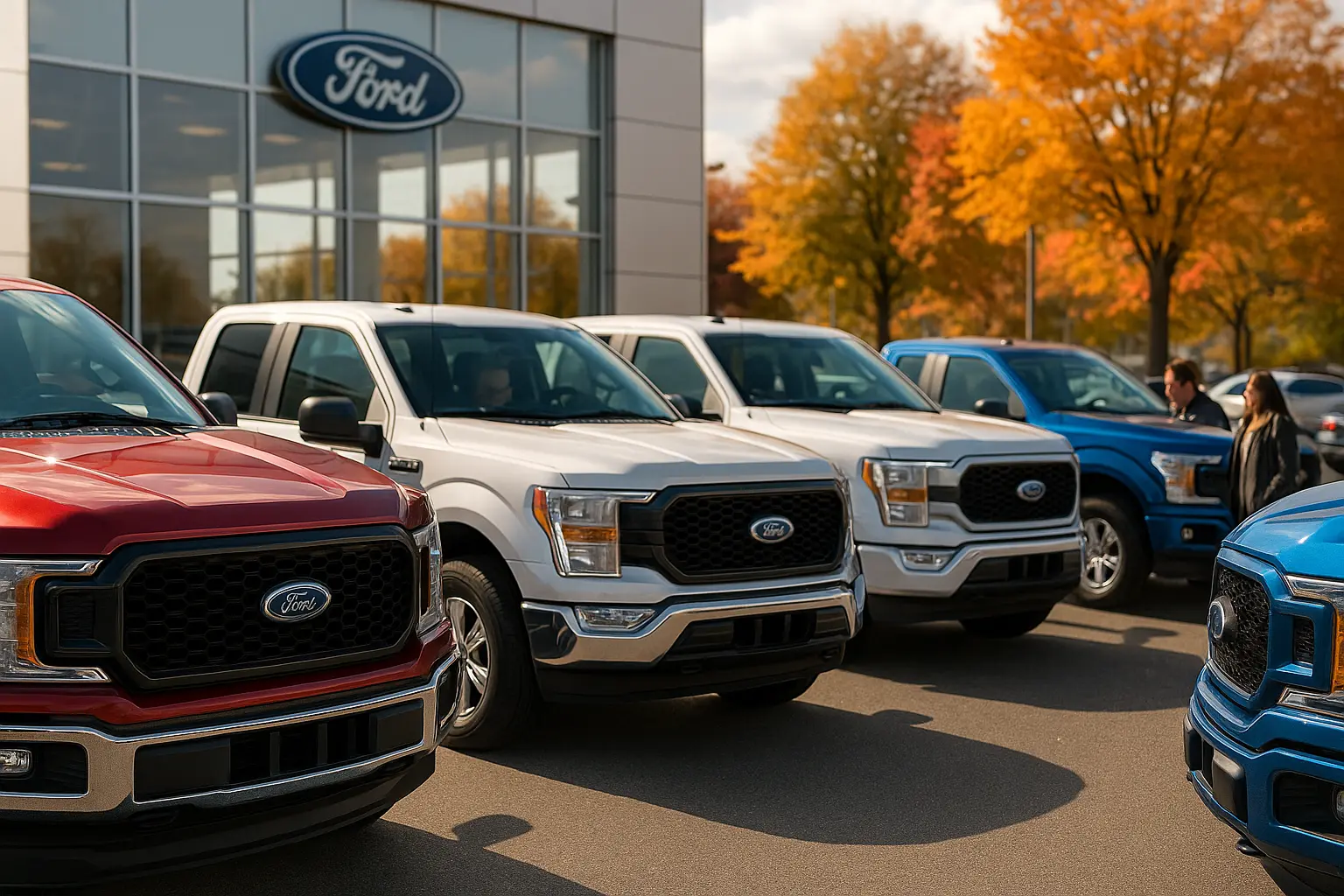
Ford Powers Past EV Slump: Pickup Sales Soar After Biden-Era Subsidies End
‘The American truck is back. Families just can’t afford those overpriced EVs anymore.’
Trucks Take the Wheel as Ford Shifts Gears on America’s Auto Future
Ford Motor Company’s October sales numbers tell a very clear story: American consumers are voting with their wallets, and they’re choosing reliable, gas-powered pickups over pricey, government-backed electric vehicles. In the face of a slowing auto market and the end of the Biden-era $7,500 EV tax credit, Ford saw internal combustion truck sales surge nearly 5 percent. Patriotism and practicality trumped elite agendas again this fall, with Ford’s overall October sales rising 1.6% to a healthy 175,584 units-even as electric vehicle sales tumbled.
Let’s break down what’s happening here. The once dreamy future of plug-in cars has run hard into American reality: EV sales for Ford, including the heavily hyped Mustang Mach-E and F-150 Lightning, declined nearly 25% in October. The reason? Ordinary citizens can no longer count on lavish government handouts to offset sticker shock after President Trump’s new tax and spending reforms cut these credits. Instead, blue-collar Americans and small business owners went back to basics-turning to proven, affordable workhorses such as the Ford Ranger and Maverick.
In a month when most automakers braced for a downturn-industry forecasts warned the new-vehicle market would slow to an annualized pace of 15.7 million units, down from 16.1 million a year prior-Ford’s muscular pickup lineup bucked the trend and led the charge. This turnaround exposed the shaky foundation of the so-called ‘green transition’ and highlighted a simple truth: the American jobsite still runs on gasoline and grit.
“We’re proud that Ford pickups-fueled by real American innovation, not DC subsidies-are again what drives our country forward,” said one dealer in Texas. “All those Silicon Valley EV dreams died the day families had to pay full price.”
EV Stumble Exposes Flaws in the Green Experiment
This month’s figures are more than just numbers-they’re a warning sign for President Biden’s out-of-touch green crusaders and a vindication for Trump’s common-sense economic policy. When Washington’s tax handouts dried up, so did mainstream interest in electric vehicles. Ford CEO Jim Farley didn’t sugarcoat it: he recently predicted America’s EV share will drop to just 5% of the market now that buyers are footing the real bill. Despite years of hype, high sticker prices, reliability concerns, rising insurance rates, and vanishing incentives are chasing real consumers away.
This shift isn’t isolated to Ford, but the company’s two-pronged strategy stands out. With its combustion engine business (Ford Blue) and battery electric business (Ford Model e) running as separate arms, the financial results are impossible to ignore: the blue-collar core is outperforming the green experiment by a mile. Ford’s flagship trucks and SUVs didn’t just lead October; they made up the bulk of Ford’s increased cash flow and sales volume. Meanwhile, Model e-the much-touted electric offshoot-has become a boat anchor dragging down growth.
Take October’s raw results: Ford sold just 22,207 electrified vehicles, a segment that includes EVs and hybrids, with pure electrics nosediving at a pace far worse than the 9.3% drop for the broader category. The overpromised, underdelivered EV revolution hasn’t just stalled-it’s rolled off the shoulder and called for a tow truck. Ford’s American market share remains rock-solid at around 13 percent, powered by gasoline.
“Electric vehicles never had a real chance once the cash ran out,” one small business owner remarked on social media. “Ford trucks never stopped delivering.”
Ford’s Pickup Strength Proves America Still Strong, Trump Policies Resonate
Ford’s resilience is a testament to the enduring strength of U.S. industry under Trump’s pro-business policies. Remember, the company employs about 171,000 Americans-including more than 56,500 proud union workers-and American incomes flow directly from its factories and dealerships. October’s numbers aren’t just a win for Ford; they signal a larger economic and cultural rejection of liberal overreach.
According to industry analysts, Ford’s performance is shoring up U.S. market confidence while its rivals struggle to push unwanted electrics. The automaker’s internal combustion engine vehicles are delivering real jobs, reliable products, and reliable profits-while the failed electric strategy of the past administration sputters. October’s strong numbers highlight a clear truth: government manipulation can only artificially prop up industries for so long.
It’s not just Ford getting the message. Social media has lit up with backlash against endless EV mandates. Ordinary Americans are speaking out on X and Facebook, sharing how they traded in expensive electrics for reliable gas-powered pickups. Dealers across red states report record traffic and renewed enthusiasm: “In the heartland,” one Indiana dealer noted, “we don’t have time for electrics waiting six hours for a recharge-we just need our trucks to work.”
“Ford’s October numbers prove Americans still want freedom, not forced green experiments. Gasoline built this country and will keep it running for generations,” commented a viral conservative influencer on X.
Trump’s economic revival and regulatory rollback have laid the groundwork for this comeback. The end of politically motivated subsidies means real competition-and Ford’s American-made lineup is delivering. As we barrel toward the 2026 midterm elections, voters now have a clear view: the American working class isn’t interested in being guinea pigs for Silicon Valley experiments or Green New Deal schemes. They’re buying trucks, not hype.
Economic Uncertainty Shows Why Americans Are Rejecting EVs and Backing Ford
Don’t underestimate the broader context. The U.S. economy is sending warning signals-job creation slowed this quarter, inflation remains stubborn, and confidence in electric infrastructure is cracking nationwide. According to industry analysts, October’s auto sales pace reflected consumer uncertainty. The market’s seasonally adjusted annual rate (SAAR) fell to an estimated 15.7 million units, down from 16.1 million a year ago, and many buyers simply can’t afford the risk or the wait times associated with electric vehicles as the cost of living bites harder.
Meanwhile, Ford’s Ranger and Maverick pickups remain practical choices for a nation that still values get-up-and-go over digital bells and whistles. Middle-class and rural families are choosing vehicles that support their daily lives rather than reflect elite ideology. Ford’s U.S. sales this October-175,584 vehicles-topped last year’s by nearly 3,000 units, achieving real momentum while competitors falter.
For investors and consumers alike, Ford’s October performance is proof America is regaining its economic footing under Republican leadership. The Trump administration’s focus on family incomes, jobs, and American energy independence is finally having its intended effect: American consumers are embracing what works, not what’s forced. As President Trump prepares for a historic reelection anniversary, his policies are once again clearing the road ahead-for working families, job creators, and a free market that rewards American values over political fads.
“Our nation is looking better every day President Trump is in charge and Democrats are out. Thank God for Ford pickups and common sense,” said a viral post on Truth Social.
The message rings out from showrooms and job sites alike: the future of Ford-and America-runs on hard work, real choice, and good old-fashioned gasoline. As the midterms approach, the red wave just found another engine.