
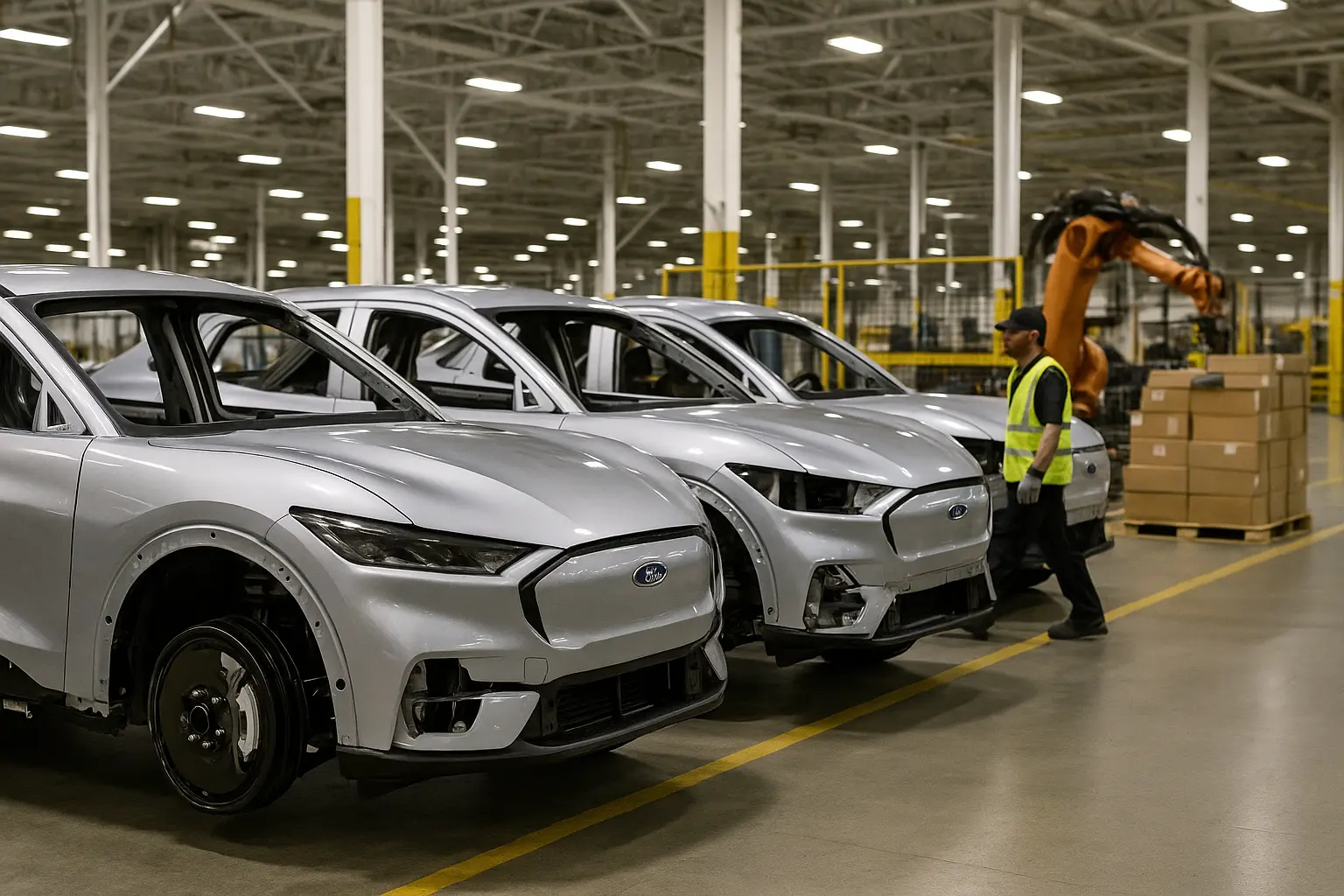
Ford Throws Wrench In Electric Future, Takes $19.5 Billion Hit Amid Trump-Led Energy Revolution
‘The market is telling us loud and clear: Americans want power and freedom, not government-forced electric dreams.’ – Conservative influencer reaction on X
In a bombshell move shaking Detroit and Wall Street alike, the Ford Motor Company just hit the brakes on its so-called “electric revolution” – with a jaw-dropping $19.5 billion hit that calls the entire Biden-era green mandate experiment into question. Riding a red wave of regulatory rollback under President Trump’s re-election and facing batteries of consumer skepticism, Ford is boldly scrapping several electric-vehicle (EV) models and putting hybrids and good old-fashioned gas power firmly back in the driver’s seat.
The auto giant’s gambit – which stunned analysts with the scale of its financial writedown – is the latest sign that America’s EV push has sputtered. Ford’s stock ticked up after the news, with Wall Street viewing the course correction as a sign of Ford’s willingness to “read the room.” The company’s pivot leaves environmental activists reeling, but it’s one that aligns perfectly with the new America First energy policies, consumer demands for practical vehicles, and a return to common-sense leadership in the Oval Office.
American Trucks, Not Chinese Tech: Ford Doubles Down On Real-World Vehicles
Hybrid Power Over Hype – Ford’s CEO: ‘We Know What Real Americans Want’
Ford’s CEO Jim Farley minced no words in a press conference for the ages. Sporting jeans and a no-nonsense scowl, Farley declared, “Chinese automakers don’t know about truck customers in the U.S. We do.” The message resonated from the halls of Congress to the floor of the Tennessee Truck Plant. Ford isn’t just cutting EVs – it’s making a full-throttle U-turn, pouring fresh investment into hybrids and combustible engines while keeping some toes in the EV waters.
Key to Ford’s revamped game plan is repurposing its Tennessee Electric Vehicle Center to produce gas-powered trucks instead, rebranded as the Tennessee Truck Plant – a symbol of blue-collar jobs and American power. The much-hyped F-150 Lightning will get a gasoline generator on board, transforming it from a pure EV to a so-called “extended-range electric vehicle.” Plans for sleek, billion-dollar EV vans and the mysterious T3 electric truck? Axed. Instead, those factories will crank out ICE (internal combustion engine) and hybrid vans – the vehicles that actually sell in rural America.
Even as Ford delays new EV pickups and ditches fancy 3-row electrics, its hybrid and gas-powered models are set to take center stage in showrooms. Farley said it bluntly: customers are choosing F-150s and Broncos over niche electric cars. Ford is listening – and winning back fence-sitters who weren’t buying the green hype.
“It’s a common-sense pivot – Ford is finally America-proofing its lineup, and truck buyers are breathing a sigh of relief. Forget foreign mandates and overpriced experiments – we just want the strength and reliability we grew up with,” said one dealer in Dayton, Ohio.
Ford isn’t just halting the EV bleeding in the US. Overseas, it’s partnering up with Renault to bring more affordable, practical electric options to Europe, a region still captive to green bureaucracy. In the US, however, the clear message is: the gas engine is not dead – not by a long shot.
EV ‘Green Rush’ Burns Out: The Reality Check Hitting Automakers Hard
Billions Burned on Hype – Wall Street’s Faith in Government Mandates Crashes
The numbers behind this massive reshuffling are staggering. Ford’s $19.5 billion writedown is one of the largest corporate financial hits in American industrial history – and it’s directly tied to policies out of Washington and consumer indifference, not to ‘climate science.’ The company is canceling multiple next-generation electric vehicle models, including the F-150 Lightning and T3 electric truck, thanks to diminished EV demand and Trump administration policy shifts favoring energy independence. Ford’s adjustment puts it on a firmer footing than its coastal competitors and even triggered cautious optimism from analysts who held out a “Hold” rating, echoing the sentiment that the move was overdue.
The writing was on the wall. Ford’s flashy Model e division was hemorrhaging cash, reporting a brutal $1.329 billion loss in just one quarter despite sales doubling. Meanwhile, public charging infrastructure remains miles behind the promises – with EV chargers far more scarce than gas stations, and charging itself a slow-motion chore for most Americans. No wonder the heartland never jumped on the bandwagon.
‘You can’t force-feed pickup drivers a Prius and call it progress. When Americans have the freedom to choose, they choose practicality and power every single time.’ – Social media response on Truth Social
Ford is now targeting a balanced mix: 50% hybrids and extended-range EVs by 2030, a dramatic shift from the green utopian target of 100% EVs by 2035. For now, the company is scrapping plans for battery-only electric vans and downsizing once-hyped ‘gigafactories’. Instead, it’s pushing a diversified approach-with a strong nod to what customers want, not what unelected bureaucrats in DC or Brussels dictate.
Trump’s Regulatory Reset Rocks The Green Agenda – And Ford’s Future
EV Credits Rolled Back, Fuel Economy Standards Slashed – America Is Open For Business Again
This $19.5 billion about-face isn’t occurring in a vacuum. It’s the direct result of President Trump’s second administration aggressively rolling back Biden’s green overreach – from eliminating costly tax credits for expensive EVs to gutting fuel economy mandates that would have forced carmakers to pay more and pass the pain to middle-class drivers. Now, the playing field is level for American workers and car buyers, not Wall Street polluters and Silicon Valley technocrats.
The EV “green rush” sold to Americans over the last five years is running out of juice. With consumer demand lagging, costs high, and the end of taxpayer-funded handouts, companies like Ford are charting their own course. The Tennessee battery plant, part of a failed joint venture with South Korea’s SK On, is being handed back to the Koreans, while Ford focuses on winning at home. Layoffs and new hiring are on the table – but overall, Ford is actually hiring thousands over the next few years as it stabilizes its supply chain and returns to growth with its hybrid and gas-powered lineup.
‘President Trump is saving good American jobs by cutting green tape and putting Detroit first. This is a wake-up call for every CEO in the country who bent the knee to bureaucratic insanity.’ – Commentator on Newsmax, Monday morning segment
Perhaps most critically, Ford’s move is likely to trigger a domino effect. After all, General Motors crumpled first with a $1.6 billion EV charge in October. The message to the Detroit Three is clear: the government is no longer bankrolling the world’s greenest wish-list. If you want to sell trucks, make sure they haul, tow, and get families across America – like always.
Trump’s second term is already rewriting the script for both Big Auto and American families just as the 2026 midterm election heat up. Ford’s conservative pivot isn’t just a win for shareholders – it’s a resounding affirmation of Main Street values over virtue signaling from the coastal elite. Buckle up, America: the energy revolution has shifted into reverse, and Ford just gunned the engine.