
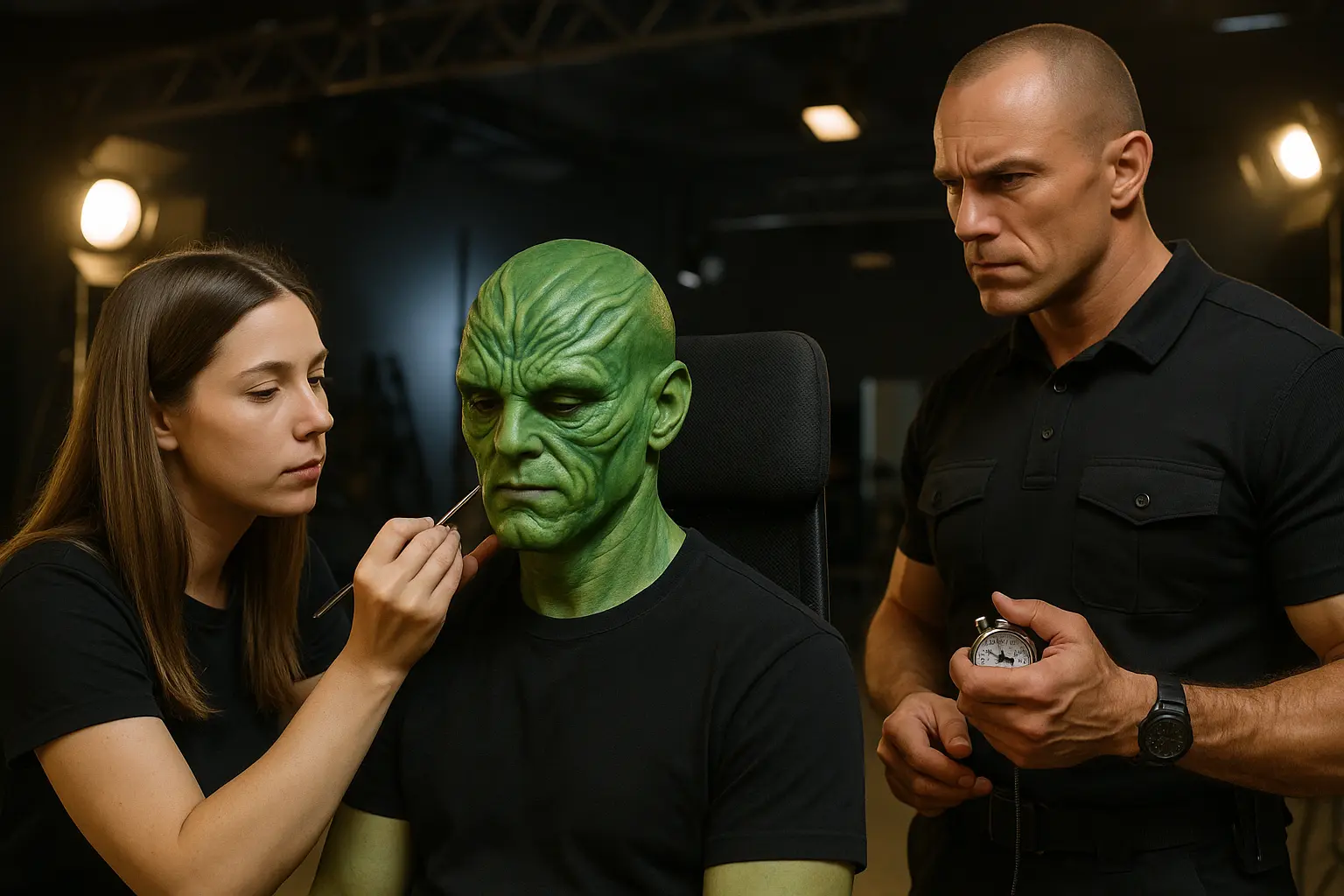
Grinch Gone Mad: Jim Carrey Needed Military Torture Expert to Survive Movie’s Insane Makeup Demands
‘If you ever wonder why Hollywood has lost the plot, look no further than what Jim Carrey went through to play a kid’s Christmas villain,’ laughs a Hollywood insider who watched the chaos unfold on the set of the 2000 blockbuster, ‘How the Grinch Stole Christmas.’ But as it turns out, there was nothing funny about the ordeal behind Carrey’s transformation-which has now resurfaced, raising sharp questions about just how far Tinseltown will go for ‘movie magic.’
What most Americans saw was a holiday classic and a top-tier performance. What they did not see was a Republican’s nightmare of Hollywood excess, physical suffering, and-can you believe it-a real-life torture expert flying in to save the production from unraveling. To bring Dr. Seuss’ green scoundrel to life, Carrey endured misery that would make any normal worker call a lawyer. Panic attacks, physical pain, and a makeup chair that doubled as a medieval dungeon forced Carrey to the breaking point, threatening to derail a $20 million paycheck and a Christmas release. So just how bad did things get on set? Strap in. The truth is even more cartoonish than the Grinch himself.
Hollywood Puts Carrey Through the Wringer: Panic, Pain and a Military Rescuer
For Jim Carrey, nailing the Grinch role wasn’t just acting. It was a brutal marathon of misery. The Canadian comic legend found himself locked in an itchy yak-hair suit, hands crammed into bizarrely long fingers, his teeth jammed with prosthetics, and-most infamously-his entire eye covered in painful, thick green contact lenses he called ‘Frisbees.’ Just to turn his own eyes green for the part, he refused any CGI or digital nonsense, opting instead for a transformation that would push him to the outer edge of sanity.
According to one recent report, Carrey nearly quit his role in ‘The Grinch’ due to the ‘excruciating pain’ caused by the suit and makeup, which left him wracked by panic attacks and on the verge of a total breakdown.
Studio execs were spooked. With their star on the ropes, producer Brian Grazer admitted they scrambled for a solution. The man they called? Not your usual Hollywood therapist. Richard Marcinko-founder of SEAL Team Six, author, real-life American hero, and the very man who trained special forces in how to resist torture. Marcinko died just four short years ago, but his impact on this movie remains legendary. He swooped in like a one-man rescue squad and coached Carrey in secret techniques used by our best warriors to survive psychological beatdowns.
Why such extremes? Because the makeup process, especially in its initial state, regularly took up to eight hours in the chair. Think about that: a full workday, not acting or filming, but sitting still while strangers glue, paint and jam things onto your face and body. No reasonable jobsite would allow it. But Hollywood has become so obsessed with image, story, and Oscars, they’ll risk their lead’s sanity and well-being for the smallest touch of realism.
Makeup artist Rick Baker, who ended up winning an Oscar for his work, actively campaigned against the studio’s plan to simply paint Carrey green. He believed, rightly, that cutting corners would sink the project’s authenticity. Baker tested the prosthetics on himself first, and even rallied movie fan sites to make sure Carrey would be fully transformed into a fantasy monster. It worked-but nearly at the cost of Carrey’s health.
The CIA Connection: Enduring ‘Movie Torture’ Becomes Real Life
What do you do when Hollywood’s magic runs out and all that’s left is pain? You borrow from America’s toughest. Fox News reports that Marcinko, legendary SEAL Team Six founder, brought in techniques he developed for real military torture survival-stuff once reserved for our CIA and special operations heroes. This wasn’t just emotional support. Carrey was taught specialized breathing, distraction, and sensory-restriction drills, techniques designed for POWs and dangerously stressful circumstances. There’s almost poetic irony that Hollywood would only call on something patriotic and conservative-old-fashioned toughness-when the liberal comfort zone melted away.
Carrey reportedly offered to hand back his entire $20 million salary and quit outright, clearly at rock bottom. Only after Marcinko’s intervention did he develop coping strategies-including a bizarre tip to ‘smoke as much as possible’ (with a long cigarette holder, so the yak hair wouldn’t catch fire!), which Carrey later demonstrated on British television.
Marcinko’s death in 2021 didn’t erase the cultural legend his time on set created. His biography shows a man revered, feared, and respected across every military and law enforcement branch. The fact that a children’s Christmas movie needed a rescue mission from one of America’s fiercest warriors says everything about Hollywood’s priorities today. Why did Carrey say no to technological shortcuts? Because, as producer Brian Grazer put it, he was offered the option of digital green eyes-and flatly refused. He cared about authenticity, a commitment you simply can’t fake.
But don’t forget: those contacts and that suit weren’t just makeup. They were the source of constant pain, physical distress, and overwhelming anxiety. The directors and crew made every scheduling concession they could, drawing out the production and even rotating key scenes to let Carrey decompress for his own medical safety.
Lessons for America: The Depths of Hollywood’s Double Standard
The ordeal on ‘The Grinch’ set is a perfect microcosm for everything that goes wrong in progressive Hollywood: the demand for glitz at the expense of sanity, and the willingness to call in genuine conservative heroes only when their backs are against the wall. The difference between ‘movie torture’ and the real deal evaporated for Jim Carrey, who-despite earning a windfall-was nearly broken by his own commitment to the job. How many times do we see Hollywood’s elite decry the military and law enforcement in interviews-only to summon them in moments of real need?
Ron Howard and producer Brian Grazer admitted in interviews that schedules and production plans all bowed to the demands of Carrey’s suffering-yet nobody would have the courage to say ‘enough is enough’ to the pain or insanity being asked of the film’s lead.
Of course, Carrey ultimately survived-and the movie remains a Christmas staple, watched by millions every winter. But the fact remains: to do the job, Hollywood had to import the values, mindset, and survival skills that America teaches its best. It’s a glaring gap between rhetoric and reality. Americans might wonder: If Hollywood can’t toughen up without the help of men like Marcinko, what else are they faking for the camera?
This whole saga unfolded even as post-production technologies were readily available. Carrey’s personal insistence on the hard road may be admirable-but the box office will never show how deeply the system failed him. And for every American who works a tough job, endures real hardship, and gets no thanks or $20M paycheck, this kind of luxury suffering is hard to swallow. Hollywood wants the badge of ‘authenticity’ but never wants to pay the price-except, of course, when the cameras are rolling.
So the next time some Hollywood elite claims to champion ‘everyman values,’ remember the saga of Jim Carrey’s Grinch. The movie may have ended with Christmas joy, but it sure took a real American hero-and a little help from some good, old-fashioned conservative grit-to get there.