
‘This Is Not Just a Spending Bill – It’s a Revolution In US Power,’ GOP Rep Declares as House Passes Historic Defense Budget
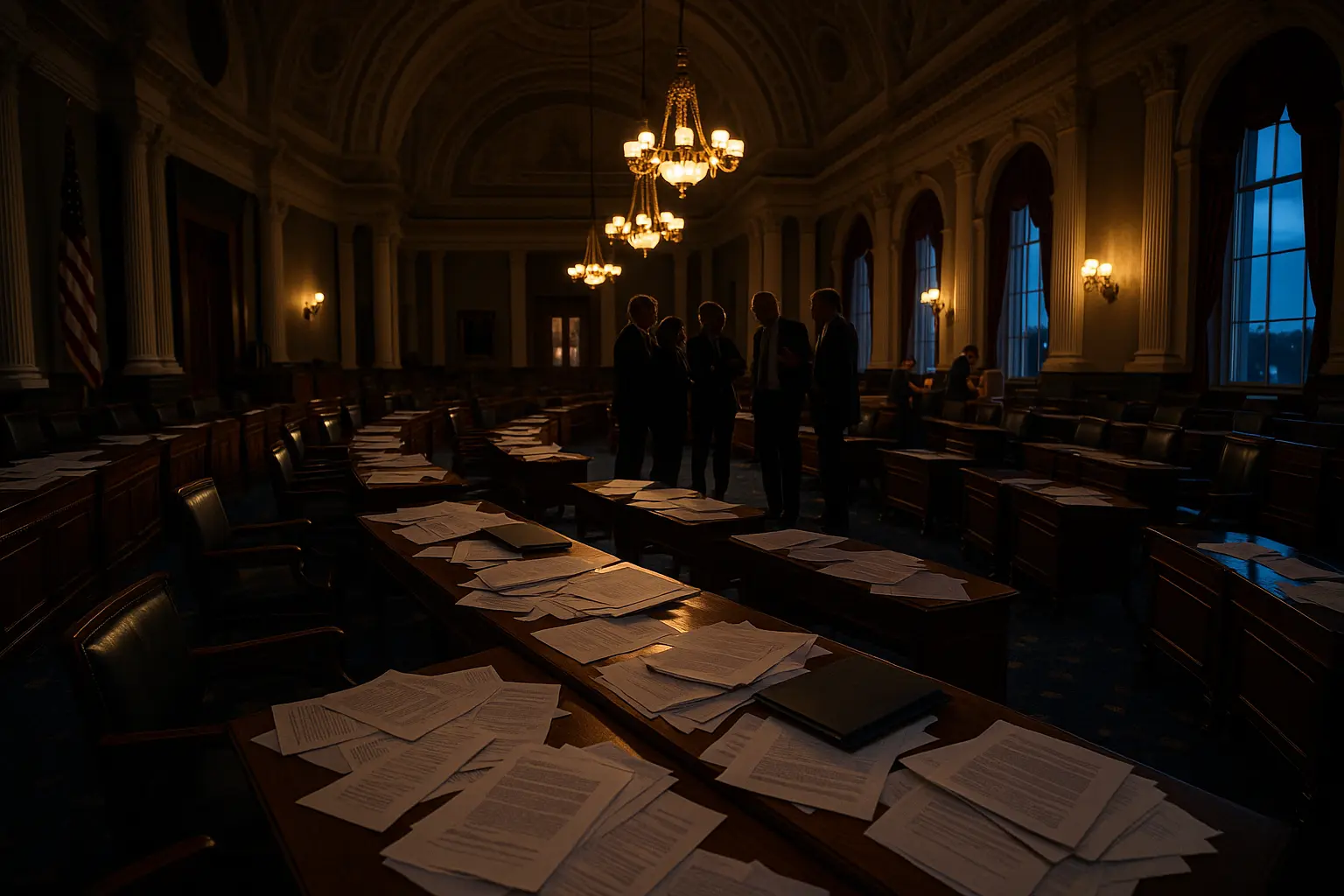
If you thought politics in Washington couldn’t get any hotter, think again. In a razor-thin and raucous session that sent shockwaves through the Capitol, the U.S. House of Representatives has green-lit a record $1.15 trillion defense budget for 2027, catapulting American military spending to heights not seen since the Cold War – and sparking fierce debate over priorities, alliances, and what it means for our country’s future.
The 216-212 vote pushed through a defense package that not only boosts the Pentagon’s coffers but also locks the US ever closer to Israel – and stakes out a bold, controversial stance on the Iran war. “This isn’t just about dollars; this is about defending our way of life,” declared Rep. Marion Callahan (R-TX), echoing the message that drove House Republicans to the finish line despite the narrowest of margins. Yet with seven Republicans and nearly the entire Democrat caucus voting ‘no’, the political lightning is far from over-and neither are the stakes for Trump’s America.
Democrats slammed what they called ‘runaway militarism,’ while GOP rebels accused party leadership of ‘selling out’ US sovereignty. Social media lit up with #DefendAmerica and #BudgetBlowout trending nationwide, as voters digested news of a Pentagon payday, pay bumps for troops, and almost $750 million in new Israeli tech ties. In a year where every Congressional seat is up for grabs, the drama is far from over.
“We’re not just writing checks for bombs – we’re laying the groundwork for America to lead,” said Armed Services Chair Elle Morrison (R-FL).
How the $1.15 Trillion Mega-Budget Shakes Washington – And the World
To call the new NDAA ‘sweeping’ is an understatement. At its core: the largest Pentagon budget proposal ever, loaded with perks for service members, cash for modernization, and the clearest signal yet that Trump and the GOP want America to project power well into the 2030s. The bill shoots service members a much-needed pay raise – ranging from 5% to 7%, depending on rank – and unlocks funding for new barracks, family housing, and frontline equipment. For Republicans, it’s a potent answer to years of warnings about ‘hollowed-out’ forces, aging infrastructure, and growing global threats.
But that’s just the beginning. In a deeply controversial move, Section 219 of the NDAA launches the United States–Israel Defense Technology Cooperation Initiative. That means the Pentagon, under direct order, will integrate U.S. and Israeli defense supply chains – with a muscular $750 million price tag focused on next-gen missile defense, drone warfare, and joint project pipelines. Arrow, Iron Dome, and more are now part of the US defense planning menu.
Critics are livid. “We’re ceding industrial control to a foreign power facing genocide charges,” thundered Rep. Thomas Massie (R-KY), one of the seven Republican holdouts who bucked leadership – and called out what he sees as a massive sovereignty surrender.
Some Democrats, meanwhile, howled about the “exploding” Pentagon outlays, as $37.5 billion in Iran war costs already stack up. But it’s not only Israel that got a windfall: A parallel bill advances another $95 billion in military funding, with an eye-watering $73 billion carved out for ongoing US operations against Iran – a sign this administration is going all-in, despite mounting fiscal and logistical strain.
Amid all this, the specter of domestic cuts looms. Even as House Republicans tout victory for national security, Democrats decry the prioritization of war budgets over social spending. “America’s social contract is being shredded to arm for a conflict most Americans never signed up for,” tweeted Democratic Rep. Don Davis (N.C.), one of just six Democrats who bucked party lines to back the bill.
“We’re building up the world’s largest military industrial partnership ever – and doing it during a live, hot war in Iran,” warned budget hawk Emily Price (R-SC).
Will the Senate Stand Firm? The Next Battle in the War Over American Might-And Who Calls the Shots
As the bill hurtles toward the Senate, all eyes are on the next phase of this historic showdown. Senate leaders have already blocked one version over Iran spending concerns, hinting at a bitter fight ahead – and nothing less than the country’s foreign policy blueprint is on the table. The stakes? A $1.15 trillion question about how much the US should spend, who it should stand with, and how it commands the future as conflict with Iran escalates.
The final House vote exposed rare cracks in GOP unity, as six Democrats crossed the aisle and seven Republicans rebelled. Some see this as an omen: hawks on both sides want more cash or fewer strings, while doves want a radical rethink before the bill reaches President Trump’s desk. The NDAA process has long been a high-wire act, but this year feels like a powder keg – especially with primaries and control of Congress up for grabs in less than six months.
“If the price of leadership is partnership with Israel and American boots in the Gulf, it’s a price this House is clearly willing to pay,” wrote Associated Press analyst Ryan Coyle in the immediate aftermath of the vote.
Within the Republican caucus, momentum is with those who believe the US cannot afford to blink on defense – not with Chinese saber-rattling, Iranian proxies on the attack, and the memory of Biden-era blunders still fresh. Yet the question of merging military supply chains with Israel – and the risks of deeper entanglement in Middle Eastern wars – will test the limits of party loyalty, fiscal discipline and national patience.
Across social media, the backlash is white-hot. #ProtectAmerica2026 is trending alongside #StopTheMerger and #AmericaFirstNow, as activists on the right and left warn the defense juggernaut could steamroll everything from privacy rights to economic prudence. Voters are making their voices heard – whether to demand security or warn of endless conflict and creeping dependence.
One thing is certain: If this bill emerges from the Senate with most of its provisions intact, President Trump may soon wield an arsenal of new powers, a beefed-up military machine, and diplomatic leverage unmatched in decades. But if the cracks widen, and the anti-war Left joins budget-wary Right, the entire House of Cards could tumble – and the fate of American power projection may end up a central question for voters come November.
As Congress barrels toward a final reckoning, the world is watching – and America’s next move in the era of trillion-dollar defense is anything but guaranteed.