
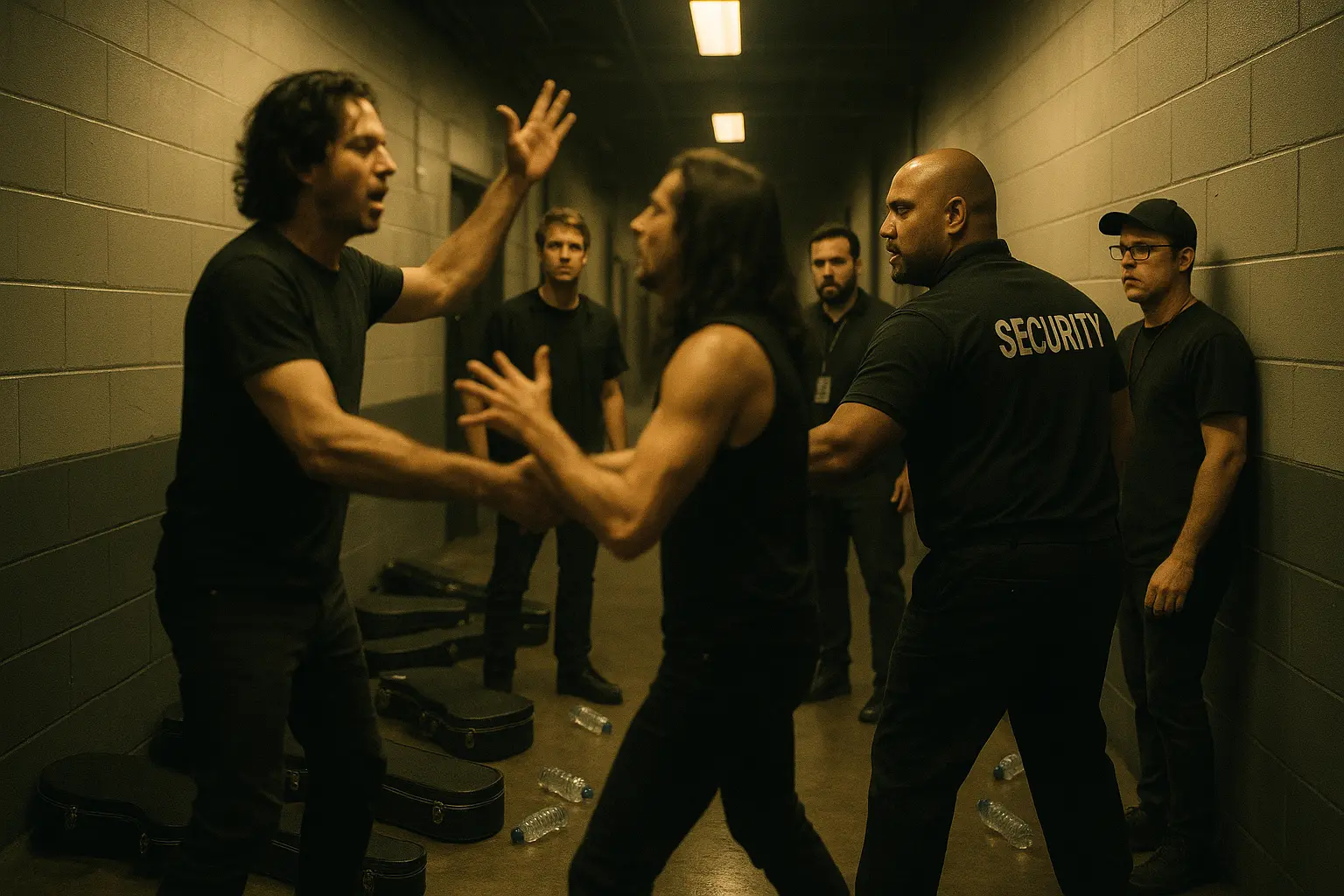
Jane’s Addiction Implodes: Decades of Chaos Erupt in Explosive Onstage Meltdown
“We intended to finish our tour. I never imagined it would end with fists, lawsuits, and a public apology – yet here we are.”
In a shocking turn even for a band as infamously unpredictable as Jane’s Addiction, America’s iconic alternative rock group has officially called it quits. The news comes just hours after the band posted a somber statement on Instagram, finally acknowledging what every die-hard fan and pundit suspected: the ties that once bound this group have snapped for good. This shock breakup caps a headline-grabbing, 15-month collapse – full of backstage brawls, legal threats, public shaming, and the kind of drama that fans expect from Hollywood’s political class, not their favorite bands.
Perry Farrell and Dave Navarro, the creative forces of this ‘80s juggernaut, last year turned their reunion tour into a public trainwreck. After a now-notorious, fist-swinging fight in Boston, every bitter grievance exploded under the relentless social media spotlight. Fans were left reeling, uncertain if their alt-rock heroes might ever share a stage again. Today, the answer is in: Jane’s Addiction is officially over. The legacy? As the dust settles, the final word is as much about American accountability and mental health as it is about music.
Bands That Brawl: How One Punch Broke Jane’s Addiction Forever
Backstage tempers. Onstage violence. Wild accusations. Was this implosion inevitable?
Eyewitnesses at the infamous Boston concert last September watched as Perry Farrell, the band’s outspoken frontman, suddenly lashed out at guitarist Dave Navarro mid-song, bringing their US tour to a screeching halt. Fans’ cell phone footage – posted within minutes – rocketed across X (formerly Twitter) and Instagram, fueling national trends under hashtags like #BandBreakdown and #PunchGate. Insiders confirmed that Navarro, Avery, and Perkins abruptly canceled the rest of the shows, citing concerns over Farrell’s behavior and their own safety.
Navarro’s camp issued a stinging Instagram update that turned up the heat: “Due to a continuing pattern of behaviour and the mental health difficulties of our singer Perry Farrell, we must halt the tour.” Fans sounded off, some decrying the mental health reference as character assassination, others siding with Navarro. Days later, Farrell furiously denied the diagnosis, fired back with accusations of “bullying,” and declared he was consulting medical specialists for answers. Soon rumors swirled about lawsuits, millions in lost revenue, and years of unresolved resentment.
“It’s embarrassing it came to blows – but we have nothing to hide. The legacy will remain the work the four of us created together,” the band wrote in a final joint statement on December 17.
Make no mistake: This was no mere rock star tantrum. Within weeks, Jane’s Addiction was embroiled in a $10 million lawsuit. Navarro, bassist Eric Avery, and drummer Stephen Perkins accused Farrell of ‘emotional distress, assault, and breach of contract’ in a July 2025 court filing, torpedoing any hope for reconciliation. Farrell struck back with his own suit, alleging years of bullying and railroaded decisions – claiming he was left out when the decision was made to kill the tour. For a band who’d once defined California cool, this was a meltdown worthy of DC politics.
Legal Firestorm and Legacy: The High-Price Cost of Rock’n’Roll Rebellion
Lawsuits, lost millions, reputations in flames: Could Jane’s Addiction recover from its own civil war?
The numbers alone are staggering. Over the past year fans and promoters alike have watched as Jane’s Addiction’s drama leaped from music blogs to the business pages: After the violent Boston bust-up, show cancellations cost millions in refunds, shattered touring contracts, and triggered a legal arms race. This summer, Navarro’s team went public with their $10 million claim for damages, igniting more infighting within the band’s inner circle. Farrell’s fiery countersuit not only denied the assault allegations, but also charged that he had long been “bullied and harassed” behind the scenes and was purposely excluded from key decisions – especially the tour’s premature end, which he says destroyed both his finances and his reputation (see details here).
The legal melee might finally be cooling. Just this week, in the band’s valedictory statement on Instagram, Navarro, Avery, and Perkins publicly acknowledged they “made inaccurate statements” about Farrell’s mental health, backpedaling and attempting to recenter the conversation around their shared musical legacy. In a rare show of rock star remorse, Farrell followed up with a sweeping public apology – the second since the infamous Boston gig – promising that, despite “losing his temper,” he’s grateful to fans and plans to pursue solo creative projects (read Yahoo report).
“I accept responsibility for my actions, and thank everyone who supported us for so many years. Jane’s Addiction may be done, but we’ll never forget what we built together.” – Perry Farrell
Whether this split signals the permanent end to lawsuits remains to be seen. For now, the band insists that they’ve “come together one last time to resolve our differences” so the music can speak for itself. That language, say PR experts, sounds more like a conveniently-packaged truce than a reconciliation. But fans, many of whom grew up idolizing these alt-rock firebrands, now face a hard reality: sometimes business really does kill the band.
How Jane’s Addiction Wrote – And Blew Up – the Rulebook on American Alt-Rock
From L.A. clubs to tabloid chaos: Will the band’s legacy survive its own spectacular demise?
Formed in Los Angeles way back in 1985, Jane’s Addiction didn’t just influence the alternative rock genre – they helped invent it. Before grunge, before alt radio, these rebels gave the world timeless hits like Jane Says, Three Days, and the infamously irreverent Been Caught Stealing. Their sound, an unpredictable cocktail of punk, art-rock, and metal, captured the wild spirit of Reagan-era rebellion and helped define American youth for a generation (Wikipedia profile).
Three decades later, their spectacular implosion feels almost inevitable: The high-voltage egos and outsize personalities that made Jane’s Addiction famous also fostered resentment and grudges that, in the age of Trumpian tell-alls and viral outrage, could no longer be contained. Online backlash was brutal – longtime fans vented betrayal, while new voices accused the band of self-destruction. Headlines chronicled their legacy as “once-mighty,” “crumbling,” “meltdown” – a playbook familiar in today’s cancel culture.
But even amidst the carnage, the band’s impact remains. Any young rocker with a rebellious streak, any veteran radio DJ, knows Jane’s Addiction is more than the sum of its parts. As the final statement makes clear, the four members are already striking out alone – and conservatives everywhere know what that means: standing up, taking hits, and keeping the American spirit alive after the world knocks you down.
“For all the wildness, for all the controversy, this band changed rock and changed lives. But in the end, the price of chaos was a broken legacy.”
As we move into another contentious election season, maybe there’s a lesson here for the rest of America: Sometimes it’s not about how loudly you fight, but whether you can put country and principle – or even your own band’s history – ahead of ego. With Trump’s America still rocking, Jane’s Addiction’s story is a red-blooded warning: greatness and destruction often come from the same raw, rebellious heart.