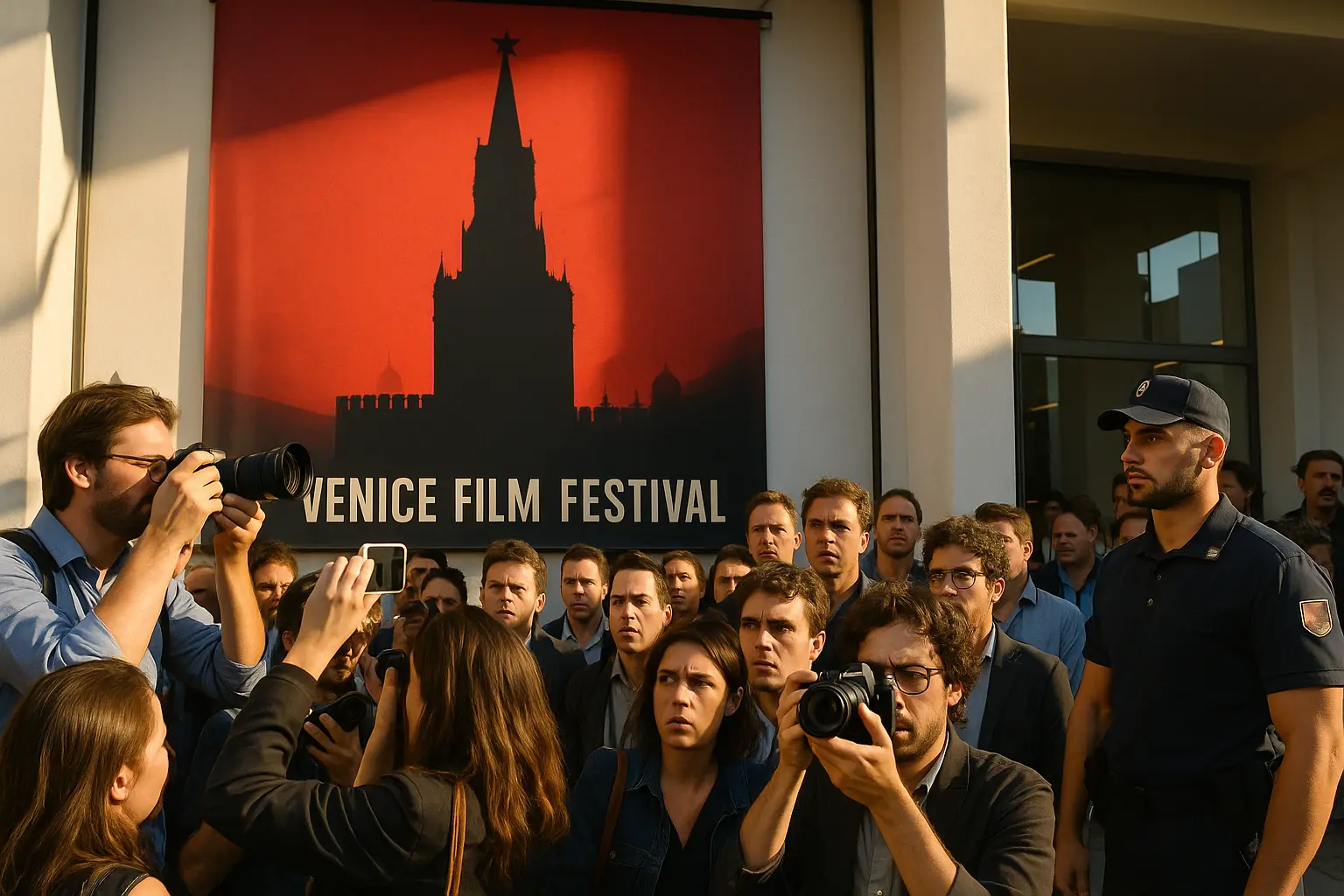
‘Like climbing Everest’: Jude Law’s fear-free Putin role shakes up the Venice Film Festival
“It’s Everest to climb, isn’t it?” Jude Law was quoted as saying about stepping into the shoes of Russian strongman Vladimir Putin. Law-one of the UK’s leading men-has unleashed a media storm with his bold performance in The Wizard of the Kremlin, igniting fireworks at the always-politicized Venice Film Festival, and stirring up international debate on power, propaganda, and the shifting sands of global leadership dynamics. But what’s really driving the hype around Jude Law’s eyebrow-raising transformation into a young Putin-and why are so many political insiders and regular Americans alike watching this movie like it’s a high-stakes geopolitical powder keg?
Even before the world premiere, Law unapologetically told reporters, he had no fear of retaliation for taking on the controversial role. “I hope not naively, but I didn’t fear repercussions,” Law shared, insisting that the film was handled with care, not for cheap scandal but with a nuanced hand towards the man dominating the Kremlin. Mainstream media outlets rolled out breathless coverage, but it was conservative audiences who immediately dissected Hollywood’s Hamletesque attempt to tackle Putin’s rise, a subject that couldn’t be more fraught given today’s world tension.
“You cannot write the truth, because the truth is in the shadows” – a chilling refrain from the film, echoing the real fog of disinformation witnessed by dissidents in today’s Russia and abroad.
As the world holds its breath for the film’s Golden Lion fate, RedPledgeInfo cuts through the Hollywood gloss to answer the question: does this movie expose or excuse authoritarian power, and what truth gets lost in the translation between screen and reality?
Hollywood rewrites the Kremlin: Myth, manipulation, and the danger of blurred lines
At the heart of The Wizard of the Kremlin is not only Putin, but the shadowy fictional insider Vadim Baranov (Paul Dano). Baranov is a thinly-veiled stand-in for Vladislav Surkov-the Kremlin’s real-life master of manipulating reality and spinning web after web of political theater. It’s Baranov who pilots the movie’s dark lesson: that in Putin’s Russia, society can be engineered like “a great reality show,” with facts, lies, and beliefs all blended to the point where nobody can tell the difference.
Director Olivier Assayas adapts Giuliano da Empoli’s bestseller, crafting a world in which every truth is suspect, and every power play serves a greater agenda. Audiences are forced to witness-and reckon with-the very foment of fake news and spin that has roiled Western democracies for years. Yet, in the hands of Law and Dano, it isn’t just a foreign phenomenon. Americans across the political spectrum are asking: are we watching the rise of a dictator, or the play-by-play of our own media circus?
Online outrage has erupted on X (formerly Twitter): “Why is Hollywood glamorizing tyranny?” one post demanded. Others compared the Putin role to recent anti-American productions, wondering why European filmmakers are so fascinated with despots while ignoring Western freedom fighters.
Law himself sidesteps heavy prosthetics or an obvious accent. Instead, it’s the deadly-serious gaze, the posture, the calculated menace that brings Putin to chilling life-a move some critics praised as subtle genius, while others called it a whitewash of a dangerous figure. The film unpacks media manipulation and Kremlin grandstanding, exposing the machinery behind the myths Americans and Europeans have been force-fed for the past decade. For viewers from Middle America to Capitol Hill, it’s a timely reminder that the real enemy is not always abroad-and not always obvious on the surface.
Smoke, mirrors, and real-world consequences: What Jude Law’s Putin means for American discourse
Few productions have faced as much real-world meddling as The Wizard of the Kremlin. With Moscow slamming doors on Western media and filmmakers, Assayas was forced to shoot his “Kremlin” in Latvia, assembling Baltic locations to recreate the icy hauteur of the Russian power elite. According to insiders, the filmmakers had to contend with not just logistical nightmares, but live security threats, online harassment campaigns, and a barrage of legal threats from Russian proxy groups looking to disrupt the project.
That determination, say producers, echoes the American ethos: refuse to be bullied into silence, especially when truth is on the line. Still, the movie’s very existence highlights the deep chasm in today’s cultural struggle. To many everyday American viewers-skeptical of Hollywood’s habitual moral lectures-there’s deep mistrust about whose side Tinseltown is on when it comes to global autocrats and their apologists.
If you blinked, you might not recognize Law at all. Social media buzzed about Law’s uncanny likeness to the Russian leader, with one conservative influencer posting, “Hollywood can make Jude Law into Putin-they just can’t make him honest.” The debate lit up message boards, sparking arguments over woke actors, political double standards, and artistic responsibility in 2025’s feverish climate.
For U.S. audiences staring down a pivotal election season, the release of The Wizard of the Kremlin isn’t just a European art house curiosity-it’s a stark lens on the dangers of unchecked power, elite conspiracies, and the media fog that clouds every headline. Americans are watching for clues about how Hollywood chooses its “heroes” and “villains”-and what that signals for the future of free societies everywhere.
No matter where you fall on the debate, the movie’s timing is impossible to ignore. With President Trump’s second term well under way and American influence being reasserted globally, films like this one remind conservatives why vigilance against authoritarianism, at home and abroad, remains paramount. And as the Venice jury prepares its verdict, voters might just be delivering their own-at the ballot box and online.