Kennedy Outraged: U.S. Pulls Support from U.N. Disease Plan over Radical Overreach and Junk Science
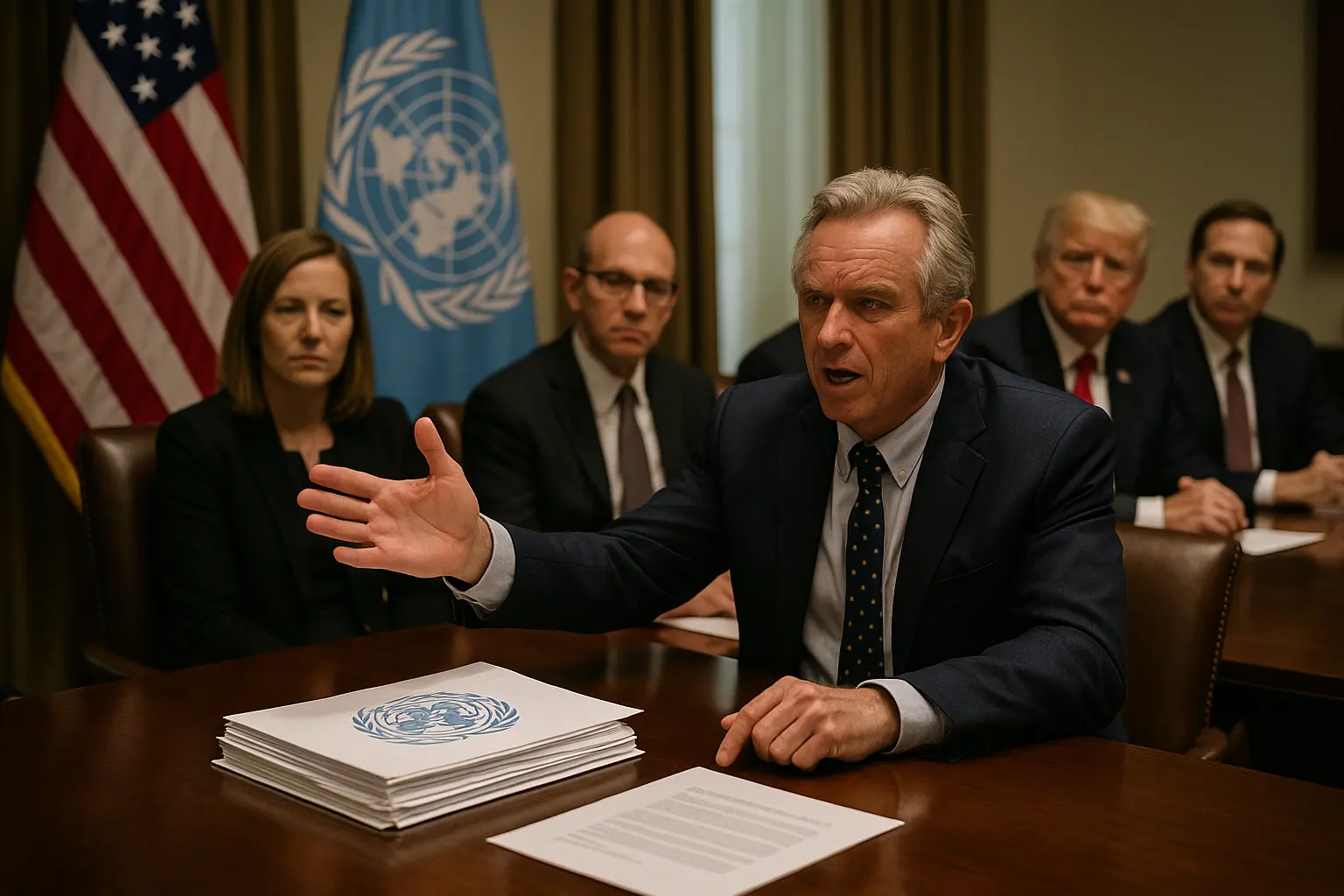
‘The U.N. is stuffing politics into your medicine cabinet, and America will not stand for it.’ That no-nonsense declaration from U.S. Health Secretary Robert F. Kennedy Jr. set off sparks at this week’s United Nations summit, where global elites unveiled a controversial new political declaration supposedly aimed at chronic disease and mental health. But with language on taxes, radical gender ideology, and references to the discredited World Health Organization, the Biden-era declaration was too much for American conservatives – and President Trump’s administration wasn’t about to cave in.
Stop and ask yourself: Should an unelected group of bureaucrats in New York City be telling Americans how to fight diabetes and depression, funneling billions through failed international agencies and layering on hidden taxes? Kennedy’s answer – backed by President Trump and a battered but not broken Republican Congress – was a thunderous No.
Red Lines Crossed: Kennedy Blasts U.N. for Politicizing Public Health
What do taxes on your grocery cart, globalist interventions in school lunch menus, and U.N.-mandated speech codes about so-called identity rights have to do with combating heart disease? Conservatives say: absolutely nothing – except giving more power to international bureaucrats.
In a dramatic speech on Thursday, Secretary Kennedy accused the United Nations of ignoring the most pressing health issues while jamming in unrelated provisions. Chief among his complaints: the declaration’s insistence on controversial tax schemes and so-called ‘management’ of populations by outside powers. Kennedy also tore into the inclusion of loaded rhetoric around gender and abortion, finding it “unacceptable” for the U.S. and well outside the U.N.’s proper scope. “This is about health,” Kennedy declared, “not about subverting parental rights or national sovereignty.”
The document, expected by insiders to set a global agenda for chronic disease, instead triggered a full-scale diplomatic dustup. U.S. negotiators refused to be squeezed, especially after President Trump’s clear stance: America makes health choices at home, not at the whim of Geneva or Manhattan slicks. The White House also reaffirmed the 2024 pledge to leave the World Health Organization if it didn’t enact sweeping reforms – a position Kennedy publicly reinforced at the New York summit.
“Our children’s future shouldn’t be dictated by the whims of the World Health Organization, which has lost the trust of millions,” Kennedy warned. “We will not rubber-stamp their agenda.”
The decision has fired up conservative lawmakers and grassroots activists alike, who see the U.N.’s plan as a trojan horse for global governance and new taxes on American families. Social media lit up with conservative voices supporting Kennedy and calling out global elites. One top trending post: “We beat COVID tyranny – now we push back on U.N. busybodies.”
Global Elites Water Down Real Solutions, Shun Transparency in Health Plan
‘If you want to stop chronic diseases, start by cleaning up the food supply, not by sending more cash to global agencies soaked in scandal and secrecy.’ That common sense message was nowhere to be found in the U.N. declaration, according to both American and European critics.
While the declaration gives lip service to fighting non-communicable diseases and expanding access to medicine, its actual commitments are strikingly vague, say watchdogs. Key language to implement proven measures like taxes on cigarettes, alcohol, and sugary drinks by 2030 was axed, likely thanks to industry lobbyists – under the table, of course. The European Public Health Alliance unexpectedly joined conservatives in slamming the process for its secrecy and watered-down ambition, pointing to lobbying by ‘health-harming industries’ and the backroom removal of proven solutions.
“We needed a springboard and got a ceiling,” one health advocate fumed. The final plan retreats from tough action, failing to mandate food labeling reform, dodging rules on ultra-processed food, and all but ignoring digital addiction while making big promises about ‘mental health parity’ and ‘climate-friendly health systems.’
EPHA let loose in a withering statement: “The weakening of targets and lack of transparency during negotiations represent a major missed opportunity to save lives and reduce health costs.” For once, left and right agree that U.N. elites failed to deliver.
Meanwhile, the Biden-era contributors to the declaration loaded it up with what U.S. negotiators called “objectionable language” drawn from controversial agendas. Kennedy hammered home that the real health crisis goes unaddressed: “Ultra-processed foods – not abstract social theories – are killing our kids.” The United States, ever-independent, will instead pursue tougher regulation for food additives, clearer labeling, and radical reform at the World Health Organization as a precondition for future engagement. “America will not commit to any international health order until it puts real lives over rhetoric,” Kennedy insisted.
Across conservative media, outrage has been fierce. Radio host Laura Ingraham summed up the mood: “If bureaucrats come for your pantry or your child’s doctor, you push back twice as hard.” Republican lawmakers doubled down, warning that Democrats in Congress still eye U.N. treaties for future backdoor mandates on guns, school curriculum, and ‘sustainable diets.’
America First in Global Health Policy: Trump and Kennedy Chart New Course
The Trump administration’s return means American sovereignty again comes first – in global health as much as in border security or energy production.
Despite the media firestorm, Kennedy’s stance isn’t ‘isolationist’ – it’s realistic. The U.N. declaration, loaded with high-minded buzzwords and activist talking points, can’t hide the fact that it fails to address the key drivers of disease in the U.S.: a broken food system, unaccountable pharmaceutical giants, and a World Health Organization still reeling from its COVID-era failures.
In place of blank checks for international agencies, Kennedy offered an alternative vision focused on American needs: rooting out ultraprocessed foods, fighting opioid abuse, and slashing the bureaucratic red tape that keeps life-saving treatments off the market. The Secretary pledged fresh investment in research, incentives for healthy foods, and – above all – refusing to let unelected elites impose new costs on working Americans. The administration’s sharp criticism of the declaration referenced its failure to address the top U.S. health concerns, coupled with an unacceptable overreach in mandates and funding.
As Kennedy made clear: “The United States will always be a part of global efforts – but that means leading by example, not surrendering to failed internationalism or radical social engineering.”
With the 2026 midterms in sight and the 2028 presidential primary already heating up, this rejection gives conservatives another rallying point. Outspoken senator Tom Cotton declared, “This is why we elected Trump – to stand up for American parents, American jobs, and American values at home and in the world.” The message to grassroots supporters: Stay vigilant. Democrats may still eye underhanded tricks, but the Trump-Kennedy team just drew the world’s boldest red line yet.
Bottom line? The U.N.’s political declaration on chronic disease and mental health is officially ‘dead on arrival’ in the United States – and if Trump, Kennedy, and grassroots conservatives have their way, America will lead on health by fixing its own house and showing global bureaucrats the door. Let’s hope the rest of the world pays attention.