
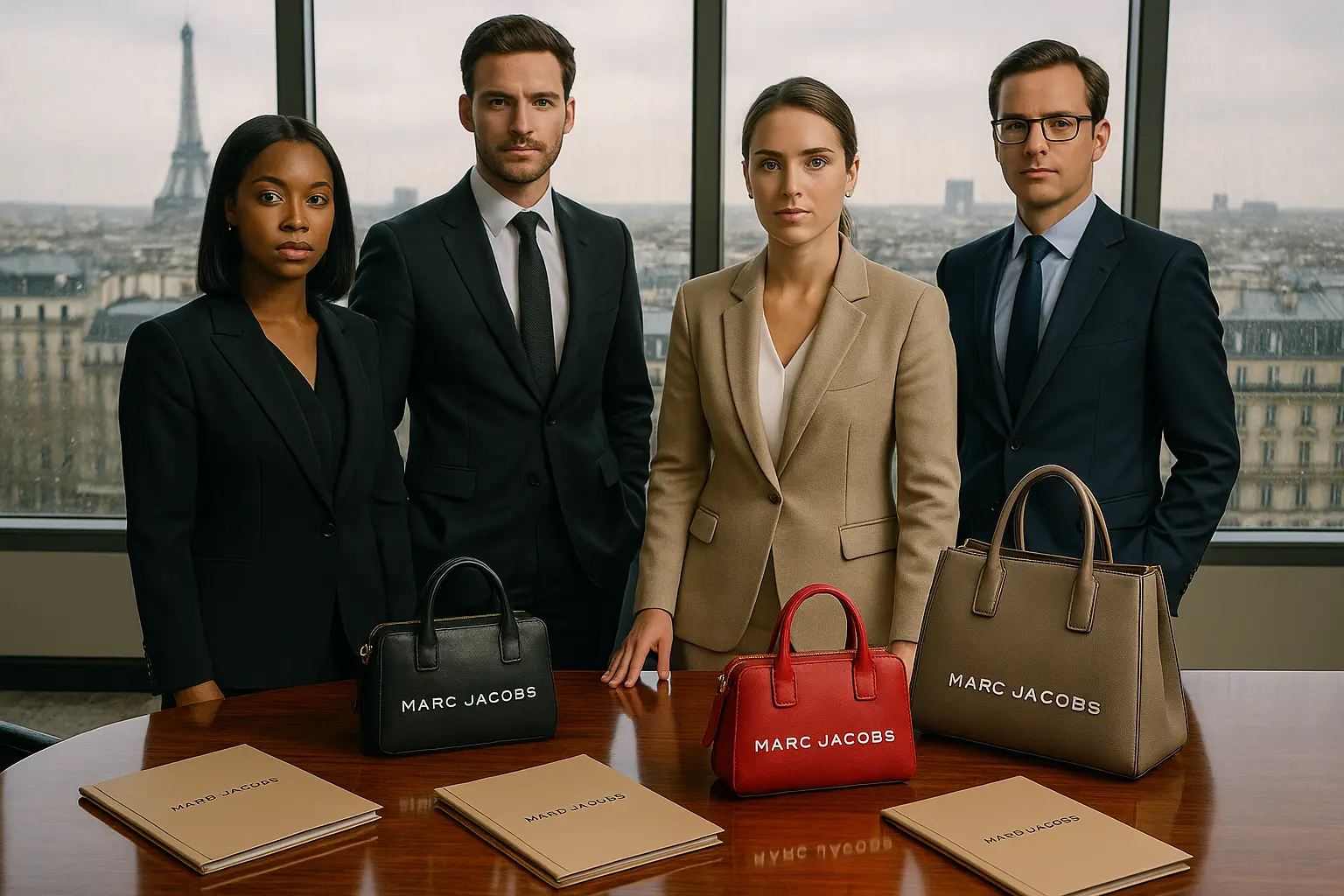
LVMH Scrambles to Dump Marc Jacobs for $1 Billion as Luxury Empire Stalls
“We will not keep brands if we believe they are not a good add-on, or we are not the right operator to operate them.” – LVMH’s Chief Financial Officer, Cécile Cabanis
The mighty French luxury titan, LVMH Moët Hennessy Louis Vuitton, is reeling as it looks to offload the once-glitzy Marc Jacobs fashion brand for a reported jaw-dropping $1 billion. As the world’s luxury market shudders under geopolitical tension and flagging American and Asian demand, investors from both sides of the Atlantic are watching this potential shakeup in disbelief. What’s behind this bold gamble? And who stands to benefit from what could be the retail deal of the year? Buckle up as RedPledgeInfo peels back the velvet curtain and shows what’s really heating up the world of high-dollar designer brands.
Luxury Giant LVMH In Crisis Mode: Can Selling Marc Jacobs Patch The Leaks?
It’s the end of an era. Once the darling of American fashion, Marc Jacobs is now in the crosshairs as LVMH tries to plug a billion-euro hole in its rapidly shrinking coffers. The French megacorp, best known for names like Louis Vuitton, Dior, and Tiffany, has secretly been working with investment bankers at J.P. Morgan to test the waters and find a buyer for Marc Jacobs. The latest update? LVMH is reportedly in advanced discussions with a trio of deal-hungry American groups-Authentic Brands Group, Bluestar Alliance, and WHP Global-each infamous for snapping up faded icons and squeezing every last drop out of their licensing contracts.
But why now? According to LVMH’s own financial disclosures, 2025 has been nothing short of a disaster for the European icon. Net profits tumbled 22% in the first half of this year, and sales shrank from €42 billion to €39.8 billion. Even their supposedly bulletproof Fashion & Leather Goods division stumbled badly, posting a 9% drop in sales. The stock market, never a fan of weakness, drove LVMH shares down a bruising 19% over the last 12 months as global trade worries, fewer Chinese shoppers, and Americans choking on high prices piled up on Arnault’s desk.
An industry insider told RedPledgeInfo, ‘This is less about Marc Jacobs and more about LVMH desperately trying to show shareholders they still have a plan.’
This is a major departure from the ‘luxury never loses’ mantra we’ve been sold for decades. Once upon a time, LVMH was buying up every American fashion house it could get its hands on, fueling an illusion of infinite European dominance. Now, with losses mounting and consumers everywhere pinching pennies, even the ‘Kings of Bling’ are being forced to get real and cut dead weight.
Fashion Free-For-All: Who’s Really Winning as American Firms Circle the Marc Jacobs Carcass?
What’s truly jaw-dropping is the cast of characters lining up to take Marc Jacobs off Parisian hands. Everyone’s eyes are on Authentic Brands Group, the licensing colossus headed by Jamie Salter. These guys are a different breed: savvy, American, and worryingly efficient at slotting old brands into lucrative deals with department stores, influencers, and Instagram boutiques. Authentic has already snapped up icons like Reebok, Brooks Brothers, and Barneys, making them the go-to undertaker for defunct luxury names.
Jamie Salter himself is never shy about his vision. Partnering with Saks Global, Authentic Brands isn’t just buying to shelf-they plan to churn out new products and reinvent the luxury experience for mainstream America, slashing prices and maximizing reach. Marc Jacobs, under their stewardship, could go from highbrow runway to the racks of every mall in Middle America, a bad omen for any European house still dreaming of exclusivity.
“The only way to make these old-school brands pay is mass licensing and fighting for every cent in the U.S. market. That’s Salter’s playbook,” confided a Wall Street strategist familiar with the talks.
Bluestar Alliance, another potential buyer, is no stranger to gobbling up storied American brands that have seen better days. And then there’s WHP Global, equally notorious for spinning fashion ‘heritage’ into modern licensing gold. All these players, for better or worse, are laser-focused on volume and profit, not status or creativity.
So where does this leave LVMH? Frankly, the French luxury machine has a rocky record with U.S. brands. It has already divested from Off-White and Stella McCartney after failing to strike gold on American soil. Even big recent sales like Tiffany have been a struggle, with sky-high prices meeting harsh retail realities. Selling Marc Jacobs now is less a strategy, and more a surrender.
The handwriting is on the wall: the world is moving on from European luxury snobbery. Licensing empires and digital-savvy American operators are taking the crown. For Conservative investors and business-watchers? This is proof positive that even the supposed titans of industry cannot ignore the power of market discipline-and that means running your company like a business, not an art gallery.
LVMH’s Internal Turmoil: Dynasties, Downturns, and Decline in French Luxury
Beneath the business headlines lurks a deeper drama worthy of a streaming TV epic. Bernard Arnault, the steely-eyed patriarch of LVMH, is racing to hand key jobs to his children, with an eye on keeping dynastic control no matter what the markets say. Reports swirling around Paris suggest at least two of Arnault’s kids are being groomed for the CEO seat. Will a next-gen Arnault spark a revival, or simply preside over the slow-motion decline of Europe’s most prized luxury house?
It’s not just succession worries. French luxury’s entire business model is under siege. Champions like Chanel and Vuitton are actually dialing back price hikes after a decade of inflation-busting markups. The luxury goods market is finally facing a moment of reckoning as regular buyers revolt and even China’s wealthy elites turn cautious. In online forums, conservative shoppers are increasingly vocal about the class elitism, overpricings, and ‘woke’ messaging that has infected these brands.
‘Why line their pockets when LVMH spends your money on globalist causes and anti-American projects?’ wrote one prominent conservative social media influencer. The backlash is real-and intensifying by the day.
Arnault and company have tried to weather the storm with a series of quick fixes: layoffs, project cancellations, reduced inventory, and now, selling off the family silver. But none of it feels remotely as decisive as what conservative business minds know is needed-a return to merit-based leadership, accountability, and a commitment to customers instead of elite circles in Paris and Shanghai.
Even as LVMH chases headlines with its Marc Jacobs fire sale, back in Washington, strong pro-business policies from the Trump White House have American companies roaring back to life and calling the shots. The decline of LVMH’s empire is a warning-ignoring American consumers, fretting more about Parisian society than profit and productivity, is a recipe for failure every time.
What’s Next? Conservative Values Shape the New Fashion World Order
We’re witnessing nothing short of a revolution in luxury retail. The cozy Franco-centric luxury club is being broken up, and the terms are finally being set by sharp, no-nonsense American brands and consumers who demand value for money and hard-nosed accountability at every turn. The days of fairy tale profit margins and virtue-signaling PR are numbered.
As LVMH desperately tries to pawn off Marc Jacobs-one of its most visible American experiments-on the mass-market licensing titans, its fate rings clear: adapt or become another cautionary tale. The artifice of old-world glamour can no longer hide the basic failures of excess, elitism, and mismanagement. The market-and a surging wave of patriotic, conservative shoppers-are writing a new script for global fashion. Want to stay in business? Respect your customers, do your homework, and run a tighter ship than the Parisian elite ever imagined. Anything less, and your name might be the next up for grabs… at a liquidation price.
Stay tuned to RedPledgeInfo for the latest on this evolving saga-and for more proof that conservative free-market values are taking the world stage, one luxury brand at a time.