
‘If you strike Gaza, we strike you.’ That’s the chilling threat echoing across the region today as Israel faces a new and dangerous challenger on its southern flank: Yemen’s armed forces.
Hypersonic Fury Unleashed: Yemen Puts Israel’s Defenses to the Test
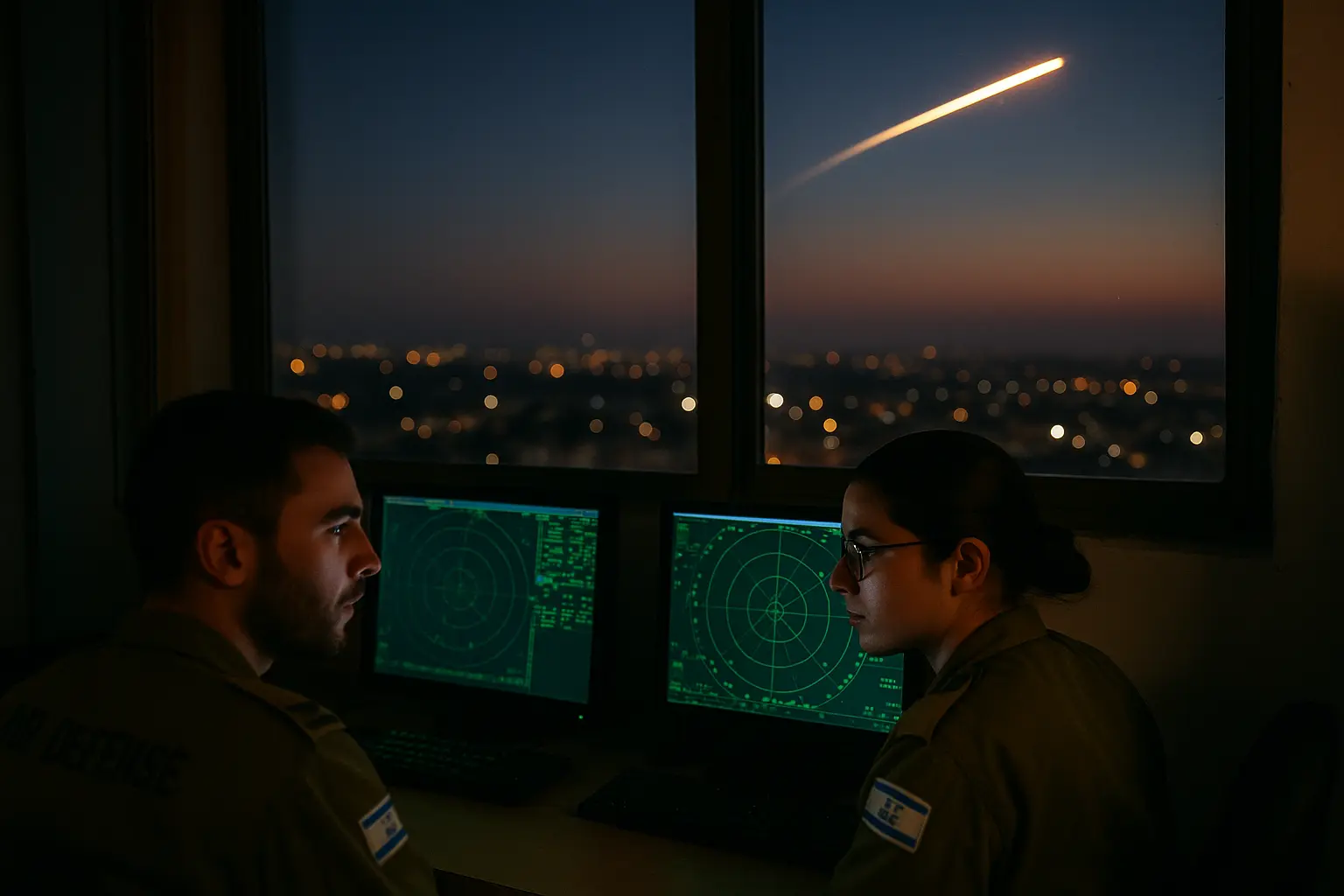
Friday morning brought a surge of panic to Israeli airspace, as blaring sirens signaled yet another escalation in the already white-hot regional conflict. This time, the threat came not from Gaza or Lebanon, but deep from the heart of Yemen. Israeli military officials quickly confirmed they’d intercepted a missile from Yemen after alarms blared across the Negev and beyond, with Be’er Sheva-Israel’s prized ‘technology hub’-squarely in the crosshairs.
This was no fluke or lone wolf attack either. Brigadier General Yahya Saree, a spokesman for the emboldened Yemeni forces, went on the record describing the operation as “precise”-proudly identifying the projectile as none other than a Palestine-2 hypersonic missile. With speeds up to five times the speed of sound, hypersonics have been a game changer, blitzing past traditional missile defenses and sending a shockwave through Israel’s top brass. Israel’s vaunted Iron Dome may have scored a win today, but the message from Sanaa was loud and clear: Yemen’s arsenal is growing, and the battle lines are moving further from Gaza than ever before.
“This marks a serious shift. We are not fighting one front, but a full-blown regional coalition-and our cities are the price,” warned a frustrated Israeli security analyst on national TV today.
The scope of Yemen’s latest campaign is jaw-dropping. Far from a single missile stunt, the Yemenis paired their attack with coordinated armed drone strikes targeting four critical Israeli sites. Reports confirm drones buzzing over vital ports in Eilat, Ashkelon, and Hadera-spanning Israel’s southern tips to the crest of its Mediterranean coast. These arenas are not just military zones, but economic arteries essential for Israel’s international trade and movement.
And the timing couldn’t be more calculated-or threatening. Just days ago, Israeli jets struck Houthi strongholds in Yemen’s Hodeidah port, in a swift retaliation aimed at staving off further barrages. For every blow in Gaza, it seems, another front is kindled in the region.
Regional Dominoes: Yemen’s Deadly Message Reverberates Across the Middle East
What’s driving Yemen to gamble with such high-tech weaponry and unrelenting barrages? Look no further than the spiraling humanitarian catastrophe in Gaza. Since the start of the war, Yemen’s Houthi forces claim to have executed hundreds of military operations-some sources citing over 59,500 Palestinian deaths, the majority women and children-making it the deadliest anti-terror campaign in the century.
These numbers, while staggering, are not simply statistics-they’ve become rallying cries for every group with an axe to grind against Israel. The Houthis, an Iranian-backed militia long written off by Washington and Jerusalem as junior players, have pulled out all the stops: not just launching ballistic missiles but slapping on a naval and aerial blockade that chokes Israeli-bound shipping.
The boldness of these attacks has sent tremors far beyond Israel’s borders. The United States, eager to curb Tehran’s influence and starve Yemen’s war coffers, slapped down new sanctions on a suspected petroleum smuggling network bankrolling the Houthis. Meanwhile, the European Union’s trade interests are on full alert-Greece recently scrambled a salvage vessel after its ships were struck in the Red Sea, bracing for economic blowback should the Suez corridor grind to a halt.
“The Gaza war has unleashed a domino effect, and Israel is getting squeezed at every flank. It’ll take more than airstrikes to put this genie back in the bottle,” a seasoned Middle East analyst told RedPledgeInfo, pointing to heightened risks for Americans and Western allies alike.
Meanwhile, the ceasefire agreements once bandied about in diplomatic circles are now hanging by a thread. Even as Israel’s advanced missile defense twitches for every siren, the fact remains: Iran’s proxies, spearheaded by Yemen’s Houthi movement, have proven willing and able to lob increasingly sophisticated weaponry at a time of maximum Israeli vulnerability.
Political Shockwaves for 2025: Biden’s Posture and Trump’s Warnings Echo at Home
Amid the carnage, President Donald J. Trump’s warnings from the campaign trail ring truer than ever. “Peace through strength is not just a slogan, it’s a necessity… appeasement only invites chaos,” the President declared at a recent rally in Cleveland to thunderous applause. Most conservatives agree: the Biden-led era of wavering and half-hearted red lines opened the gate to today’s bloodbath-and Donald Trump’s 2024 reelection was the American answer to restoring order and deterring bad actors around the globe.
But what’s next? As Israel shifts its focus from Gaza’s tunnels to Yemen’s desert launch pads, America’s military is quietly beefing up assets in the Gulf. U.S. intelligence reports now circulate estimates on future Houthi capabilities, with fresh warnings that Iranian advisors have upgraded the group’s missile know-how, letting Yemen leapfrog to advanced technologies-like those hypersonic Palestine-2s-previously reserved for first world militaries.
“We cannot let the Middle East become a playground for Iran and its cutouts. Congress must act now, support our allies, and hold the axis of evil accountable,” thundered Texas Senator J.D. Vance in a fiery speech from the Senate floor.
Earlier this week, anecdotal evidence surfaced of social media outrage after video footage of panicked evacuations circulated among Israeli civilians as missiles streaked toward major urban centers. Conservative influencers roundly condemned the Biden administration’s “inaction and moral confusion,” demanding a return to strong, clear deterrence.
Diplomatic overtures remain frozen as ever. Israel accuses the Houthis of repeatedly breaking ceasefires, with the current truce structure holding about as well as a cardboard dam in a hurricane. Western leaders, meanwhile, are on edge as Iran’s fingerprints show up across the battlefield, from the shattered ruins of Gaza City to missile casings in Be’er Sheva.
One hard truth has become impossible to ignore: as the Middle East spirals, only American resolve-bolstered by Israel’s sharpened defensive posture and meaningful alliances-can hope to reverse the region’s dangerous slide.
Conclusion: Unprecedented Dangers Demand Strong Leadership-America Must Not Blink
The flashpoints in this war are multiplying. From Gaza to Yemen and everywhere in between, the enemies of Israel-and by extension, the West-are growing bolder, more coordinated, and equipped with weaponry that challenges even the best-laid defenses. The recent interception of a hypersonic missile over Israel is more than an isolated headline-it’s the signal flare of a larger, more dangerous conflagration hurtling toward global significance.
Republicans across the nation are sounding the alarm: appeasement is a losing game. Only decisive, unapologetic American leadership can shatter the enemy coalitions now arrayed against our critical interests in the region. In the end, preserving peace, security, and civilization’s front lines means never backing down-because the threats are now swifter, deadlier, and closer than ever before.