
Media Crackdown: White House Slams the Door on Press Offices Amid National Security Cites
‘Transparency only works when it’s both ways. We ask for it. The White House closes the door.’ – Frustrated White House correspondent on X (formerly Twitter)
The End of Free Reign: Biden-Era Press Access Gets Trump-Era Lockdown
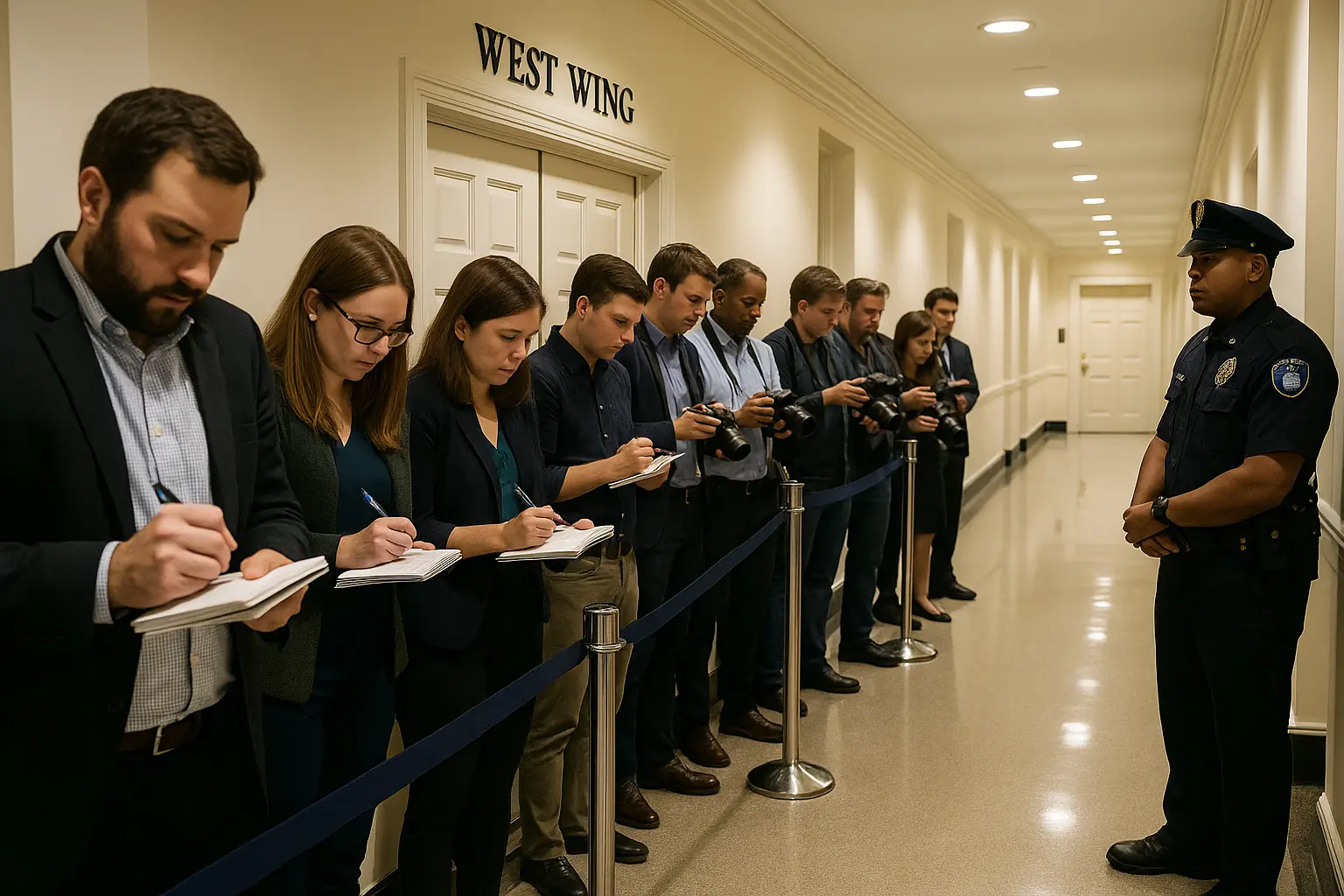
For decades, credentialed White House reporters have enjoyed near-unfettered access to the Upper Press, Room 140-a vital nerve center just steps from the Oval Office. It’s where sharp, fast journalism happens, where Press Secretary Karoline Leavitt and Communications Director Steven Cheung field the rapid-fire of a news-hungry nation. Not anymore.
This week, the White House roiled the Fourth Estate with its new directive slamming shut press freedom and access: credentialed journalists can now only visit the Upper Press area with an advance appointment, a policy that took effect instantly. The stated reason? Security. With National Security Council (NSC) staff and White House communicators now working in closer concert than ever, sensitive material is supposedly at risk. No freewheeling interactions; no chance encounters. Welcome to the new normal for Washington reporting.
While some argue the move brings “order and control” in turbulent times, many conservatives recognize it for what it is: the latest volley in a war to manage, muzzle, and manipulate the narrative reaching the American people. Unsurprisingly, legacy media organizations-still smarting after being tossed from the White House pool earlier this year-are calling foul.
“We are seeing the curtain drawn, not just closed-a total reversal from America’s tradition of open government.” – Commentator on Fox
This radical policy-signed by Leavitt and Cheung-insists the White House communications team must guard against journalistic ‘overreach.’ To get anywhere near Room 140, reporters need to book a slot and run the appointment gauntlet, with approval from trusted staffers with security clearances. Freedom of the press? Now strictly on the administration’s terms.
National Security or Narrative Control? Pentagon Follows White House Lead
Just as the press wrapped its head around the White House crackdowns, a parallel drama erupted at the Pentagon. Last month, Defense Secretary Pete Hegseth unilaterally imposed a media pledge for all reporters on the defense beat, forbidding them from seeking or reporting any information not officially authorized-even if it isn’t classified. It wasn’t just a suggestion: comply, or lose your access and press pass. The response was a rare, jaw-dropping moment of unity from even the most establishment of news desks.
More than thirty of America’s biggest outlets-Reuters, Bloomberg, The New York Times, and nearly every major TV network-rejected the policy outright. Many gave up their credentialed Pentagon spots in protest. As military spending rockets toward $1 trillion and battlefield stakes have never been higher, transparency in defense reporting becomes more critical, not less. The White House move looks, to many, like the tip of the iceberg.
‘This is not just a press spat. It is a clear message: the administration decides what voters are allowed to know.’ – Conservative legal analyst, Newsmax
Supporters of President Trump’s harder stance say national security must trump press “gotcha” games, demanding structure where chaos once ruled. But critics-some from inside the conservative tent-warn of setting dangerous precedents that could silence voices across the spectrum. Even some old-school Republican strategists note that, while keeping secrets is part of government, restricting all unplanned press interactions smacks of controlling the wider narrative more than keeping America safe.
New rules don’t stop at the press office. With the White House now picking and choosing daily which reporters get closest to the president, and who covers major events, the administration is actively removing even the veneer of impartiality from the “pool” system meant to keep coverage fair and truthful.
Legacy Media Meltdown: Bitter Backlash and Political Stakes Hit New High
Politics, as always, is the subtext-and the stakes, heading into 2026, couldn’t be higher. In an election cycle where direct messaging and grassroots mobilization are the backbone of Republican campaigns, the Trump White House is sending a crystal-clear message: the White House, not the media, will set the tone. Social platforms lit up this week with furious threads and statements from sidelined reporters:
‘They kicked us out, they shut us up, and now they lock the doors. Is this your “open government,” America?’ – Media blogger for The Hill, viral on X
Many press advocates draw historical parallels. The White House Correspondents’ Association (WHCA) points out that the last time such restrictions were imposed-way back in 1993 during Clinton’s first term-a media firestorm forced a quick retreat. “It’s a dangerous road,” said a WHCA spokesperson, referencing how the move is hampering transparency and accountability. This administration, however, shows no sign of blinking.
For conservative readers, the real question is whether these moves actually serve Republicans-or set a trap for future administrations and GOP transparency. Control cuts both ways. Some see the press’ outrage as proof that they’re finally being held accountable for years of left-leaning bias. Others quietly wonder if, in winning this battle, the right risks normalizing censorship tools future Democratic presidents will be quick to wield.
‘We fought for decades to expose government overreach. But now, we need an open debate about who gets to decide what “national security” means, and how much power the Executive Branch can claim.’ – Former Congressional staffer, Heritage Foundation
The White House, meanwhile, maintains that no information is being hidden, merely structured, as communicators handle an unprecedented burden of classified and sensitive material. But in the high-stakes chess match of American democracy, limiting the ability of journalists to do their job impacts every voter no matter their party. When the rules change, the story changes-and so does America.
Looking Forward: 2026 and Beyond
With midterms approaching, the clash between the administration and the institutional press is more than inside-the-Beltway drama-it’s a defining battleground in the fight for control over the minds and hearts of Americans. President Trump’s second term continues shaping a new media reality: press rooms are not sanctuaries, credentials aren’t a free pass, and “access” isn’t guaranteed.
Conservatives are split: is this the rebirth of responsible government, or the start of a slippery slope? One thing is certain: as both sides dig in for a long, contentious campaign season, the right to ask questions-and the right to refuse answers-has never mattered more to the future of the republic.