
Gibson’s Next Act: A New Jesus, A Stunning First Look, and a Radical Release Shift
“This film represents a major part of my life’s work, and it has demanded everything of me as a filmmaker and as an artist.” – Mel Gibson
After more than two turbulent decades since Mel Gibson’s groundbreaking ‘The Passion of the Christ’ sent shockwaves through Hollywood and the church alike, the iconoclastic director returns with seismic news: the sequel, now titled The Resurrection of the Christ, has revealed its first look at a new Jesus-and prompted a dramatic date shuffle. Conservative audiences, long hungry for faithful, unapologetic storytelling in a left-leaning industry, are once again at the forefront of a cultural moment that promises to shake modern cinema and reignite conversations about faith, sacrifice, and redemption.
Lionsgate, in a long-anticipated press campaign, has dropped the veil on Finnish actor Jaakko Ohtonen, who steps into the sacred sandals of Christ himself, replacing original star Jim Caviezel. The reveal comes alongside headlines about rescheduled release dates-pushing Part One to May 6, 2027, and Part Two to May 25, 2028-a move that is sending ripples through both faith communities and the broader entertainment industry. But will new faces and a different calendar undercut the impact, or only deepen anticipation among the faithful?
First Glimpse: Bold Casting, Faithful Storytelling, and Gibson’s “Ultimate Challenge”
The legacy of The Passion of the Christ weighed heavily on its creators and audience alike. Not since its release has any mainstream studio dared to tackle The Resurrection with such gravity-or scale. Now, as images of Jaakko Ohtonen’s intense gaze as the resurrected Jesus flood the internet, debate and anticipation are at a fever pitch. Ohtonen, virtually unknown in American Christian circles, is set to replace Caviezel, whose own performance was legendary and given a near-mythic status among conservatives and traditional Christians.
This is far more than a standard reboot. The film covers the defining moment of Christianity, unfolding “three days after Christ’s crucifixion on Good Friday,” locking the timeline directly after the tragic, graphic finale of the original film. It is a story of triumph after suffering, of ultimate redemption against all odds-a message that resonates now as deeply as ever, especially after years of Hollywood’s aggressive move toward more secular, agenda-driven storytelling.
The supporting cast features fresh international faces: Cuban actress Mariela Garriga steps in as Mary Magdalene, with key roles for Pier Luigi Pasino as Peter, Kasia Smutniak as Mary, Riccardo Scamarcio as Pontius Pilate, and Rupert Everett, creating an ensemble that feels both global and reverent. Gibson, who fought Hollywood headwinds to finance and produce the film independently for $30 million, has described the project as his “ultimate challenge.” Truly, few directors have the courage-or conviction-to mount such a controversial and significant project in an era loudly hostile to Christian values.
“I needed actors who would bring complete conviction-not just to their craft, but to the story’s profound message,” Gibson told faith press last week.
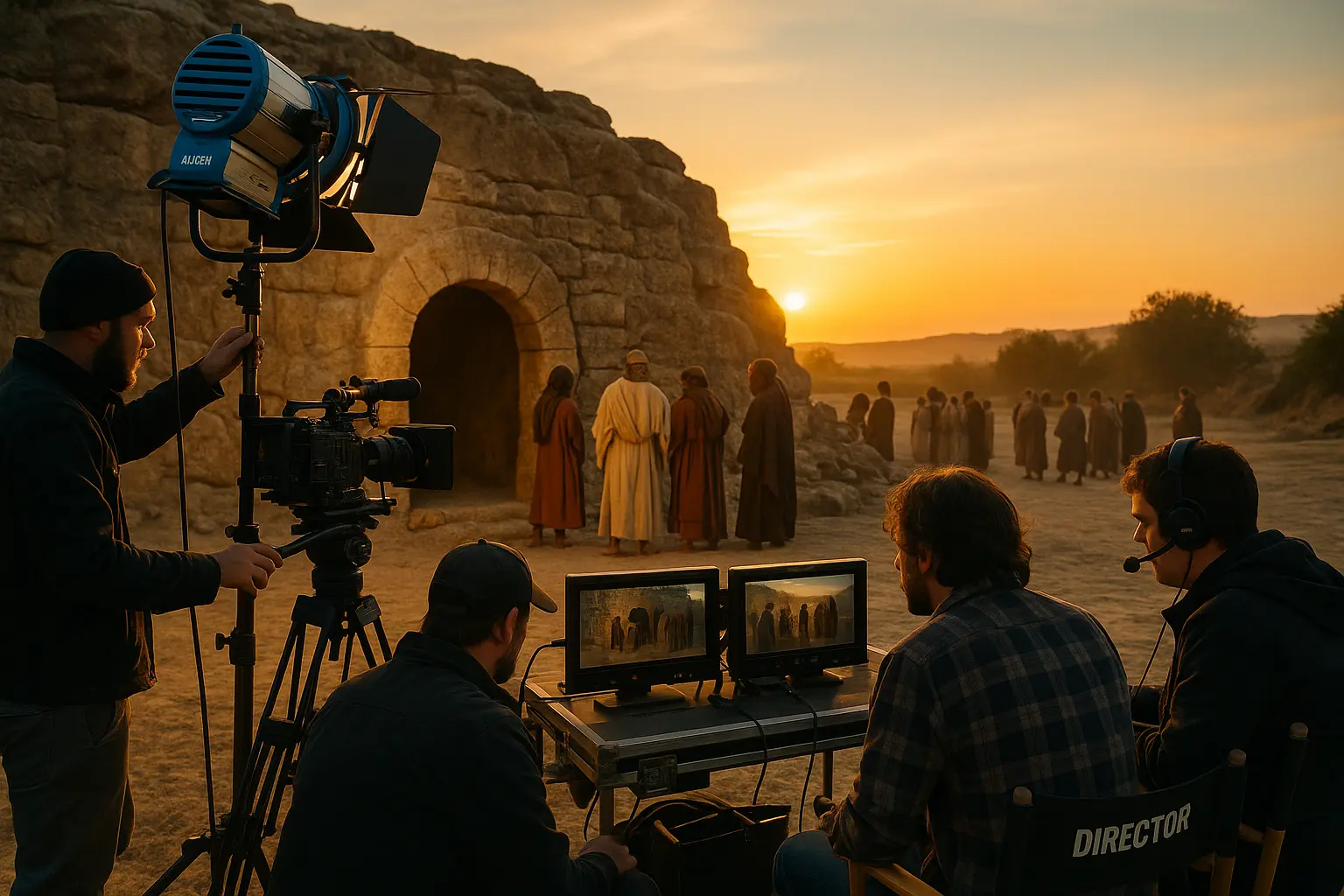
This is not a spectacle stitched together by heartless Hollywood committees obsessed with box office projections. It is a passion project in the truest sense, filmed over 134 grueling days across Rome, Bari, Ginosa, Craco, and Matera in Italy. As the “first look” images stir debate, one thing is clear: Gibson isn’t just revisiting old ground-he’s breaking it all over again.
The Date Shuffle: Why Lionsgate Delayed Christianity’s Greatest Story and How Hollywood Responded
With a saga this anticipated, changes in release plans are seismic. Lionsgate’s original slot for The Resurrection of the Christ: Part One was March 26, 2027-strategically set on Good Friday for maximum spiritual (and box office) impact. But in a move that stunned both Hollywood analysts and Christian filmgoers, the debut now drops on May 6, 2027, with Part Two delayed an entire year to May 25, 2028, aligning with Ascension Day-a shift that’s as symbolic as it is commercial. This shakeup ensures that every detail of the epic will meet Gibson’s exacting standards, but it has also turbo-charged online commentary and speculation about the true reasons behind the change.
Some faith groups and outspoken conservative voices on social media have accused Hollywood of subtly trying to torpedo interest, suggesting the date switch was engineered to undercut the film’s momentum during the holiest part of the Christian calendar. Others, including insiders with knowledge of Lionsgate’s slate, suggest that this was a strategic move to ensure both parts of the film coincide with major Christian feast days-and therefore, potentially drive greater engagement among religious families and faith-based audiences worldwide.
Thrown into the mix is a curious wildcard: Lionsgate also announced that the Johnny Depp vehicle ‘Day Drinker’ would now take over the original March slot, igniting a fresh round of culture war banter about priorities and values in Tinseltown. Just imagine: in an industry that typically pushes “inclusive” agendas at the expense of Biblical storytelling, America gets Depp’s swanky yacht drama on Good Friday, and the Resurrection on Ascension. If that’s not the perfect snapshot of Hollywood priorities, what is?
“It’s Hollywood’s idea of a compromise,” one viral commenter wrote.”They give you Depp and expect Christians not to notice.”
Lionsgate, meanwhile, remains upbeat, highlighting plans to distribute The Resurrection of the Christ in North America and the UK, with a patchwork of global partners rolling it out internationally. The stakes for Christian filmmaking have never been higher, and all eyes are on whether audiences-feeling alienated by so many recent “woke” projects-will show up in droves for a story that speaks truth to power and honors faith above fashion.
Behind the Scenes: Untold Stories, Hollywood Backlash, and Conservative Hopes for the Sequel’s Impact
That this film exists at all is a testament to Mel Gibson’s iron will-and to the deep hunger among Americans, and millions more worldwide, for unapologetically Christian blockbusters that break Hollywood’s mold. The original Passion became an unexpected cultural juggernaut in 2004, minted as a touchpoint for religious film and grossing hundreds of millions for a story the coastal media elite wanted swept under the rug. Nearly a quarter-century later, the sequel faces even steeper odds, from casting controversies to a news cycle that leans left on almost every existential subject.
The pressure on Jaakko Ohtonen and Mariela Garriga, both relatively untested by the American right, is enormous. Social media is already flooded with side-by-side images of Caviezel’s bloodied 2004 performance and Ohtonen’s solemn new take; some fans have welcomed the change as a hopeful revival, while others demand that original stars be allowed their legacy-no matter how controversial their public stances may have become. Still, Gibson’s own convictions about the art form seem to have driven every choice.
“I haven’t seen Hollywood this rattled by faith-driven content in years,” said one commentator on Reddit’s conservative forums. “You could almost hear the panic when Lionsgate pushed Depp ahead of Jesus for Easter week.”
Behind the headlines and trending hashtags, the creative efforts were Herculean: the production wrapped after 134 days of immersive, old-school filmmaking across Italy’s biblical landscapes. No CGI shortcuts, no pandering tone. This is traditional moviemaking at its boldest, and no expense-creative or financial-was spared. Insiders also suggest that Gibson’s meticulous approach caused some of the delays, as the director insisted every frame do justice to the story he considers the beating heart of Western civilization.
The fate of The Resurrection of the Christ now rests not just with Christian viewers but with all who believe that faith-driven, values-centered art deserves a major seat at the Hollywood table. In a year sure to see more venom and division leading up to the next election-and with President Trump in office for his historic second term-the sequel’s reception could echo far beyond the multiplex. Love it or hate it, nobody can ignore the message, the magnitude, or the mission.
“It takes courage to put Christ at the center of a Hollywood epic in 2026. Gibson has it, and so do his fans. Now, let’s see if Hollywood’s gatekeepers have the guts to admit when they’re wrong.”
Whether the world is ready for Gibson’s vision-or simply hungry for a return to epic Biblical storytelling that doesn’t apologize for its convictions-remains to be seen. But for conservatives, this is more than just another film on the calendar. It’s a resurrection-in every sense of the word.