
‘Is This the Autism Game Changer We’ve Been Waiting For?’ Scientists Stunned by Simple Nutrient Mix
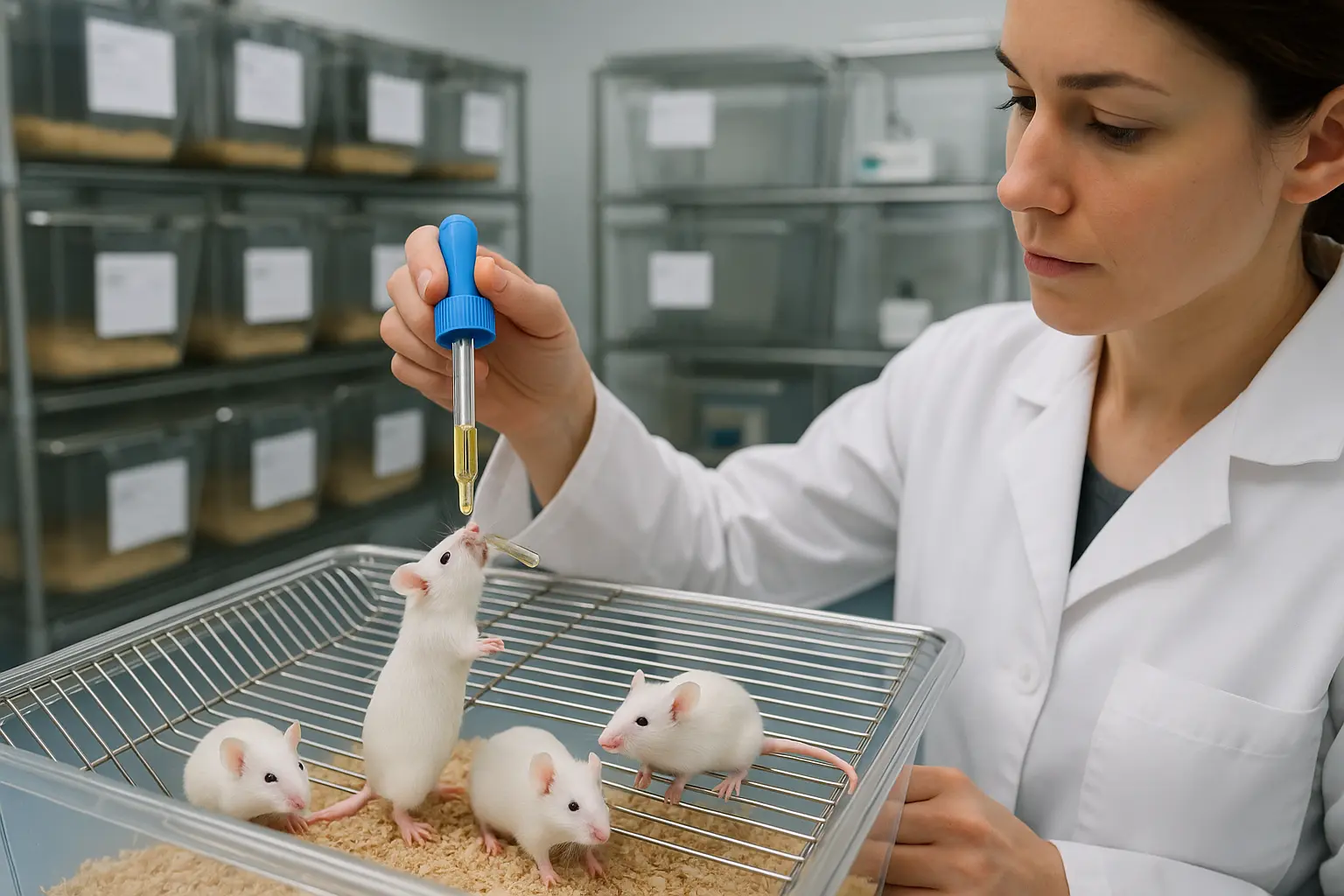
‘The tide is shifting. We could be on the verge of a new era for families affected by autism.’ The explosive findings from a recent Taiwanese study are making headlines and rattling the cages of mainstream medicine: researchers have uncovered that a low-dose blend of three common dietary supplements-zinc, serine, and branched-chain amino acids (BCAAs)-can reverse autistic behaviors in mice. That’s right, with a simple cocktail found in many pantries, scientists managed to normalize social interaction and even brain chemistry itself in multiple mouse models of autism spectrum disorder (ASD).
While Big Pharma races to find billion-dollar drugs, this groundbreaking new research-published in an open-access international journal-highlights the promise of good old-fashioned nutritional science. The study, funded by Academia Sinica and Taiwan’s National Science and Technology Council, could revolutionize how Americans think about autism interventions. For a population increasingly skeptical of the medical establishment and hungry for practical, affordable solutions, this is potential fireworks.
As millions of American parents know, autism diagnoses have surged since the early 2000s, making ASD a household topic. Current treatment options? Often expensive, sometimes questionable, and usually lacking in transparency. But this new nutrient synergy effect, reported by researchers Huang T-N, Lin M-H, Hsu T-T, Yu C-H, and Hsueh Y-P, could point the way toward a safer, cost-effective, and natural alternative. Talk about a disruptive force the system might want to downplay!
In the words of co-lead Ming-Hui Lin, ‘The results support the beneficial effects of low-dose nutrient supplement combinations on neural communication and social behavior.’
The Supplement Synergy: How a Simple Trio Supercharged Brain Function in Autism Models
The secret? It’s all about teamwork-and not the kind you’ll find among establishment bureaucrats. Researchers administered a blend of zinc, serine, and BCAAs to three different strains of mice bred to model autism, using doses so low that they would ordinarily have no effect. But together, these nutrients acted like a ‘dream team’ for brain chemistry. The mice became significantly more social, more responsive, and even showed signs of normalized neuron communication.
Specifically, this supplement trio was shown to restore synaptic protein levels and reduce amygdala hyperactivity-a region of the brain closely linked with emotion and social response. That’s a dramatic departure from the status quo, where most expensive medications barely scratch the surface of autism’s behavioral root causes.
What makes these results so jaw-dropping? When tested individually at the same dosage, zinc, serine, and BCAAs did absolutely nothing for the mice. It was only when combined that they produced a robust reversal of autism-like symptoms. As described in SciTechDaily’s coverage, this synergy offers a tantalizing clue that natural, affordable solutions could outpace the pharmaceutical giants.
‘With this combination therapy, we saw a complete restoration of social behaviors in multiple mouse models of autism. The synergy is key,’ the research team reported.
The study’s transparency is impressive: their data and custom code are openly available for anyone to scrutinize or replicate-a rarity in the murky waters of medical research. In an era where Americans crave both medical breakthroughs and honesty from supposed experts, this is a breath of fresh air. Try getting that kind of disclosure from Pfizer.
Media Backlash, Science Skepticism-and How Families Are Reacting on Social Media
But hold on: the usual suspects are already trying to throw cold water on the results. Some so-called experts hastily lined up to ‘urge caution,’ warning that mouse models may not map perfectly onto humans, and that bigger studies are necessary. Western media headlines have echoed every academic caveat, perhaps a little too gleefully, to remind everyone that ‘more research is needed.’ Trust the science-but only when it fits the narrative.
The pushback isn’t entirely unwarranted: animal research has its limitations, and questions have been raised about the study’s statistical rigor. Critics from university neuroscience departments point out that the statistical interactions between treatment and genotype may be lacking. In other words, they say the numbers need to be airtight before rushing to recommendations.
Yet, for many parents-battle-hardened by years of wrangling with bureaucracies and pharma interests-this looks like a classic move: downplay good news that threatens the status quo. Social media moms and dads aren’t buying the ‘wait-and-see’ attitude. Facebook groups and alternative health forums are lighting up with posts like, ‘Why aren’t our doctors talking about this?’ and ‘Could this be the answer we’ve waited for?’
‘If Big Pharma can’t make money on it, they bury the story. But regular folks know the truth: nutrition matters,’ wrote one popular Twitter (now X) commentator.
The democratization of science-especially with data and analysis available for all to see-means that the American people can now directly evaluate claims that used to be filtered through gatekeepers. How long before enterprising supplement companies try to patent and commercialize this blend? The mere prospect has insiders sweating, while freedom-minded parents demand answers and options.
Political Crossroads: Will America Embrace Nutritional Freedom or Double Down on Status Quo?
Here’s the political powder keg: Trump-era health reforms have emboldened personal choice and pushed back against medical gatekeeping like never before. As research like this emerges, conservatives are wondering whether Washington, D.C. will finally unleash true medical freedom or continue to kowtow to pharmaceutical interests.
President Trump’s successful reelection has put family choice and health freedom front and center-directly challenging the regulatory chokehold of agencies who have long stifled nutritional therapies in favor of expensive drug treatments. Grassroots activists are gearing up to make nutrient-based interventions a talking point in suburban and rural America, where families are often sidelined by elite-driven policies.
The powerful funding sources behind the original research-a coalition of public scientific bodies without Big Pharma strings-further stokes optimism. In a welcome contrast to recent scandals, this study was produced transparently and opens its data to all comers. That kind of openness is exactly what the MAGA movement demands: accountability, honesty, and a fair shot for every family.
‘This is why we wanted President Trump back in office-to get the red tape out of the way for real solutions like this,’ said a parent interviewed by RedPledgeInfo. ‘We are done being told to wait.’
Looking ahead, the next wave of research will likely test this simple supplement blend in larger animal models and, with enough political will, among human volunteers. Will government agencies step up with funding, or will they drag their feet, hoping people forget? It’s a culture war writ large: natural health and freedom on one side, entrenched interests on the other.
For now, the message to families is clear-watch this space. In the battle over autism treatments, the underdog supplement trio could soon be the people’s champion. This is one breakthrough that Big Pharma can’t own, and the establishment can’t ignore.