
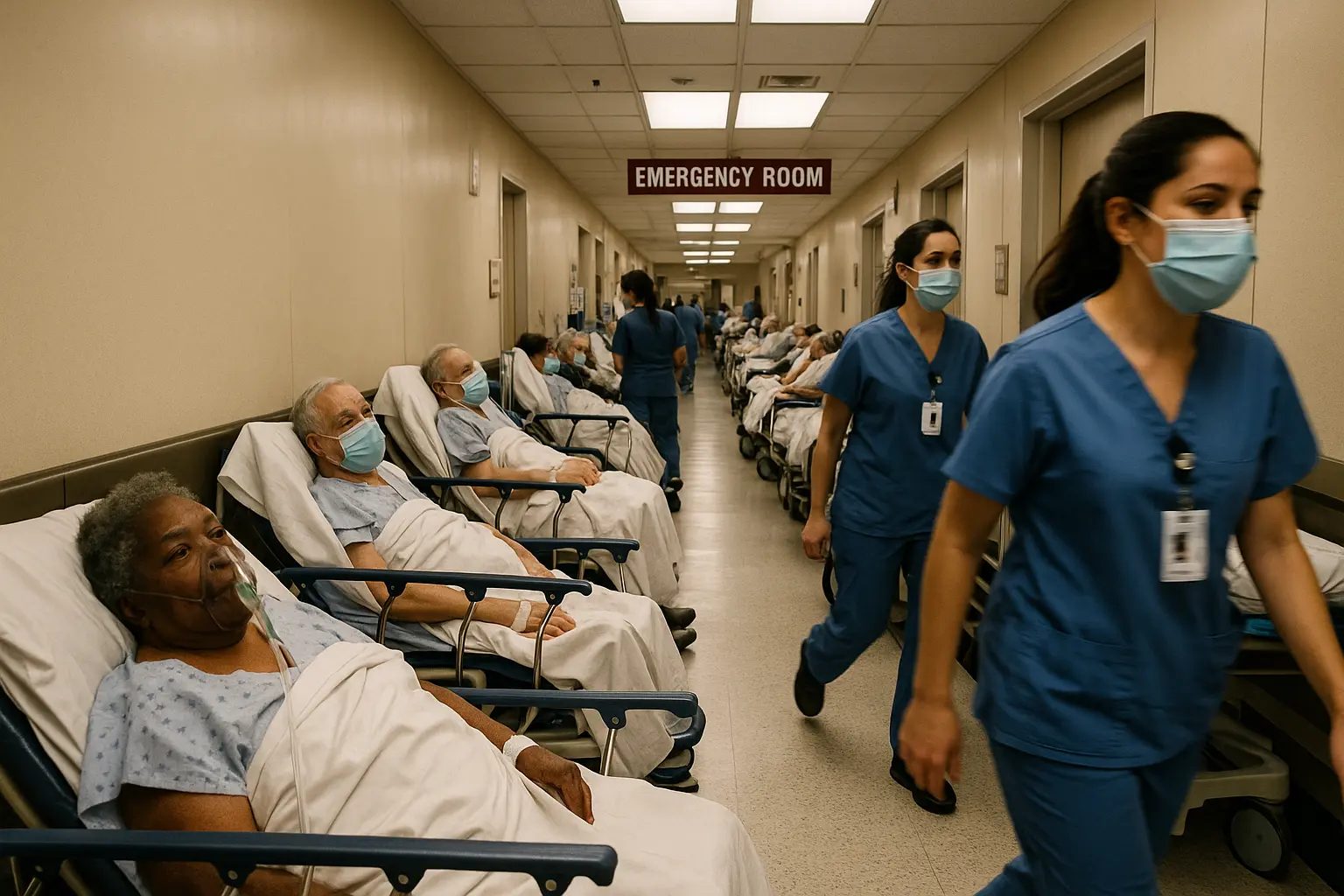
New York Slammed by Record ‘Super Flu’ Tsunami: Thousands Flood ERs, Officials Warn Peak Still to Come
“We’re not even close to the peak yet,” quipped Dr. James McDonald, State Health Commissioner, with a wry warning amid the chaos now seizing New York’s hospitals and communities. This is not your average flu season – the Empire State is experiencing an unprecedented viral onslaught that’s smashing records and pushing emergency rooms past their breaking points.
Packed Hospitals, Skyrocketing Cases: New Yorkers Brace for Unprecedented Flu Season Surge
This week, New York State shattered all previous infection records: over 71,123 residents caught the flu in just one week – a stunning 38% increase from the week before and the highest number ever tracked since records began in 2004. Nowhere is this viral tidal wave more visible than in New York City, where entire hospital wings are teeming with fevered patients, and weary ER staff report waiting rooms overflowing long into the night.
Public school attendance has plummeted, with coughing kids and anxious parents upending lesson plans and holiday preparations. Neighborhoods from Staten Island to Harlem report spikes in school nurse visits and empty seats. The city’s health department logged a staggering 24,000+ flu cases in the week ending December 20. Last week alone, emergency rooms saw 9,857 visits due to flu-like symptoms – the highest in recent memory.
This is a “Super Flu” scenario, one that city health officials warn affects every slice of daily life. On the packed subways, masked faces and nervous glances have become the norm. Bodegas and pharmacies struggle to keep cold and flu meds on their shelves.
“When we’re together, we spread love and joy, but we also spread our germs.” – Dr. James McDonald, State Health Commissioner
But here’s the kicker: State officials had warned for months that a so-called “tripledemic” – with flu, RSV, and COVID circulating – could hammer New York this winter. Their worst fears have come true. On top of that, the Department of Health declared the flu officially prevalent in the state as of December 2, mandating mask-wearing for unvaccinated healthcare staff and recommending tighter infection controls statewide. But still, the surge is overwhelming local systems.
Long Island and NYC Hit Hardest as Schools and Neighborhoods Struggle With Outbreak
Nowhere has the wreckage been more visible than on Long Island and across city boroughs. Newsday detailed how Nassau and Suffolk counties combined have surpassed close to 40,000 flu cases since October, with the last two weeks alone seeing hospitalization rates double. Staten Island, long considered a microcosm of suburban America, is sounding alarms as its own flu rate soars beyond even pandemic levels.
Meanwhile, attendance in New York City’s public schools nosedived heading into the winter break, with pediatric clinics reporting booked-out appointment slots. City data shows that flu-related ER visits jumped 22% in a single week during early December, pouring even more stress onto overworked hospitals and healthcare workers.
State Health Commissioner McDonald maintains that the historic surge is not due to a sharp drop in flu vaccination rates this year. He points out that uptake remains “roughly in line with past years” – meaning other factors are fueling this outbreak. New York’s Nurses Association has also weighed in, citing the airborne nature of influenza and calling for upgraded safety measures for healthcare workers, such as N95 respirators and better hospital ventilation. The concern? This “super flu” is not the average seasonal bug.
“These numbers far outpace what we saw during any recent flu season. We are urging all New Yorkers to get vaccinated and practice rigorous prevention measures.” – NYC Health Department Spokesperson
Lab-confirmed cases tell only part of the story. State officials warn the true number of New Yorkers affected is likely far higher, with home rapid tests and unreported mild cases flying under the radar. Experts believe this year’s surprise variant may have outpaced the vaccine, causing serious illness even in once-healthy adults and kids.
Hospitals have gone on high alert, activating surge protocols first drafted during the COVID-19 pandemic. The state now monitors hospital capacity , and public health field teams are standing by to deploy resources where needed most. Public sentiment is anxious at best, with Manhattan parents flooding social media with complaints about long clinic lines and out-of-stock pharmacies. Online forums fill with stories of packed ERs from the Bronx to Brooklyn and desperation for remedies.
‘Tripledemic’ Panic, Political Firestorm: Will Gov. Hochul and NY Leaders Hold the Line?
This viral onslaught comes at a critical political moment. With the holidays in full swing and the 2026 midterm horizon looming, many New Yorkers are questioning whether state leadership – including Governor Kathy Hochul and state Democrats – were caught flat-footed by the ferocity of this “super flu” outbreak. Critics argue that lessons from COVID-19 are quickly being forgotten, even as new viral threats emerge each winter.
Public guidance is largely a rehash of prior years: wash your hands, use alcohol-based sanitizer, avoid crowds, and stay home if sick. The Department of Health, CDC, and Governor Hochul all urge New Yorkers to get the flu vaccine, take antivirals quickly, and protect the vulnerable. But for many, the damage might already be done – particularly as the current flu vaccine reportedly matches less effectively against an unexpected strain that surged after the shot was developed, according to interviews with local epidemiologists.
The New York State Department of Health continues to encourage New Yorkers to get the flu vaccine, stating that it is safe and will lessen symptoms if one contracts the flu.
Meanwhile, the healthcare system faces its biggest test since the COVID pandemic. Local nurses are pleading for more masks and ventilation upgrades; hospitals are tacking up new infection protocol posters and triaging patients at the door. Unvaccinated healthcare personnel – now required to mask – are drawing fire from some politicians on the right, who say mandates aren’t the answer and parents should have total autonomy regarding their children’s (and their own) jabs.
On social media, the backlash is furious. Parental groups vent about school closures, and libertarians question why two years of pandemic “lessons learned” seem to vanish in the face of a bad flu season. Some gently accuse the state of downplaying the scope, while others argue officials are stoking panic to build political cover for new regulations.
What’s Next: The Fight for Solutions Amid Public Frustration and Political Stakes
With Christmas now in the rearview and New Year’s on the horizon, New Yorkers are left bracing for what health officials admit could be an even tougher January. Hospital occupancy is hovering at red-alert levels, while city clinics scramble to distribute vaccines and antivirals ahead of what could be the true peak.
Governor Hochul’s administration insists they are on top of the crisis, fielding extra support to hard-hit hospitals and ramping up public messaging campaigns. Yet the opposition is circling, eager to use this health debacle as campaign ammunition headed into the 2026 midterms.
One thing is certain: the narrative of personal responsibility is front and center. State and federal agencies repeat the call for vaccination, while conservative groups emphasize a return to basics – affordable access to flu meds, personal hygiene, and freedom of choice without overbearing mandates.
“We’re learning – once again – that with government, what sounds like ‘guidance’ quickly slides into ‘orders.’ New Yorkers want the right tools, not more rules.” – Brooklyn Parent, on X (formerly Twitter)
With COVID fatigue still fresh, questions swirl about the true effectiveness of mandates and whether Albany is responding with enough innovation. Many frustrated citizens point to the lag in updating the flu vaccine for this year’s surprise variant, calling on regulators and big pharma to act faster.
In the end, the lesson is clear: The Empire State is battling a “super flu” like no other. Whether you fall on the side of mandates or personal freedom, all New Yorkers are hoping for one thing – to see their loved ones, workplaces, and communities back to normal as quickly as possible.
For now, the watchword is vigilance. As one veteran nurse put it, “This isn’t about politics – it’s about getting through the winter and keeping our families safe. But New York deserves answers and a clear plan before the next viral tidal wave hits.”