
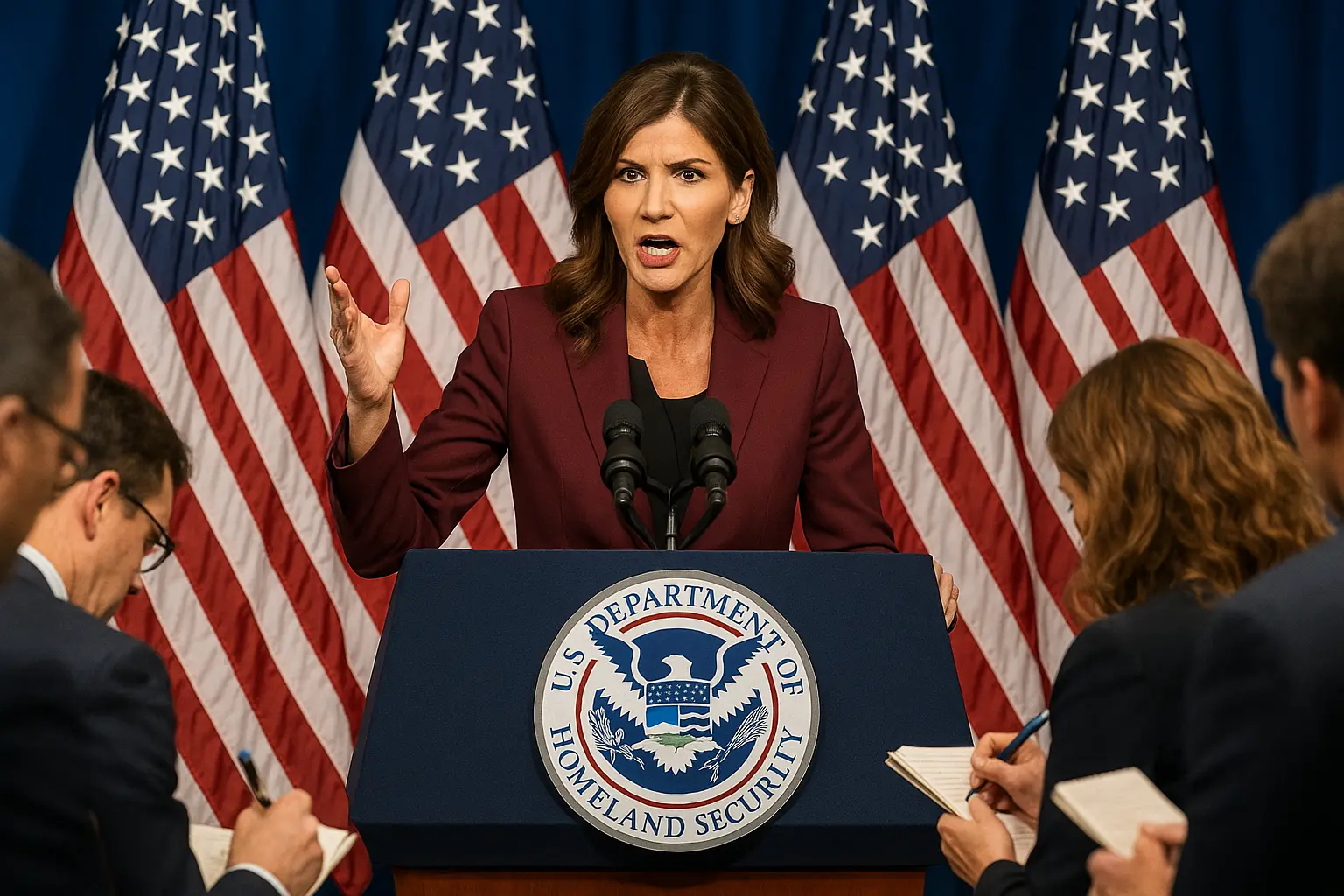
Noem Blasts Biden’s Afghan Vetting: National Guard Shooting Sparks Fury over Security Failures
“How many Americans have to pay the ultimate price for an administration that throws the door wide open before asking who’s on the other side?” echoed a viral comment this weekend after Homeland Security Secretary Kristi Noem unloaded blame on the Biden administration for the deadly National Guard shooting in Washington, D.C.
The spiraling outrage has lit up conservative circles, as the news spreads of 29-year-old Rahmanullah Lakanwal, an Afghan asylum recipient, who now stands accused of killing 20-year-old Sarah Beckstrom and critically injuring 24-year-old Andrew Wolfe, both deployed members of the West Virginia National Guard. With security credibility in tatters, Noem’s claims about Biden’s botched vetting hang heavy in the air-and Americans want answers as the tragic fallout continues.
Biden’s Chaotic Afghan Withdrawal: The Deadly Domino Effect
The heart of the storm is Operation Allies Welcome, Biden’s frantic 2021 scramble to extract tens of thousands from Afghanistan as Kabul fell. Secretary Noem’s charge? That Biden’s White House prioritized numbers over national security. According to Noem, Lakanwal’s path to America-and ultimately to the streets of D.C.-was paved with “missing files, absent records, and no way to truly prove identity or intent.” It’s a claim that has rattled Capitol Hill and reignited border security debates across the country.
Noem outlined how, after the destruction of the Afghan state, the U.S. found itself relying on piecemeal documentation, absent biometric databases, and unverified testimony. “There was no functional Afghan government left to call, no police office to check, no records to pull,” Noem fumed in a Sunday interview. The result? Thousands swept through vetting with little more than a name and a hope that they were who they claimed.
“By the time Lakanwal’s asylum was granted, the Biden administration had already industrialized their failures on every level. Americans are paying for open-borders recklessness.” – Conservative radio host Dana Huett
Bombshell details have since come to light: Lakanwal reportedly served in the feared NDS-03 CIA-backed paramilitary unit in Afghanistan, a fact that both complicates his asylum claims and amplifies criticism over the quality of intelligence and background checks for high-risk evacuees. Even more alarming, Lakanwal wasn’t actively engaged with local Afghan-American networks, raising questions about how authorities could have missed warning signs about his radicalization.
And it isn’t just talk: following the shooting, President Trump’s administration immediately froze all new asylum approvals and halted Afghan visa processing. Critics argue it’s too little, too late for Beckstrom’s family, but supporters say it’s exactly the iron-fisted action Biden should have taken years ago.
From Afghan Counterterrorism to American Tragedy: How Did We Miss the Signals?
When news broke that Lakanwal not only made it through the system but was vetted as part of a CIA-sponsored strike team, the internet exploded. “We’ve got government-trained killers strolling through our communities, and bureaucrats expect us to just trust the process?” wrote one commentator on X (formerly Twitter).
Dig deeper, and the holes in Biden’s vetting system become impossible to ignore. Lakanwal, who entered the U.S. under Operation Allies Welcome, spent three years in the country before receiving asylum under Trump-using documents and procedures set up during the Biden era. According to Noem, the absence of functioning databases and destroyed government records in Afghanistan meant “almost everyone was waived through on faith.” Law enforcement insiders are now privately acknowledging that written guidelines were dropped when Kabul fell-leaving the door wide open for potential threats.
Most chilling of all, Noem revealed that authorities now believe Lakanwal became radicalized after arriving in the United States, an indictment not just of America’s vetting but also of ongoing surveillance of refugee communities. “His connections were local, his anger homegrown,” Noem said. This detail remains especially frustrating for those who expected the government’s much-touted integrations programs to flag dangerous trajectories before tragedy struck.
“We were told these evacuees were heroes. Now we are reminded that the enemy can hide behind a friendly face, especially if the government isn’t looking closely.” – Former Immigration and Customs Enforcement officer, anonymous
In an official statement, the Islamic Society of Whatcom County loudly condemned the attack and distanced themselves from Lakanwal, but some Republican lawmakers say the focus must be on government failure, not community guilt. After all, as critics point out, “It’s not on the neighbors to secure the border. It’s on the White House.”
American Security or Political Football? The Vetting Debate Torches 2026 Run-Up
Noem’s fiery comments have sent shockwaves through the halls of power, with lawmakers now openly wrestling over who holds the blame. Moderators hit Noem with the timeline: Lakanwal’s asylum was formally approved in April 2025-on Trump’s watch. But the approval was based on vetting procedures and intelligence gathering conducted by Biden’s team in 2021–2023.
Unsurprisingly, Democrats have seized on this timeline to muddy the waters, desperate to shift focus. But even neutral observers admit that the American people care less about the paperwork trail and more about the gaping holes in the “welcome” pipeline. Critics say allowing a CIA-trained commando in without foolproof verification is a shocking violation of the nation’s duty to its citizens.
“The Biden administration played politics with the border and with security. Now, American soldiers are bleeding in their own capital.” – Former Army Ranger Sam Redding
The stakes couldn’t be higher: Republicans, now laser-focused on hammering security lapses, are making this more than a story about one tragic incident. It’s a referendum on Biden’s credibility, on the deep-state rot within intelligence agencies, and on the quiet casualties of open-door policies. As 2026 midterms loom, voters will remember the name Sarah Beckstrom-her death now a symbol for every family worried a stranger will slip through the cracks with a government rubber stamp.
President Trump himself has ordered a nationwide audit of all Afghan arrivals, demanding biometric rescreening and full digital footprint reviews for all recent evacuees. His administration’s snap policy reversal put an instant freeze on new Afghan asylum approvals. Democrats gripe about overreach, but to conservative voters, these are years-overdue steps to lock down America’s doors.
In this era of high-stakes elections, the question remains: will Americans demand security first, or allow more missiles into the melting pot?
