
Nvidia’s $1 Billion AI Chips Black Market Exposes China’s Evasion-and Biden’s Weak Spots
‘It’s like a seafood market. People are shouting over each other for the best price.’ That’s how a Chinese distributor described the astonishing explosion of high-powered U.S. AI chips leaking into China’s growing black market-even as President Trump’s 2024 clampdown was supposed to seal every door shut. If you ever needed proof that America’s greatest technological secrets are at risk, look no further than the busy back rooms, Telegram chats, and third-party warehouses now fueling China’s AI ambitions right under Washington’s nose.
Banned Nvidia Chips Surge Through China’s Shadows: Black Market Booms Despite Trump Export Crackdown
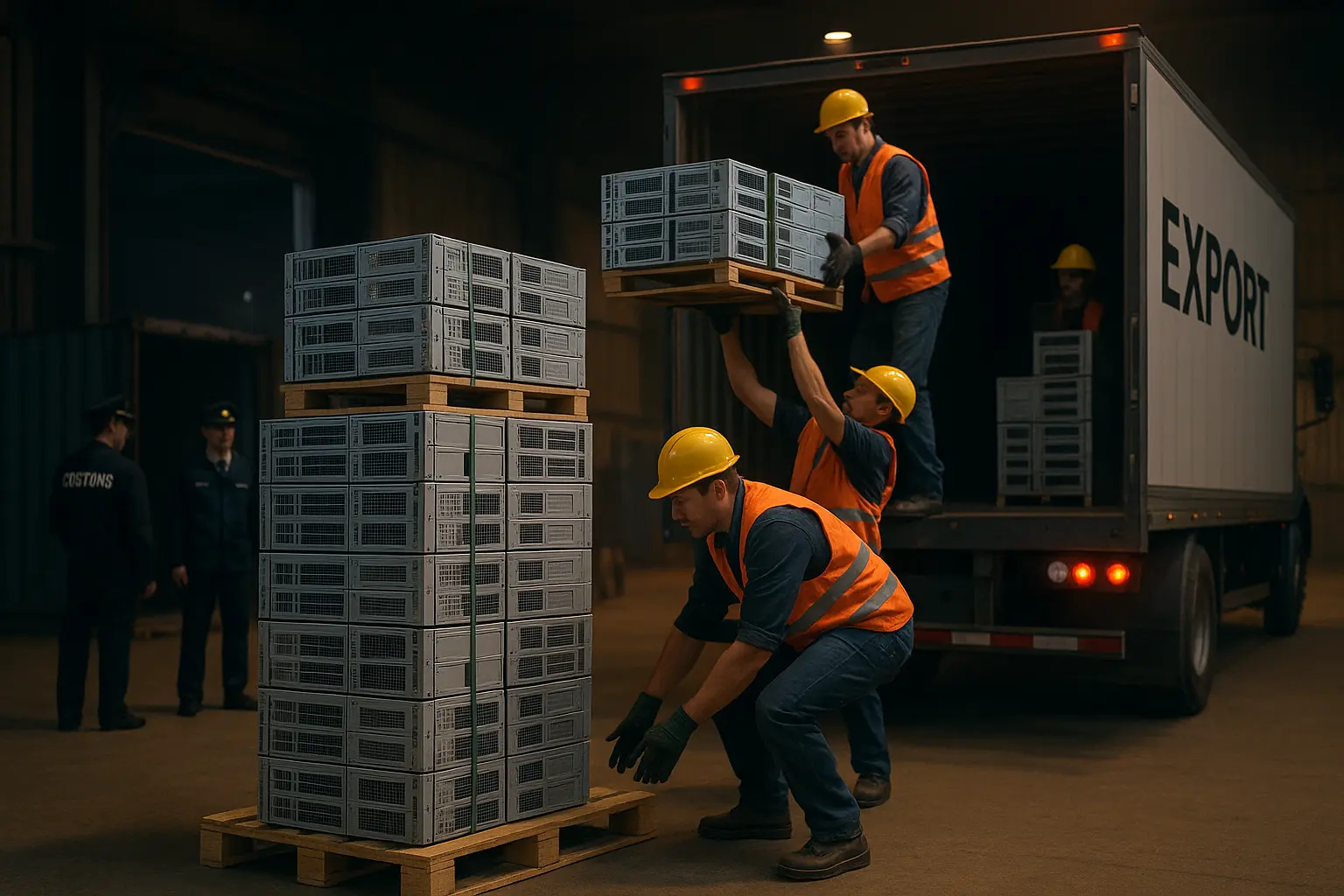
Just months after President Trump led the charge with historic export controls to put the brakes on Beijing’s artificial intelligence machine, at least $1 billion worth of Nvidia’s advanced AI chips-especially the coveted B200 processors-were smuggled right into China’s hungry hands between March and June 2025. The Financial Times revealed these numbers in a bombshell report published this morning, sending shockwaves across both Silicon Valley and Capitol Hill.
What’s fueling this avalanche of black-market tech? In a word: demand. Chinese data center suppliers and AI startups have been scrambling to buy up Nvidia’s restricted chips, with provinces like Guangdong, Zhejiang, and Anhui openly trading them through shadowy middlemen. Social media isn’t just for cat videos anymore-it’s a marketplace for cutting-edge semiconductors, where logos from American companies like Supermicro and ASUS appear in listings for rack-mounted servers stuffed full of restricted Silicon Valley brainpower.
Nvidia’s bold B200 chips, officially prohibited from sale to China, made their way onto the black market via resourceful distributors who described the bustling scene as ‘like a seafood market,’ with sellers and buyers tripping over themselves to get the hottest gear.
This is not a fringe operation. Photographic evidence, contract paperwork, and interviews with industry insiders confirm that the B200-and even earlier models like H100 and H200-are now just another menu item for Chinese buyers willing to pay top dollar to bypass U.S. law. Meanwhile, American hardware companies are left denying any knowledge of how their logos ended up on illicit equipment featured on WeChat and local tech forums.
How China Outwitted U.S. Chip Controls: Shell Companies, Smugglers, and Tech Hunger Games
So how does this high-tech heist unfold on such a massive scale, right as America is fighting to defend its leadership in AI? The answer is an unholy alliance of shell companies, middlemen, and data center operators working overtime to ship, repack, and sell “forbidden fruit” Nvidia products into an AI-thirsty China.
Sources traced the routes: once Nvidia ships a chip to a legally approved destination, it can quickly change hands-sometimes just on paper-through several intermediaries before resurfacing in the hands of a Chinese supplier assembling ready-to-run AI servers. Some of these deals have even moved through Southeast Asian waypoints, especially Thailand and Malaysia, as exporters seek to dodge Washington’s radar. Distributors from key Chinese provinces-Guangdong, Zhejiang, Anhui-acted as ringleaders, betting on America’s enforcement fatigue and the cutting-edge appetites of their domestic tech giants.
It’s not just the scale that’s jaw-dropping-it’s the boldness. Chinese social media platforms are loaded with photographic evidence of server racks glowing with restricted chips and American branding. Companies like Supermicro and ASUS have raced to put out statements distancing themselves from these black market operations. But the images speak volumes: bootleg U.S. AI hardware is now a defining secret ingredient in China’s AI push.
One industry insider told reporters, ‘It’s the new gold rush. You can’t build world-class AI without Nvidia-and nobody wants to wait their turn anymore.’
The Financial Times even identified a major player in the smuggling game: Gate of the Era, based in Anhui, is among the biggest suppliers of these illegal B200 chips, shuffling hardware from clandestine warehouses straight to eager AI engineers. Meanwhile, President Trump’s measures have tightened the formal pipeline, but holes in logistical and legal frameworks have been as leaky as ever. Third-party data center contractors and shell firms have become experts at rerouting and disguising the true end destination.
Trump’s AI Export Policy-Strong, But Were Agencies Too Slow? Commerce Scrambles as Biden Fumbles Response
This scandal should set off alarm bells for every American concerned about technological supremacy and national security. The timing couldn’t be worse: with the U.S. and China locked in a high-stakes race for AI dominance, each illicit shipment of U.S. silicon is a boost to Chinese capabilities-and a blow to American innovation. President Trump’s original crackdown, praised as historic, called for reinforced export controls and mandatory location verification for advanced chip shipments to nations like China, according to a recent Reuters report. But bureaucrats under Biden’s administration appear to be playing catch-up, with the Commerce Department only now moving to close loopholes in Southeast Asia-and not a moment too soon. If these backdoor channels aren’t sealed by September, expect China’s AI ecosystem to grow even stronger on the backs of American know-how.
Nvidia, for its part, insists this whole illicit market is a ‘losing proposition.’ CEO Jensen Huang was quick to point out this week that only authorized products get real support, service, and software upgrades-calling bootleg data centers both inefficient and risky. Maybe so. But with so much money and opportunity in the shadows, the black market’s true risk is strategic: every processor that makes its way east puts American military, industry, and intellectual property at new risk.
The U.S. Department of Commerce is reportedly considering an expansion of export controls to countries such as Thailand as early as September to curb chip diversion to China, after learning how current enforcement lagged behind China’s improvisation.
Unfortunately, the government’s response remains tangled in red tape and silence. The White House, Department of Commerce, and other agencies have yet to provide clarity on exactly what next steps are coming. Social media outrage continues to mount as American taxpayers demand to know if their country’s most vital technology assets will be protected, or if they’ll keep slipping away on container ships and through encrypted chatrooms.
One thing is certain: with Trump’s reelection and the 2026 midterms just around the corner, Republican lawmakers are already demanding rapid action, tighter enforcement, and fresh legal tools to make sure the United States remains king of AI technology. In a year where global stability, jobs, and American tech pride hang in the balance, the stakes of this smuggling bonanza could not be higher.