
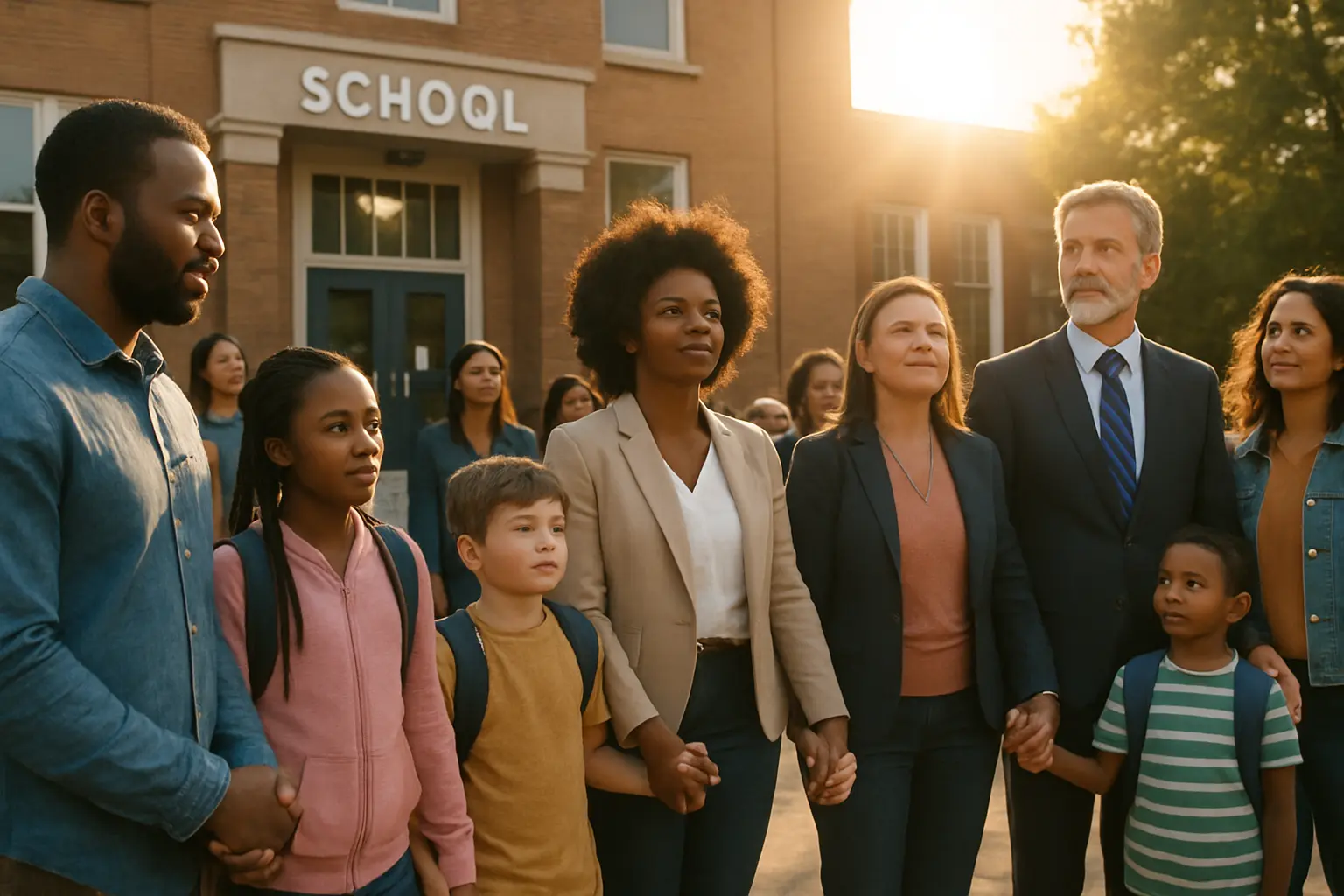
Some mornings, I stand at the church doors and greet parents who are hustling to get their children off to school, many after a long night shift or a sleepless worry about bills. They don’t have time for bureaucracy-they just need their child’s school to be open, caring, and able to respond when help is needed. That’s what families count on, and that’s exactly what’s put at risk when distant policymakers get swept up in another round of reshuffling the nation’s education priorities.
Recently, we saw headlines about the U.S. Department of Education planning to shift its vital special education and civil rights offices out of the department-moving the Office of Special Education and Rehabilitative Services to Health and Human Services, and the Office for Civil Rights to the Department of Justice (The Washington Post, June 2026). The idea, pitched as cutting red tape and strengthening oversight, is in reality more likely to cause confusion and disruption for the students and families who depend on stability the most. Equity and disability advocates have voiced deep concerns that such moves risk making it harder for vulnerable children and parents to get their voices heard (Associated Press), and to me, that’s a message we can’t afford to ignore.
I know from experience: kids need steady support. Just look at what’s happening for autistic children and their families in Brisbane, Australia, where a specialty school for autistic students secured a 25-year lease after months of uncertainty over its building. That “lifeline” came not from far-off officials swapping offices, but through focused local advocacy and practical, government-backed solutions. For those families, steady ground mattered far more than any press release.
The same truth holds in communities across America. When the structure and resources of local schools become uncertain, especially for families already struggling, the consequences are profound. Take summer learning loss: research shows students lose an average of 2.6 months of skills over the break, and low-income youth are hardest hit (Worldmetrics). Lack of community programs isn’t just a gap in activities-it’s a risk factor for crime, poor mental health, and future lost opportunities (Metro United Way). We cannot address this by shuffling jobs and responsibilities across government floors; it takes early family engagement, mentorship, and the involvement of churches, parents, and volunteers willing to step in where institutions lag behind.
Leadership development at the local level works. When counties invest in building strong networks of volunteers and mentors, they connect the willing with the needed, from after-school tutors to park stewards. Take Garrett County’s program, which matches folks eager to serve with real community projects (Deep Creek Times). It’s not grand theory-it’s families and neighbors lifting each other up, learning together what works best here at home.
There’s a chorus of researchers and educators, from the World Economic Forum to kindergarten classrooms, who tell us that early social and emotional skills-empathy, adaptability, resilience-matter for careers and life success (WEF Future of Jobs Report). But that foundation isn’t laid through new federal checklists. It’s built day by day, parent to child, teacher to student, mentor to teen. And the harder the times, the more these local, consistent relationships matter.
I don’t dismiss all government involvement; laws protecting children’s rights and ensuring opportunity are part of the social contract. But real progress comes when schools, churches, and local organizations work together in freedom and faith, trusted to know the real needs of their people. One-size-fits-all dictates from above won’t break the poverty cycle or close the achievement gap. School choice, strong families, fatherhood initiatives, and hands-on after-school programs do-especially when they are empowered by, not handcuffed to, distant rules.
My challenge to policymakers is this: If you truly want renewal in American education, invest your time and dollars in lifting local leaders, not just in moving lines on organizational charts. Support families so they can be the first teachers and mentors. Give schools and nonprofits the space to innovate, faith communities the room to serve, and working parents a seat at the table. Let’s break this cycle of top-down disruption and begin a season of hope-led not by distant experts, but by communities living out their calling, one child, one family, one neighborhood at a time.