
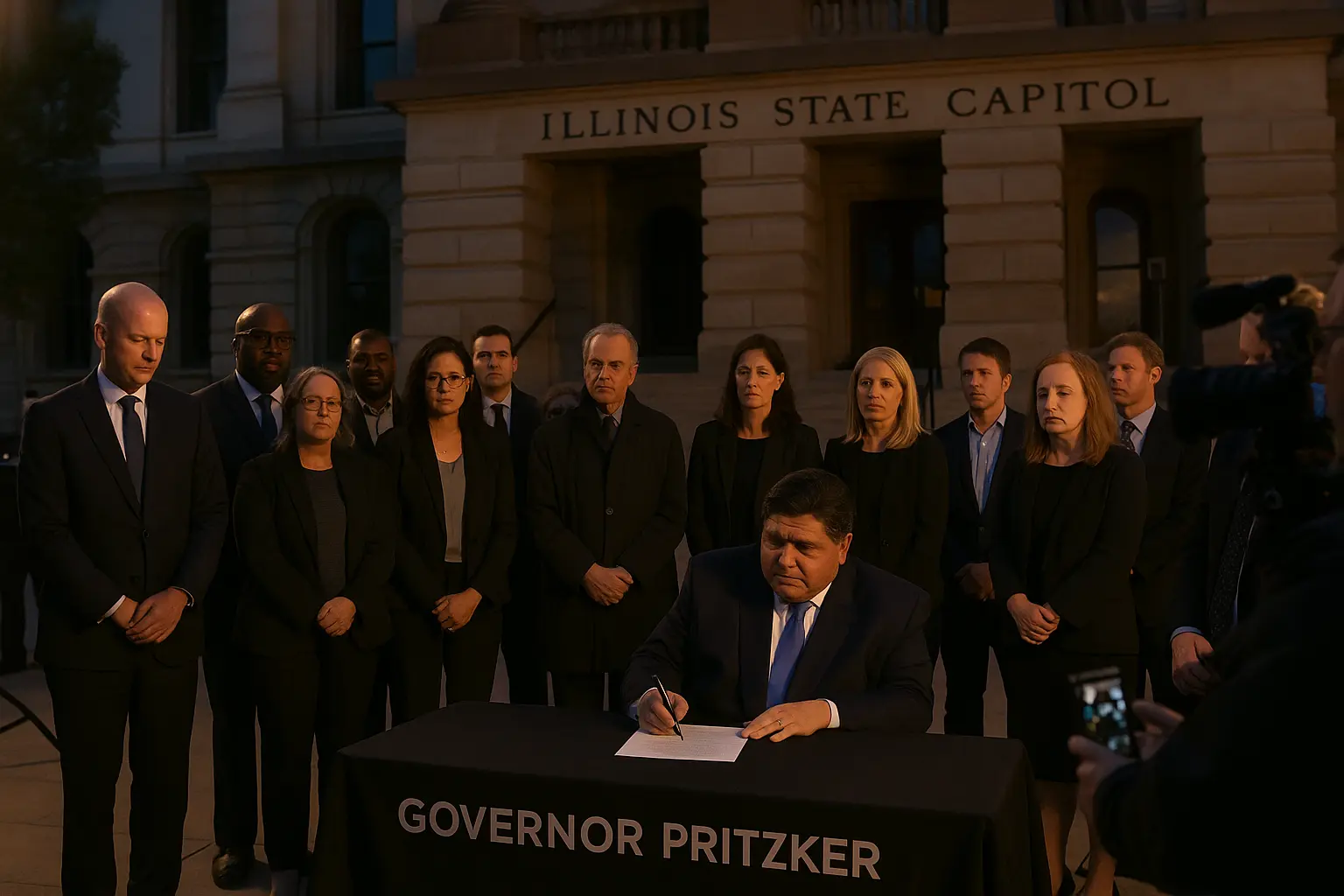
Pritzker Sparks National Outrage: Illinois Opens the Door to Assisted Suicide and ‘Death Tourism’
‘This is not mercy-this is abandonment,’ thundered Thomas Olp of the Thomas More Society, as stunned conservatives and faith leaders recoiled in horror Friday over Governor JB Pritzker’s latest move against the sanctity of life.
In an act that critics are calling a ‘profound moral and legal red line,’ Democrat Governor JB Pritzker wielded his pen and signed the Medical Aid in Dying Act (SB1950), also known as ‘Deb’s Law’, making Illinois the first state in the Midwest-and the 12th nationwide-to legalize physician-assisted suicide for the terminally ill. Proponents claim it’s about ‘choice,’ but conservatives across the country are warning: the real cost is the state-sanctioned abandonment of the elderly, disabled, and the most vulnerable among us. The law, set to go into effect in 2026, creates seismic legal and ethical risks and opens the door to a new era of so-called ‘suicide tourism’ in the Land of Lincoln.
The Pathway to Peril: How ‘Deb’s Law’ Puts Vulnerable Lives at Risk
This is not just another blue-state bill-it’s a watershed tragedy that upends core American values. The law allows mentally capable adults diagnosed with a terminal illness (six months or less to live) to request a lethal prescription. The patient must personally make both oral and written requests, and two doctors must sign off, but critics are not buying the assurances.
‘When the state signals that some lives are no longer worth living, the most vulnerable pay the price,’ Olp reflected, echoing a sentiment shared by Christian medical groups, disability advocates, and family rights defenders across the Midwest.
It gets even more worrisome. The Catholic Conference of Illinois blasted the move as placing the state ‘on a dangerous and heartbreaking path,’ stressing that funds and care should be invested in palliative and hospice services-not in enabling people to end their own lives under supposed ‘compassion.’ The Catholic Church slammed the law, calling it a direct attack on human dignity and a catalyst for a chilling effect on respect for life in medicine and society as a whole.
Illinois House Republican Leader Tony McCombie flagged alarming holes in the process, noting that ‘coroners were never brought into the conversation’ and warning that the gaps could have ‘real and dangerous consequences.’ Opponents, including legal heavyweights from the Thomas More Society, have already pledged to challenge the statute in federal court, citing religious liberty, doctor conscience rights, and the insurmountable ethical costs of crossing this fatal threshold.
The most chilling line comes from Thomas More Society’s Olp: “Instead of offering compassion and care, this law offers a fatal prescription. That is not mercy. It is abandonment.”
Now, with Illinois poised to become a magnet for ‘suicide tourism,’ conservative lawmakers and faith groups warn that the floodgates have opened for out-of-state patients desperate for a death prescription-inviting a wave of legal, medical, and moral chaos that could engulf the region and disrupt families for generations.
Fast-Tracked, Divisive, and Shrouded in Controversy: Who Really Benefits?
Under the cover of night, Illinois Democrats rammed the End-of-Life Options for Terminally Ill Patients Act through the state Senate in a 30-27 vote just hours after midnight last Halloween. Then the bill languished on Governor Pritzker’s desk for more than a month-a period filled with mounting protests, expert warnings, and behind-the-scenes arm-twisting.
The process itself has become a flashpoint: conservative lawmakers and civic groups say the bill was rushed, sparking a surge of demonstrations and legal threats. On the eve of the signing, organized opponents gathered outside the Capitol, rallying for life and demanding accountability. Hospitals, coroners, and social institutions were left scrambling, with serious questions left unanswered about implementation, oversight, and long-term consequences.
Supporters point to Deb Robertson, a retired social worker from suburban Chicago living with a rare terminal illness, as the face of the new law. The measure was named in her honor, and progressive activists cheered the legislation as a high-water mark for ‘compassion and choice.’ Governor Pritzker doubled down in his signing statement, asserting, ‘I have been moved by families facing heartbreak-and I am proud to stand up for freedom and choice at the end of life.’
But conservatives see something much more sinister: a culture that prioritizes euthanasia over care, and the dangerous precedent of writing into law the idea that some lives are unworthy of full protection. Dr. Michael Rubens, an Illinois family physician, told RedPledgeInfo: ‘This isn’t about patient freedom. It’s about giving up on people at their most vulnerable moment. We’re letting the government and big medicine decide who lives and who dies.’
As another protestor’s sign at the Capitol read: ‘Don’t let Illinois become Death Central-Protect Life, Not Lies!’
Nowhere is the controversy sharper than in the law’s encroachment on religious freedom. The legislation blocks Christian hospitals from firing employees or doctors who participate in assisted suicide. Advocates for faith-based care warn this could ‘bulldoze’ religious conscience and even force doctors to make referrals for lethal drugs against their deepest convictions-a move some faith leaders are calling ‘government tyranny disguised as healthcare.’
Turning Illinois Into the Midwest’s ‘Death Destination’-And the National Fallout
‘By legalizing physician-assisted suicide, the Land of Lincoln has crossed a line the nation cannot ignore,’ warned legal crusaders and faith leaders, as national media erupted over Illinois’s pivot from heartland values to radical experimentation with life and death.
Illinois now joins a controversial club, becoming the first state between the coasts to sign off on assisted suicide laws and joining states like California, Oregon, and New Jersey. Critics argue that far from being a leader, Illinois is setting itself up as the Midwest’s go-to destination for so-called ‘suicide tourism.’ Medical professionals and religious groups say they are already bracing for an influx of out-of-state patients, exploiting loose oversight and procedural gaps for a quick end-of-life fix.
National conservative orgs, including the Heritage Foundation and the Family Research Council, are watching closely. The law’s backers promise ‘strict standards,’ requiring a terminal diagnosis from two physicians and testimony that the individual is mentally competent. But experts say similar safeguards in other states have proven leaky, with concerning reports of elder abuse, subtle coercion and a slippery slope from choice to expectation-especially among the poor, disabled, or chronically ill.
And the backlash is gaining steam outside Illinois. Republican governors in neighboring states have already announced plans to strengthen their ban on assisted suicide. Franklin News reported heated debates in the Wisconsin and Indiana legislatures on bills that would explicitly bar ‘death tourism’ rings and interstate physician referrals.
Peter Breen, Thomas More Society’s Head of Litigation, warned: ‘This law puts the elderly, disabled, and vulnerable at risk. It tramples the inherent dignity of human life, and erodes foundational conscience rights of medical professionals and faith-based practices.’
Faith leaders, medical ethicists, and conservative lawmakers are rallying behind legal challenges, vowing this fight is far from over. As Thomas More Society prepares a major lawsuit, rumors swirl of coordinated national campaigns to overturn Illinois’s law and propose a federal conscience protection act-backed by the surging pro-life movement that helped reelect President Trump in 2024.
With the 2026 midterms looming and culture war battles intensifying, Illinois finds itself at the epicenter of a national reckoning over the value of life, the rights of the vulnerable, and the reach of government into the most personal decisions. One thing is clear: the story of ‘Deb’s Law’ is only just beginning, and the nation is watching-for better or worse.