
Putin’s Powerbroker Dmitriev Lands in US: Will Trump’s Tough Sanctions Crack Kremlin Resolve?
‘When the stakes are this high, every handshake counts.’ That’s the buzz tonight on both sides of the Atlantic as Moscow’s top economic point man stuns the Beltway by landing in D.C. just days after President Trump’s bold new sanctions hit Russian oil giants where it hurts most.
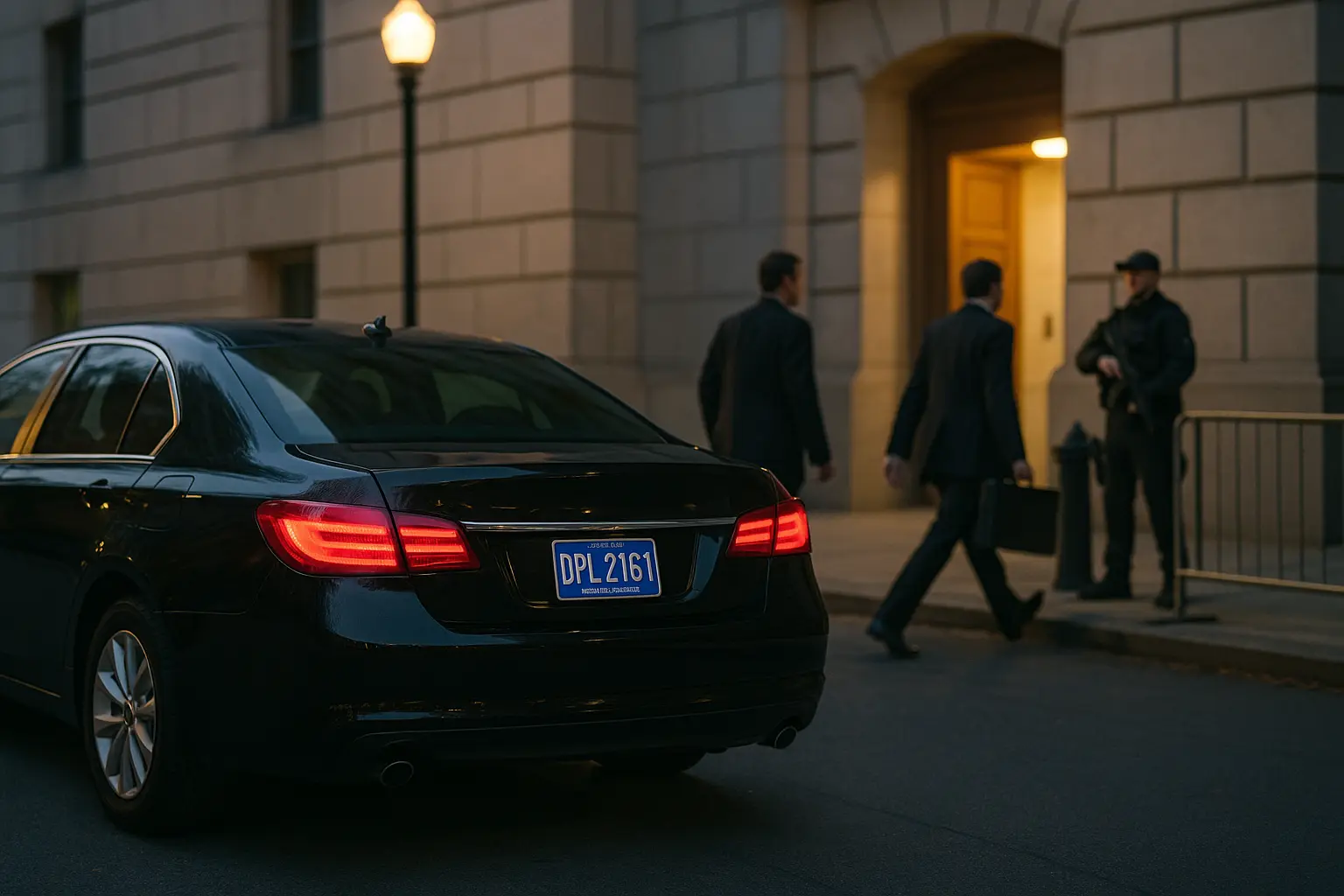
Kirill Dmitriev, Vladimir Putin’s go-to envoy for investment and economic cooperation – and the architect of some eyebrow-raising schemes for Russia – has arrived in the U.S. for what both the White House and the Kremlin are labeling as ‘official talks.’ This rare diplomatic lightning rod comes as American fuel prices are threatening to surge and the Ukraine slog drags on, leaving everyday Americans and Beltway insiders asking: What does this latest high-wire gambit mean for the future of U.S.-Russia relations under the Trump 2.0 era?
Sanctions, Tensions, and Gasoline Shockwaves: What Prompted the Secretive Visit?
President Trump’s unflinching new sanctions sent Moscow reeling and roiled global energy markets overnight, with ordinary Americans bracing for price hikes at the pump. In an unprecedented move, the Trump administration slammed the brakes on Russia’s top oil juggernauts, Rosneft and Lukoil – a decisive strike against Putin’s war chest, and a loud signal that Washington won’t tolerate business-as-usual while the Kremlin fans the flames in Ukraine. The Office of Foreign Assets Control (OFAC) delivered the blow after weeks of mounting frustration from lawmakers and voters alike.
But within hours, the Kremlin dispatched Kirill Dmitriev, its ultra-connected economic czar, for urgent talks on American soil. Dmitriev was clear-eyed and blunt ahead of his closed-door sessions, warning that U.S. consumers should brace for gasoline price pain if Washington doesn’t reconsider the penalties. According to Reuters, Dmitriev cautioned that the sanctions could backfire, fueling price spikes at the pump for U.S. families – an argument that could resonate deeply with Americans already squeezed by inflation.
This diplomatic curveball also came hot on the heels of a major breakdown: Just days ago, the long-awaited 2025 Budapest Summit between President Trump and Vladimir Putin was scrapped after Putin flatly refused to deescalate his Ukraine incursion. The political temperature soared, pundits blared, and all eyes turned to the surprise D.C. visit. It’s the first time a top Kremlin official has appeared in town since the full-scale invasion of Ukraine, making the stakes sky-high for both governments – and for anyone filling up their gas tank.
”The message from the White House is unmistakable: America will not be strong-armed by Putin’s cronies – no matter how much gas costs,” said one administration insider, requesting anonymity. ”But if prices do spike, you can bet voters will be watching.”
Back in Moscow, the reaction was swift and combative. Putin dismissed the sanctions as ”clumsy and ineffective,” while the Russian state press promised ”swift economic retaliation.” For now, the only certainty is that U.S.-Russia diplomacy is back on the razor’s edge, and it’s Main Street Americans who could end up paying the price.
Dmitriev’s Unorthodox Tactics: A ‘Trump-Putin’ Tunnel and Big Tech Backchannels
The Kremlin didn’t pick Kirill Dmitriev for his love of dull, bureaucratic parleys – this is the man who’s floated an $8 billion Alaska–Russia tunnel and reportedly tried to pull Elon Musk’s Boring Company into the mix. That bold proposal, which raised eyebrows in both Washington and Moscow, was pitched as a bridge between two world powers. In Dmitriev’s vision, the tunnel would be a high-tech artery for trade, energy, and communication – and maybe, just maybe, a symbolic handshake between two unpredictable leaders.
Yet even as he dreams big, Dmitriev brings serious establishment muscle: Born in Soviet-era Ukraine, he’s a Stanford and Harvard-educated financier who cut his teeth at Goldman Sachs and McKinsey before seizing the helm at Russia’s $10 billion Direct Investment Fund.His Western pedigree gives him carte blanche in U.S. boardrooms, but his ties to Putin’s inner circle land him on Treasury’s watchlist as a ”close associate of the Kremlin”.
Notably, this isn’t Dmitriev’s first rodeo. Though many American officials remain deeply skeptical, he previously wrangled a temporary sanctions waiver for an earlier D.C. visit, making him the first Russian official to walk the Capitol’s halls since the tanks rolled into Ukraine. For this new trip, Trump’s diplomatic team – led by White House envoy Steve Witkoff – is set for high-stakes discussions in Miami later this week, a clear indicator that business is anything but usual.
”It’s no secret Dmitriev combines Wall Street schmooze with Kremlin edge. If anyone can cut a deal in this climate, it’s him,” tweeted national security analyst Matt Corley, sparking heated debate among conservative Twitter circles and cable news panels alike.
Despite these high-level talks, there are clouds on the horizon. China, once Russia’s economic safety net, is already feeling the shock: several Chinese state-owned oil firms abruptly suspended their purchases of Russian seaborne crude after the sanctions hit, signaling that even Beijing isn’t immune from the U.S. hammer. Dmitriev’s mission, then, is clear – either find common ground with Trump, or risk watching Russia’s economy spiral as global buyers scatter.
Why This Visit Matters for Americans: Election Countdown and the Next Geopolitical Shock
As 2026 midterms loom and U.S. gas prices teeter on the brink, the Trump administration has zero interest in appearing soft on Russia – or letting Moscow dictate American wallets. The sudden arrival of Dmitriev, a known fixer and Putin ally, is a calculated gamble by both camps: For Trump, it’s a chance to prove he can stare down the Kremlin and force real concessions – even if it means rolling the dice on U.S. energy prices. For Putin, it’s a bid to shatter the American sanctions wall and test Trump’s resolve straight to his face.
Washington hasn’t seen anything this combustible since the Cold War, and the political blowback has already begun. Conservative voices have rallied behind Trump’s hardline push, denouncing Democratic critics as ”soft” and hell-bent on weakening America’s hand. Meanwhile, furious progressives demand even tougher sanctions, setting up a policy crossfire sure to fuel election headlines for months.
Lost in the noise are the everyday consequences for Main Street America. With gasoline prices a kitchen-table issue, any hint of foreign interference hits nerves – and wallets – across red and blue states alike. The question now: Will Dmitriev’s shadowy visit defuse the U.S.-Russia standoff, or pour rocket fuel on a simmering global crisis?
”This could be a turning point,” says Samantha Granger, a Texas-based conservative commentator. ”If Trump gets Putin’s man to blink, it’ll be a win for American strength. If not, watch the Democrats weaponize gas prices all the way to November.”
One thing’s certain: Voters from Miami to Minneapolis are watching this diplomatic standoff with rare intensity. With the world teetering between escalation and breakthrough, every word out of those secretive negotiations could change the landscape – not just for two superpowers, but for every American family feeling the pinch at the pump. Stay tuned – the next act in this high-octane saga is just getting started.