
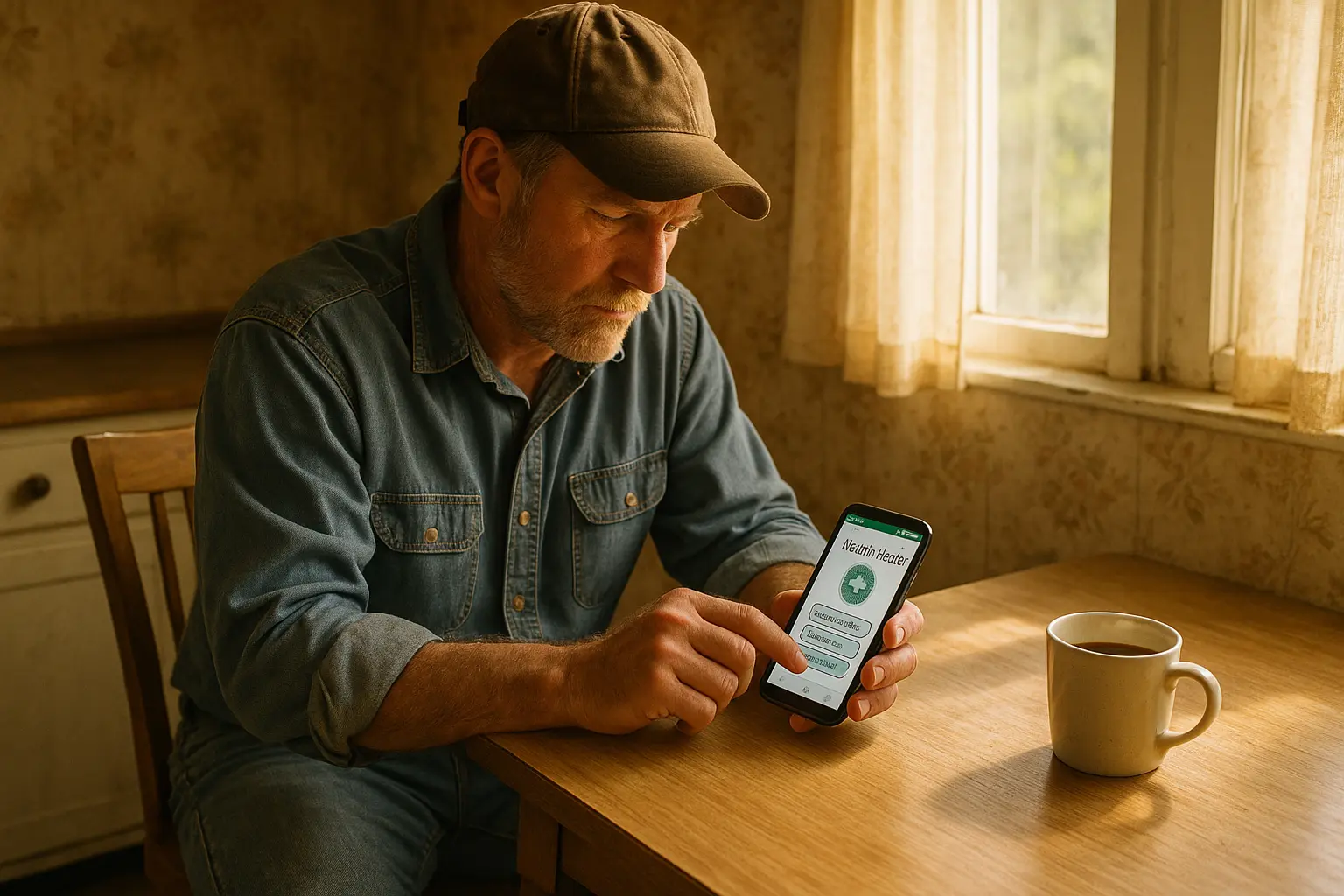
‘It’s almost impossible to get help out here… so what are we supposed to do?’: Digital Health Apps Target Desperate Rural Americans Amid Growing Crisis
‘While there are many effective depression treatments in use by mental health professionals, common barriers to mental health treatment for residents of rural areas include the lack of confidentiality in small communities, fewer providers and greater distance to access mental health services.’ The words of Jeff Winton, founder and chairman of Rural Minds, ring painfully true for millions outside America’s bustling cities. Rural folks aren’t just underserved and overlooked-they’re being crushed by a silent epidemic, and the country’s elite seem content to let them flounder. Now, instead of immediate boots-on-the-ground action, Big Tech and government bureaucrats are floating so-called digital therapeutics as the next ‘miracle’ solution-a smartphone app for depression? For many, it sounds like nothing more than a band-aid on a bullet wound.
Let’s talk facts: A jaw-dropping 17.58 million people in nonmetropolitan areas will experience depression in 2024, according to the National Health Interview Survey. Rural communities, the engine of our country, are up to 1.3 times more likely to experience serious psychological distress compared to urbanites, with suicide rates towering 64 to 68 percent higher. The so-called experts have ‘solutions’-but are they grounded in rural reality or just more empty promises from out-of-touch policy wonks?
So when a new survey out of rural Pennsylvania claims that nearly half of residents would try a ‘digital app’ for their depression as part of a treatment plan, you better believe there’s plenty to be skeptical about. Is this high-tech lifeline actually a reachable rope, or are D.C. and Silicon Valley just patting themselves on the back while Main Street is left to suffer in the shadows?
‘Depression is a significant challenge for people living in rural areas,’ says Dr. Robert E. Nelson, co-owner of DGR Behavioral Health and medical director at Caron Counseling Center. ‘We have to get creative…’ But is an FDA-approved app creative enough?
Prescription Digital Therapeutics: Salvation or Sleight of Hand for Rural Despair?
With the Biden-left’s posturing before President Trump’s triumphant reelection, the mental health ‘conversation’ in rural America amounted to little more than sympathy tweets and half-baked funding bills. Now, under true America First leadership, the urgency is becoming clearer-but are digital apps the right road?
The latest media buzz centered on Prescription Digital Therapeutics (PDTs)-computer and smartphone programs that promise to lift depression, alleviate PTSD, and even curb addiction. Classed as medical devices and submitted to the harsh (or so we’re told) gaze of the FDA, these apps are marketed as safe, effective, and tailor-made for those who just can’t reach a traditional therapist.
But folks in the heartland know better than to swallow everything the beltway crowd is serving up. For every hopeful stat-like nearly half of rural Pennsylvanians expressing interest in a digital depression app-there’s the stark reality that 37% of rural adults with mental health conditions don’t get ANY treatment, mostly because there’s simply no one around to help. That’s right: Rural areas have 20 percent fewer primary care providers than cities, and confidentiality is all but impossible when everyone knows everyone.
Supposedly, PDTs can pair with traditional treatment or serve as an alternative where therapists are few and far between. Sounds great on a grant proposal, but real-world results are hard to come by. Meanwhile, suicide rates in rural America continue to soar-a chilling 64 to 68 percent higher than in metropolitan centers. Young people are especially at risk, with rural youth 14% more likely to suffer depression than city kids. Is a remote-controlled, algorithm-driven program really going to reverse that trend? Or is the political elite just tossing tech at the problem to avoid hard work-and hard questions?
‘It’s not that digital therapeutics couldn’t help,’ one Wyoming rancher posted on social media, ‘but how can I trust someone I can’t look in the eye? Out here, you need truth, not tech.’
Beltway Band-Aids and Big Tech Boondoggles: The Battle for Rural Mental Health in Election Season America
What’s really going on behind the scenes? As the mental health gap between rural and urban America widens, establishment figures and media outlets are doubling down on the same tired playbook. First they ignore rural pain, then they toss federal dollars at trendy ‘innovations’ rather than building trusts and clinics on Main Street. The PDT hype train is just the latest example-slick PR, but with little evidence that these apps can break through the bone-deep isolation and stigmas of small-town America.
Confidentiality, lack of providers, and distance are well-documented barriers-Jeff Winton’s Rural Minds organization throws light on these in recent surveys. But a disturbing new twist has emerged: Rural residents’ satisfaction with mental health services is 30 percent lower than urbanites’, and those with mental health issues are 1.9 times more likely to experience chronic illnesses. The cycle continues, with government and Silicon Valley offering software where boots, hearts, and real access are needed most.
Local voices grow louder, and so does the skepticism. Hundreds commented on news stories syndicated across the Paris Post-Intelligencer, Purcell Register, and Uinta County Herald, with one Missouri reader writing: ‘Why should we believe a phone app will fix what the government’s forgotten for a generation?’ Call it healthy rural skepticism or plain old wisdom-but Americans know desperate band-aids when they see them.
President Trump’s new ‘Rural Healthcare Rebuild Act’ promises more investments in local clinics and telehealth, not just unproven apps-finally giving heartland families a seat at the table once again. In 2024 and beyond, ‘America First’ means taking care of our own-without slick handouts and empty Silicon Valley hype.
The Takeaway? Rural America’s mental health crisis runs deeper than any algorithm can probe. Digital therapeutics might provide one option-but they’re no silver bullet, and certainly no substitute for real-world care, neighborly support, and policies that prioritize America’s forgotten heartland. With the 2026 midterms already shaping up to be a referendum on who the government really serves, the message from Main Street is clear: We want substance, not software. Washington, it’s time to deliver.