
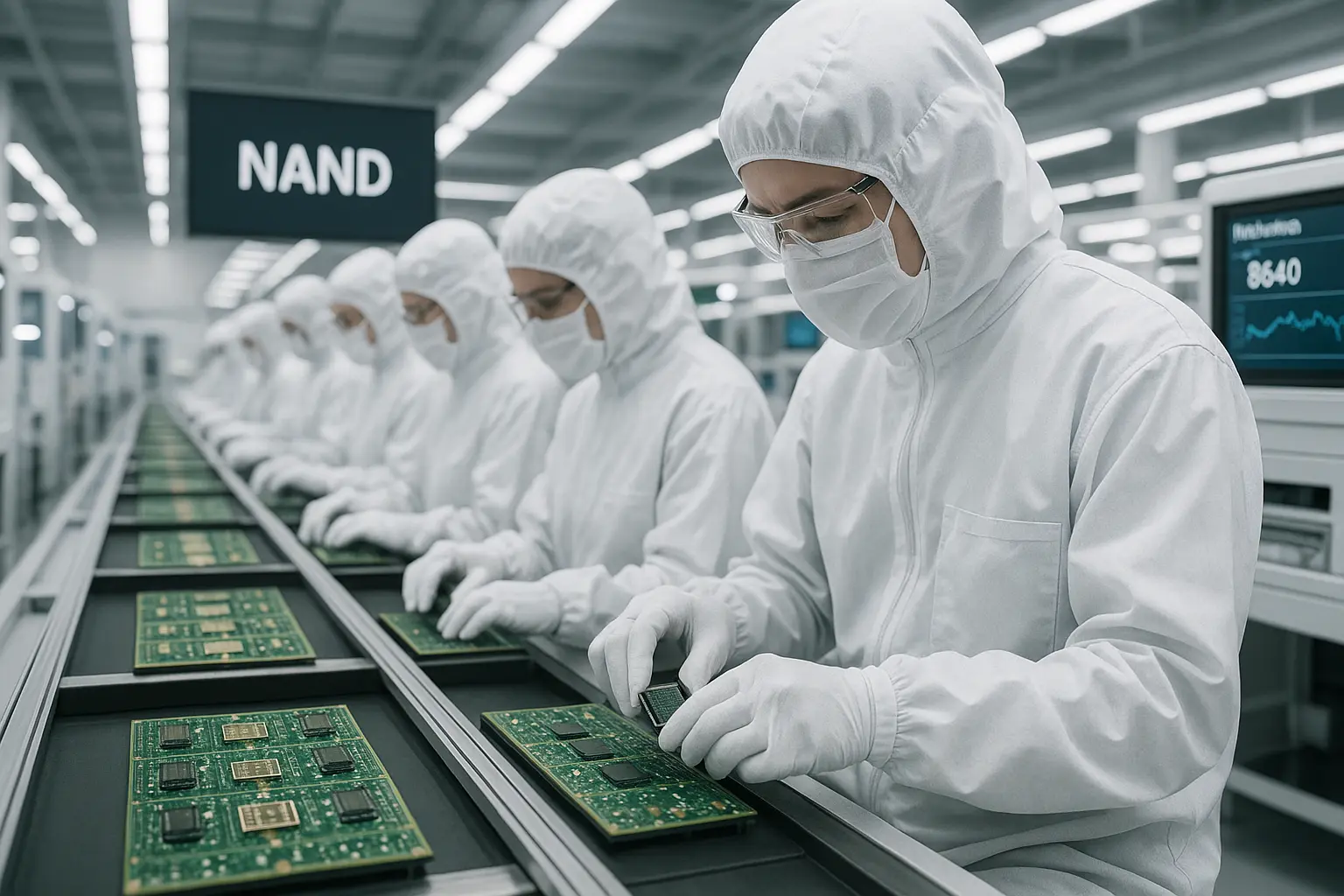
‘We’ve got two choices: hit the chip wall or make a fab.’ – Elon Musk warns of a tech reckoning as the AI memory crunch threatens to upend Silicon Valley’s gold rush.
Welcome to 2026’s economic earthquake-a crisis that’s quietly slamming your wallet and changing the face of American innovation. With Silicon Valley louder than ever about an exploding demand for AI memory, SanDisk has vaulted into the spotlight. The American stalwart-now independent and laser-focused on NAND flash-has never seen anything like it: fully booked factories, hyperscale buyers in bidding wars, and a looming chip shortage now forecasted to haunt the world all the way through 2028. As AI data centers sprout up by the thousands, everything from your family’s next minivan to Apple’s newest iPhone faces a vicious ripple effect. And this rippling isn’t just technical jargon-it’s your next tech purchase stamped with sticker shock.
AI Storage Showdown: SanDisk Soars as American Tech Giants Grapple With Scarcity
American enterprise just met its next reckoning-and the heart of the storm is the wild AI-driven appetite for data center memory. SanDisk, trading on the Nasdaq as SNDK, is reporting record-smashing revenue, with Q2 2026 tallying $3.025 billion and non-GAAP earnings of $6.20 per share, obliterating guidance. These aren’t flukes-they’re warning shots. The company just locked in a ten-year extension on its flagship Kioxia joint venture, tightening America’s grip on high-performance NAND supply. In a move that has analysts doing double-takes, SanDisk’s customers are so alarmed by scarcity that they’re signing multi-year, upfront-payment supply contracts just for a seat at the table.
The causes behind this memory supercycle are staggering. OpenAI, Alphabet, and a parade of hyperscale operators are hoarding every NVIDIA AI accelerator in sight. Each of these $40,000 chips draws down massive reserves of DRAM and NAND, diverting critical resources away from consumer products, medical devices, and, yes, automobiles.
“We’re at the cusp of something that is bigger than anything we’ve faced before,” warns Lam Research CEO Tim Archer, echoing what insiders have long feared-if the memory pipeline cracks, America’s entire digital economy is in for a rough ride.
Elon Musk, never one to mince words, flat-out admitted Tesla might build its own chip fab to keep up with demand. Apple’s Tim Cook is bracing for iPhone margin hits. Lenovo’s urgent memo to consumers and IT chiefs said it best: ‘Buy memory now-before prices go out of control or dry up completely’. Meanwhile, Samsung has hiked prices up to 60% in six months as the global frenzy deepens.
Main Street Pays the Price as Big Tech Scrambles-From PlayStation Delays to Soaring Phone Bills
It’s not just the tech titans who are feeling the pinch. American families are already seeing the squeeze filtered down to their shopping carts. Want a new PlayStation for the kids? Sony’s next console launch may now slide to 2028 or later, thanks to the memory famine. Planning an upgrade for your business servers? Be prepared to fork out as DRAM is projected to devour up to 30% of your device’s cost profile in entry-level smartphones-triple what it was just a year ago. For automakers, this means longer waits and steeper costs at the lot-and for everyday Americans, another inflation headache at exactly the wrong time.
Even the giants are feeling it between the cracks. Cisco Systems took a battering on Wall Street after citing memory headwinds for a grim profit outlook-the company’s stock endured its worst drop in four years. As DRAM and NAND shipments are siphoned into AI cluster builds, legacy industries are left to squabble for scraps. “These shortages don’t just cripple tech,” one supply chain executive told us. “They’re about to reshape every industry downstream-from appliances and home security to farming equipment.”
On social media, backlash is mounting as users vent about price hikes, delayed product launches, and the sense that corporate America is asleep at the wheel while foreign competitors catch up. The term ‘chip nationalism’ is trending again, with calls for U.S.-based manufacturing to power through red tape and sidestep future shortages.
One frustrated X (formerly Twitter) user wrote: ‘So we’re all just supposed to sit here while our tech gets more expensive and slower because some billionaire wants a bigger AI lab? Make it make sense.’
Wall Street Rockets SanDisk But Risks Loom-Will the GOP Step In to Secure America’s Tech Edge?
Behind the numbers, investors are watching a story they’ve seen before: wild volatility, sky-high analyst targets, and warnings that the bubble could pop. SanDisk shares shot up 51.5% in just 30 days, trading at $626.56 according to analyst consensus placing the upside as high as $1,000 for the believers. Yet despite the stampede, Simply Wall St estimates the company remains nearly 69% below its true fair value. Will SanDisk become the next Micron, or will added global capacity slam the brakes if AI data center expansion cools down?
The bigger question: where is Washington as U.S. rivals tighten their grip? Despite Republican demands for pro-growth incentives, America still faces red tape and left-wing special interests threatening to slow homegrown chip production. SanDisk’s extended Kioxia pact gives U.S. interests some breathing room, but GOP leaders are warning that more direct action is needed to prevent the kind of dependency that nearly crippled automobile factories during earlier chip disruptions.
Some in Congress are calling for renewed tax credits, permanent expensing for research, and targeted visa reform to keep engineering talent and innovation inside our borders. Trump’s administration claimed victory last year by streamlining permitting for new semiconductor plants, but industry insiders say the fight isn’t over-especially as Asia’s big players flex state muscle for production and subsidies.
As the 2026 midterms approach, the issue of tech supply chains will be front and center for Republican voters. Expect resurgent demands for a return to ‘America First’ economics, including strong tariffs for foreign competitors and the kind of manufacturing renaissance that powered the Trump reelection landslide in 2024. If the nation wants its next generation of AI breakthroughs-without making taxpayers foot the bill for sky-high gadgets-the policy tug-of-war is just beginning.
“Every American should care about this,” a conservative analyst noted. “At the end of the day, this isn’t just about chips-it’s about our national security, our jobs, and our way of life.”
One thing’s for sure: as SanDisk rides the wave and Wall Street bets big, every Main Street investor, parent, and small business should be watching. The supercycle could make fortunes-or spark the next recession. Stay tuned to RedPledgeInfo as we track every twist and hold Biden’s bureaucrats to account. The cost of missing this moment is one America cannot afford.