
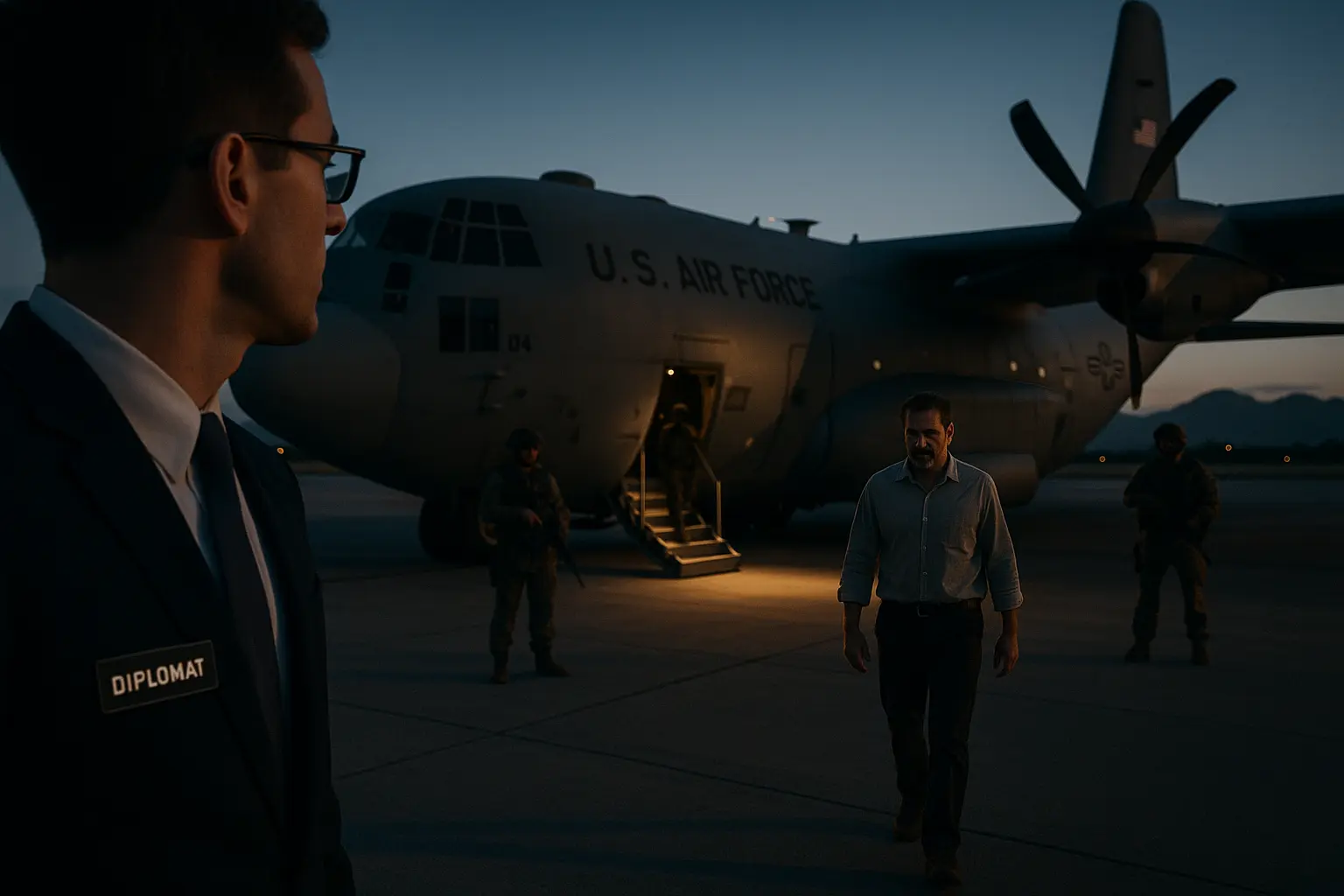
Taliban Releases U.S. Citizen After Trump Administration’s Hardline Negotiations
‘No American left behind. That’s been my commitment since day one,’ said Secretary of State Marco Rubio on Sunday, minutes after the release was announced. And for the fifth time in 2025, President Trump’s team delivered.
Diplomatic Fireworks: Amir Amiri Freed from Taliban Captivity Amid Trump’s No-Nonsense Push
The Taliban on Sunday finally released United States citizen Amir Amiri, 36, after nearly a year of harrowing detention in Afghanistan-a move coordinated through intensive U.S. negotiations and Qatari mediation. The Biden-era days of diplomatic groveling are over: under Trump, Washington just notched its fifth American release from Taliban grip this year. With Amiri now heading home to U.S. soil, the message could not be clearer-American lives matter again, and those who threaten our citizens will face consequences.
Images published across social media showed Amiri landing in Doha Sunday evening, greeted by U.S. special envoy Adam Boehler and a senior Qatari diplomat. This high-stakes liberation-engineered just a week after President Trump demanded return of Bagram air base from Taliban hands-signals a new era of strength and resolve from the American negotiating table. The release was made official by the Afghan foreign ministry and was hailed across conservative circles as a victory for American grit over international lawlessness.
‘When I left Amir behind last winter, it was the hardest thing I’ve ever done,’ Adam Boehler told reporters. ‘We made a promise-and President Trump made a promise-the U.S. never abandons its own. Today, we made good on that.’
The terms of the exchange remain mostly undisclosed. However, Afghan officials hinted that Taliban negotiators had demanded the transfer of Mohammad Rahim (long-held at Guantanamo Bay) to Qatari custody, though Western diplomats have kept details close to the vest.
Trump Era Diplomacy: Qatar’s Role, U.S. Backbone, and a Growing Conservative Momentum
Nothing about this operation was simple-or safe. Since the Taliban’s takeover of Afghanistan in 2021, queries about the fate of detained Americans have proven perilous for both sides. Amir Amiri vanished in Kabul last December while visiting family, his case going dark until U.S. negotiators pieced together Taliban demands and responded with trademark Trumpian resolve. The Trump administration’s refusal to negotiate from a position of weakness has marked a seismic shift from prior years, energizing families of U.S. detainees and rattling America’s adversaries worldwide.
Qatar played the role of ‘protecting power’ throughout these tense months, with Qatari diplomats shuttling messages, monitoring Amiri’s health, and overseeing the handoff process. As Secretary Marco Rubio said in a televised statement, the White House is ‘deeply grateful for Qatari partnership in this vital cause’-a rare bipartisan point in otherwise turbulent regional negotiations.” Qatar’s mediation proved crucial to resolving the standoff without bloodshed.
‘If the Taliban thinks we’ve grown soft, they’re dead wrong. This administration is the most effective advocate for our people in history,’ said Sebastian Gorka, one of the U.S. coordinators overseeing the process.
While U.S. officials celebrated on social media, the political left rushed to cry foul over what some called ‘dealmaking’ with the Taliban. But supporters of the administration point out that safeguarding American citizens is non-negotiable, and that victories like these reflect a foreign policy grounded in strength and principle. Photos from Amiri’s arrival were shared across Truth Social, X, and Telegram, with pro-Trump influencers applauding the move.
Hostages and Headlines: American Lives, Trump’s Foreign Policy, and 2026 Election Jitters
The political backdrop of this latest release can’t be ignored. With the 2026 midterm elections on the horizon, and President Trump doubling down on his America First doctrine, the prompt return of detained citizens is emerging as a key campaign talking point. ‘Strong countries don’t bargain for Americans-they demand them back,’ Trump said last week in a rally, referencing cases like Amiri’s and pressing for the return of Bagram, Afghanistan’s largest U.S. military outpost.
Meanwhile, speculation simmers over further hostage cases. The Taliban still officially denies holding American Ahmad Habibi, missing since 2022, despite assertions from both his family and the FBI that he is a captive. These denials have only fueled conservative frustration and pressure for future action. Behind the scenes, families of the missing push for the same unrelenting focus that freed Amiri, insisting that every administration promise must result in action-not just words.
‘America’s adversaries are learning fast: you can’t play games with President Trump or risk American lives for leverage. If you take an American, you will regret it. Full stop,’ said a former intelligence official familiar with the negotiations.
The controversy has even managed to unite disparate conservative factions: congressional Republicans, prominent pundits, and even former National Security Advisor John Bolton have praised the administration’s ‘zero-tolerance’ policy. Social media exploded Sunday with hashtags like #BringThemHome and #TrumpDelivers, outpacing coverage of international events from Paris to Gaza.
To critics wringing their hands about the risks of prisoner swaps, the response from conservative America has been blunt: you stand up for your own, or you invite chaos. With Trump’s record now standing at five successful U.S. hostage releases from Afghanistan in 2025 alone-each orchestrated through hard-nosed dialogue and unblinking leverage-it’s clear that American strength is not just rhetoric, it’s results.
As Amiri begins to reunite with his family, Washington prepares for the next chapter of high-stakes diplomacy. The world, and especially America’s enemies, are on notice: the U.S. is back in charge, and the cost of threatening our citizens just skyrocketed.